
Venezuela earthquakes leave misery and desperation in their wake as race to find survivors continues
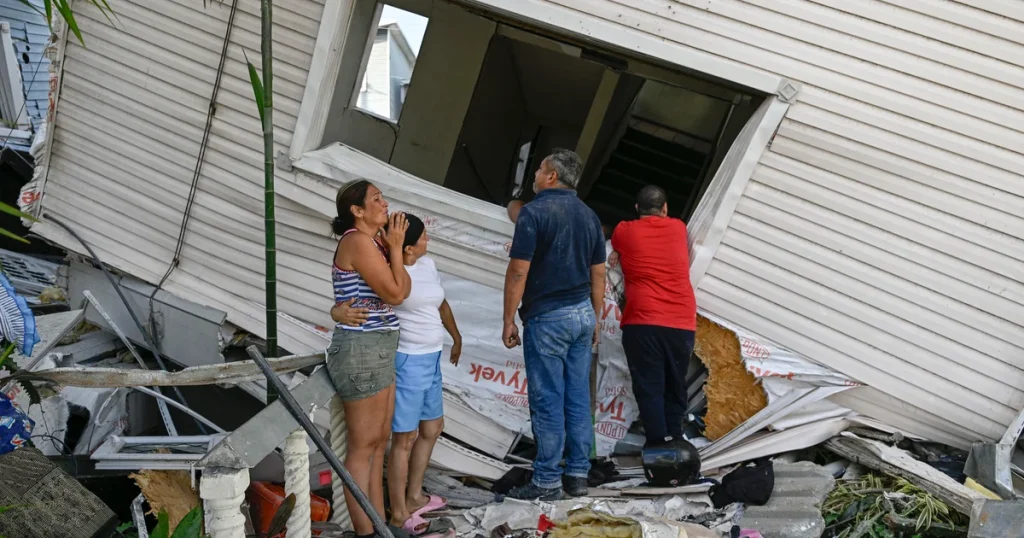
Devastation Follows Venezuela’s Shaking Ground: A Race Against Time to Rescue Survivors
Venezuela earthquakes leave misery and desperation – La Guaira, Venezuela — The night of Wednesday brought catastrophic tremors to northern cities, as two consecutive earthquakes struck, leaving devastation in their wake. Residents awoke to a landscape transformed by the force of the quakes, with neighbors scrambling to assist each other in the search for loved ones. The disaster, which officials say claimed over 230 lives and injured thousands, has intensified the urgency of rescue operations, with survivors and rescuers alike working tirelessly to uncover those still trapped beneath the rubble.
Magnitude of the Disaster
The quakes, measuring 7.2 and 7.5 on the Richter scale, were among the most severe to hit Venezuela in over a century. Their impact was felt across the region, from coastal areas to the capital, Caracas. The first tremor struck in the early evening, followed by a second, stronger quake that exacerbated the damage. Entire neighborhoods were left in ruins, with buildings reduced to skeletal remains and streets cracked open like veins of the earth.
Venezuela’s Health Minister, Carlos Alvarado, reported that the death toll climbed to approximately 235 by late Thursday, while the number of injured surpassed 4,300. These figures are likely to rise as search teams continue their efforts, with thousands still unaccounted for. The chaos of the disaster has forced families to rely on makeshift methods to locate missing relatives, such as distributing handwritten lists of names and posting photographs of loved ones in the hope of reuniting them.
Casualties and Urgent Response
In the aftermath, rescuers faced daunting challenges as they sifted through debris, pulling out the injured covered in dust and blood. Among the survivors were children and even pets, their faces streaked with soot and trauma. Dramatic footage from state television captured a harrowing moment: a woman, trapped under a collapsed slab of concrete, was freed with only her foot visible before being carried out alive by a team of volunteers. Yet, the absence of heavy machinery in the early hours of the rescue effort left many residents to dig through the wreckage themselves, despite the government’s promises of aid.
La Guaira, a coastal city north of Caracas, bore the brunt of the destruction. The region’s main airport, a critical hub for relief supplies, was rendered inoperable by the quakes, hampering the delivery of resources. As helicopters circled overhead, the sight of flattened structures and broken windows stunned onlookers. One resident, Cristian Carreño, described the scene with a mix of disbelief and sorrow, stating, “I lost everything. There are people still inside, I imagine, that couldn’t get out. It’s incredibly devastating.”
Residents in downtown Caracas, where the economic crisis has already strained daily life, spent the night huddled in open spaces such as parks and parking lots. Power outages and limited access to clean water further complicated recovery efforts. Meanwhile, the government began redirecting rescue teams from other parts of the country to La Guaira, a region with a history of natural disasters. In 1999, a mudslide in the same area claimed thousands of lives, making the current tragedy a stark reminder of the region’s vulnerability.
Stories of Resilience
Among the countless accounts of loss, stories of human endurance emerged. A retired schoolteacher named Juan Alberto Mendaño, who climbed through the wreckage in La Guaira, recounted spotting a woman trapped and waving for help. “May God rescue her as quickly as possible,” he said, his voice trembling with hope and urgency. When the scream of a child pierced the air, he added, “There was nothing we could do but try to save them.”
For Dayana Delgado, a mother of three, the disaster has been a personal nightmare. She questioned the whereabouts of the heavy machinery promised by authorities, noting that residents were left to do the digging themselves. “I want to know where my child is, if he’s trapped or in a shelter,” she said, her words echoing the desperation of many who have lost contact with family members due to disrupted phone lines.
One of the most poignant moments came from a young girl, who emerged from the rubble with the aid of rescuers. Covered in dust, she wrapped herself in a dark sweatshirt as if to shield herself from the world. The video, broadcast by Venezuelan public television, captured her determination, with rescuers praising her “strength, determination, and will to live.” Such moments of hope contrasted sharply with the grief of families who watched their children’s bodies carried away in blankets, their cries mingling with the sound of collapsing structures.
Global Support and Impact
As the situation unfolded, the global community responded with solidarity. Gabriella Suarez, a 24-year-old online gamer from Caracas, shared her experience live on social media, her camera capturing the chaos as the quakes struck. “It started getting harder and harder,” she recalled, describing the earth’s violent movement beneath her feet. “I could feel the ground moving, like it was alive.” Her online community rallied to support real-time updates on rescue efforts, while her in-person neighbors joined the search, highlighting the unity in adversity.
Yet, the earthquake’s impact extends beyond immediate physical destruction. The country, already grappling with economic instability and resource shortages, now faces an even greater challenge in recovery. Power outages, limited medical supplies, and the strain on emergency services have compounded the crisis, with millions of Venezuelans enduring hardship long before this disaster struck. As the government mobilizes resources, the question remains: will they be enough to address the scale of the crisis?
Despite the grim outlook, moments of resilience and hope persist. In the San Bernardino district of Caracas, a young man was brought out on a stretcher to the cheers of bystanders, his tearful mother declaring, “Leandro, I love you” as he regained consciousness. These small victories underscore the determination of the people, even as the full extent of the disaster becomes clearer. The race to find survivors continues, driven by the unyielding spirit of those who refuse to let despair define their response to this unprecedented crisis.
As the sun rose over the battered city, the air was thick with the scent of concrete and dust. The cries of those searching for missing loved ones blended with the sounds of machinery at work, a testament to the resilience of a nation in turmoil. With each passing hour, the search for survivors intensifies, and the hope that no one is left behind remains a fragile but vital light in the darkness of the earthquakes’ aftermath.