
Russia frees 24 Filipinos after Philippine President Marcos talks with Putin
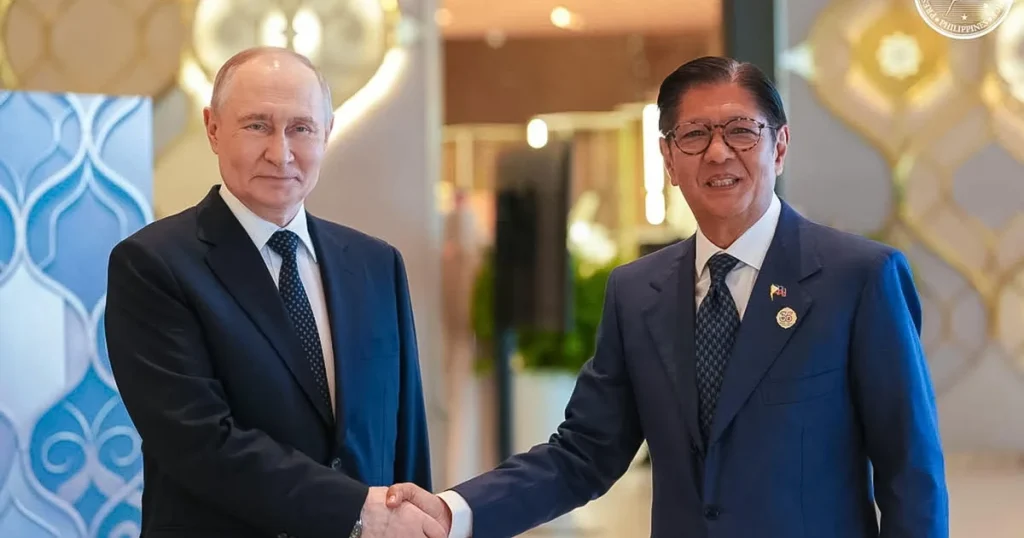
Russia Frees 24 Filipinos After President Marcos Meets with Putin
Russia frees 24 Filipinos after Philippine – Russian authorities have released 24 Filipino nationals who were held in detention for several months in the Siberian city of Irkutsk without formal charges. This decision came after Philippine President Ferdinand Marcos Jr. raised the issue during a bilateral meeting with Russian President Vladimir Putin in Kazan, a Russian city in the Tatarstan region. According to statements from Philippine officials, the swift action was a direct result of Marcos’s intervention during their discussions.
Deportation Plans and Arrival in Manila
The 24 Filipinos are expected to return to the Philippines via two flights scheduled for Sunday morning, as confirmed by the Department of Foreign Affairs in Manila. Officials mentioned that the first group will be met by Philippine Foreign Secretary Theresa Lazaro, who accompanied Marcos during the meeting with Putin. This meeting, held on Wednesday, was part of a broader event where Marcos led ASEAN leaders in celebrating the 35th anniversary of diplomatic ties between the Association of Southeast Asian Nations and Russia. The gathering took place at the Kazan summit, highlighting the importance of regional cooperation.
The Filipinos were reportedly detained in Irkutsk, a city in southeastern Siberia, for approximately nine months. During the meeting, Marcos expressed concern over their situation, prompting immediate action from Russian authorities. The Philippines, known for its strategic partnership with the United States, has maintained a strong alliance with its northern neighbor. This relationship was reaffirmed when Marcos, along with other ASEAN members, voted in favor of a U.N. General Assembly resolution condemning Russia’s 2022 invasion of Ukraine.
Diplomatic Context and ASEAN Engagement
As the current leader of the ASEAN rotating presidency, Marcos played a central role in the Kazan summit, which brought together leaders from the 11-nation bloc. The event marked a significant milestone in the diplomatic relationship between ASEAN and Russia, with discussions focused on mutual interests and regional stability. Despite the Philippines’ vocal criticism of Russia’s actions in Ukraine, the country has continued to engage with Moscow on trade and investment, which has been a key aspect of its foreign policy.
During the summit, Marcos held a one-on-one meeting with Putin, which took place outside the main conference sessions. The two leaders discussed a range of topics, including the detention of Filipino workers and the broader implications for bilateral relations. Marcos emphasized the urgency of resolving the issue, and according to his reports, Putin assured him that the matter would be addressed promptly. The Philippine delegation was informed by Russian officials that the Filipinos would be deported back to Manila within days of the meeting.
Background on Filipino Workers in Russia
Philippine officials have indicated that the detained individuals may have been victims of illegal job recruitment schemes. Some reports suggest that they were apprehended in Russia due to potential violations of immigration laws, though no formal charges had been filed against them. This situation has sparked discussions about the treatment of foreign laborers in the country, particularly those from the Philippines, which has a large diaspora in Russia.
Philippine Ambassador to Moscow Igor Bailen noted that approximately 15,000 Filipinos reside and work in Russia, making the issue of their detention a matter of concern for both governments. While the Philippines has historically maintained close ties with the United States, it has also pursued economic partnerships with other nations, including Russia. The 19% tariff rate on goods imported into the U.S. from the Philippines, agreed upon during a meeting with President Donald Trump last year, underscores the Philippines’ efforts to balance its alliances and trade interests.
Putin’s Assurances and Marcos’s Response
Following their meeting, Marcos provided an update to reporters, stating that Putin had been unaware of the detainees’ situation until their conversation. The Russian president, during a dinner on Wednesday, promised to investigate the matter and ensure the Filipinos’ release. “Don’t worry, we will find a way to fix this problem,” Putin reportedly said, as quoted by Marcos. This assurance has been seen as a positive step toward resolving the issue, though the exact circumstances of the Filipinos’ detention remain under scrutiny.
Marcos’s meeting with Trump last year highlighted the Philippines’ growing economic ties with the U.S. The two leaders agreed to reduce the Philippines’ tariff rate on goods imported into America, while also lifting all tariffs on U.S. imports to the Philippines. This move was intended to strengthen bilateral trade and investment. However, the Philippines has also engaged with Russia on other fronts, including the recent diplomatic efforts to secure the release of its citizens. Singapore, the sole ASEAN member to impose sanctions on Russia, was present at the Kazan summit, adding a layer of complexity to the region’s stance on Moscow’s actions in Ukraine.
Implications for Future Relations
The quick resolution of the Filipino detainee issue may serve as a model for future diplomatic engagements between the Philippines and Russia. While the Philippines has supported Western sanctions against Russia’s invasion of Ukraine, it has also maintained a pragmatic approach to its economic relationships. The release of the 24 Filipinos demonstrates the effectiveness of high-level dialogue in addressing specific concerns, even amid broader geopolitical tensions.
As the Philippines continues to navigate its international partnerships, the outcome of this meeting may influence its future interactions with Russia. The government’s ability to secure the detainees’ release highlights the importance of maintaining open channels of communication with key allies. Meanwhile, the situation has raised questions about the treatment of foreign workers in Russia and the need for stronger labor protections for those employed in the country. With about 15,000 Filipinos living in Russia, the incident could prompt further discussions on immigration policies and worker rights.
Overall, the meeting between Marcos and Putin has been viewed as a successful diplomatic effort, combining concern for Filipino nationals with broader strategic goals. The Philippines’ commitment to both its U.S. alliance and its relationships with other nations, including Russia, remains a central part of its foreign policy. As the Filipinos prepare to return home, their case will likely be remembered as a testament to the power of bilateral engagement in resolving complex international issues.
“Don’t worry, we will find a way to fix this problem,” Putin reportedly said, as quoted by Marcos during their meeting in Kazan.
With the Filipinos now set to return to Manila, the incident has already sparked positive reactions from both the Philippine and Russian governments. Philippine officials expressed gratitude for the swift action, while Russia emphasized its willingness to cooperate in addressing the concerns raised by Marcos. This outcome may pave the way for renewed dialogue on labor rights and immigration policies, ensuring that similar cases are handled with greater transparency and speed in the future.