
Rescue teams in Venezuela race to save security guard trapped under building that collapsed during earthquakes
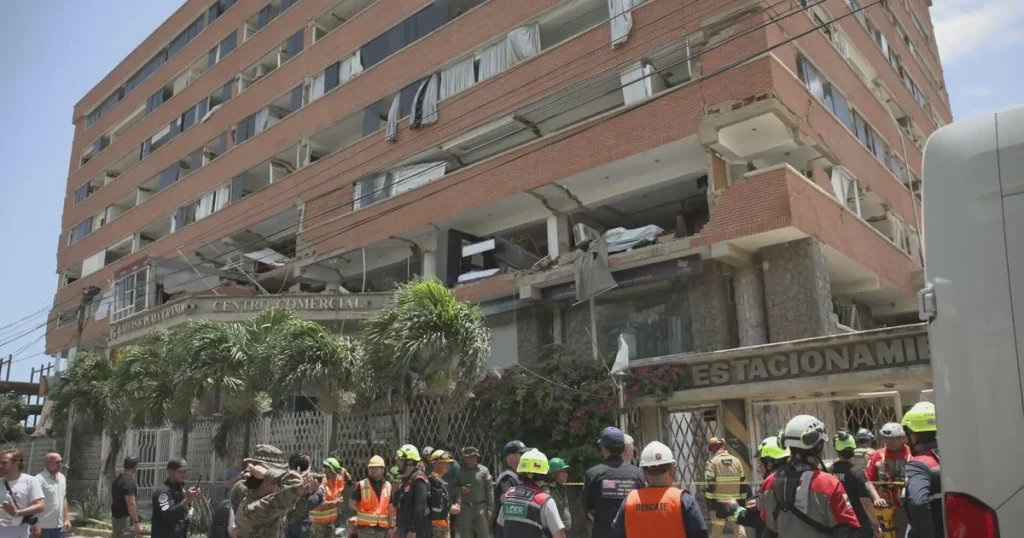
Venezuela Rescue Teams Race to Save Security Guard After Earthquake
Rescue teams in Venezuela race to save a trapped security guard following a devastating earthquake that struck the northern region. The incident occurred on June 24, when two powerful tremors, measuring 7.5 and 7.2 on the Richter scale, caused widespread damage, including the collapse of a 10-story building in La Guaira. Among the victims was Hernan Gil Flores, a 44-year-old security guard who had been buried for six days. His survival became a symbol of hope as international and local teams worked tirelessly to extract him from the rubble.
Challenges in the Rescue Operation
The rescue mission for Gil Flores faced significant hurdles. Aftershocks continued to threaten the stability of the site, with Manny Sampang, a task force leader from the Los Angeles County Fire Department, warning of the dangers. “The building is still unstable, and we have to move with caution,” he told CBS News. Multiple structures had tilted or fallen into the wreckage, complicating efforts to create safe pathways. Despite these risks, the team made progress, confirming that Gil Flores remained conscious and had been supplied with water.
“Every step we take could trigger another collapse,” Sampang emphasized. “It’s a race against time to ensure we don’t lose the opportunity to save him.”
Human Impact and Ongoing Search
The earthquake’s aftermath left thousands displaced and grieving. While over 1,900 lives had been confirmed lost, the search for missing individuals continued. Marianae Hernandez, a La Guaira resident, described her home as reduced to rubble. “We have nothing left,” she said, adding that her family now lived in tents in Caracas. The emotional strain of the disaster was evident, as survivors grappled with loss and uncertainty. Gil Flores’s wife, Gusbimar Gonzalez, shared that her husband was still in communication with rescuers, offering a rare sense of optimism.
Scale of Destruction and Relief Efforts
NASA satellite imagery revealed the extent of the destruction, with nearly 59,000 buildings damaged or destroyed. The United Nations reported that over 1.8 million people required humanitarian aid, including nearly 700,000 children. Rescue teams in Venezuela race to address the crisis, focusing on both immediate survival and long-term recovery. So far, approximately 6,400 individuals had been rescued, but the scale of the disaster demanded sustained efforts.
Among the most heartening stories was the rescue of an 18-day-old baby trapped for 32 hours in a collapsed high-rise. The child’s survival highlighted the dedication of rescuers navigating the rubble. Similarly, a mother and her 9-month-old baby were saved with minor injuries, showcasing the resilience of both people and teams. These moments underscored the critical importance of ongoing search operations and the urgency of the mission.
Global Support and Local Response
International cooperation played a vital role in the rescue efforts. Teams from the United States and other countries joined local forces to maximize resources and expertise. The operation in La Guaira demonstrated the coordination required to tackle such a crisis. Despite the challenges, the resilience of the community and the commitment of rescuers kept hope alive for Gil Flores and others still trapped.
As the search continued, the focus remained on the survival of those buried in the wreckage. The combination of natural disasters and infrastructure vulnerabilities in Venezuela highlighted the need for improved preparedness. Rescue teams in Venezuela race to not only save lives but also to restore a sense of normalcy to a region still reeling from the tremors. The outcome of Gil Flores’s case would serve as a testament to these efforts.