
People fleeing conflict in Congo complicate efforts to stop Ebola outbreak
People Fleeing Conflict in Congo Complicate Efforts to Stop Ebola Outbreak
People fleeing conflict in Congo complicate – Amid the escalating Ebola crisis in the Democratic Republic of Congo, health officials face mounting challenges as displaced populations from ongoing conflicts continue to strain containment strategies. Jean Marie Lipe, a field worker involved in distributing information about the virus, reports that even at the outbreak’s core, many locals remain skeptical of its existence. This doubt, fueled by a mix of fear, misinformation, and cultural beliefs, has complicated efforts to curb the disease’s spread. The situation has grown dire as the number of confirmed cases has surged past 800 since the outbreak was declared on May 15, prompting urgent warnings from public health leaders.
A Misunderstood Threat in a Country Divided by Conflict
Grandmother Passy Nzali, one of the thousands of Congolese who have been uprooted by violence, recently attended a community meeting led by Lipe. After the session, she expressed a newfound understanding of how Ebola spreads—specifically through contact with infected animals like bats and chimpanzees. “Now I know the virus comes from animals,” she said, her voice steady but filled with cautious resolve. However, this realization is not universal. Many in the region still view Ebola as a mystical curse or a Western plot, which has led to resistance against preventive measures and even distrust of medical teams.
“If we don’t stop this outbreak very soon, it will be even worse than what we had in West Africa,” said Africa CDC Director Jean Kaseya.
The director’s warning underscores the gravity of the situation, as the current outbreak threatens to surpass the historical record set in West Africa from 2014 to 2016. During that period, over 11,000 deaths and more than 23,000 infections were reported, marking the worst Ebola epidemic in modern history. The virus, first identified in 1976, has returned with renewed intensity, and its spread is now amplified by the displacement of people seeking safety in neighboring regions.
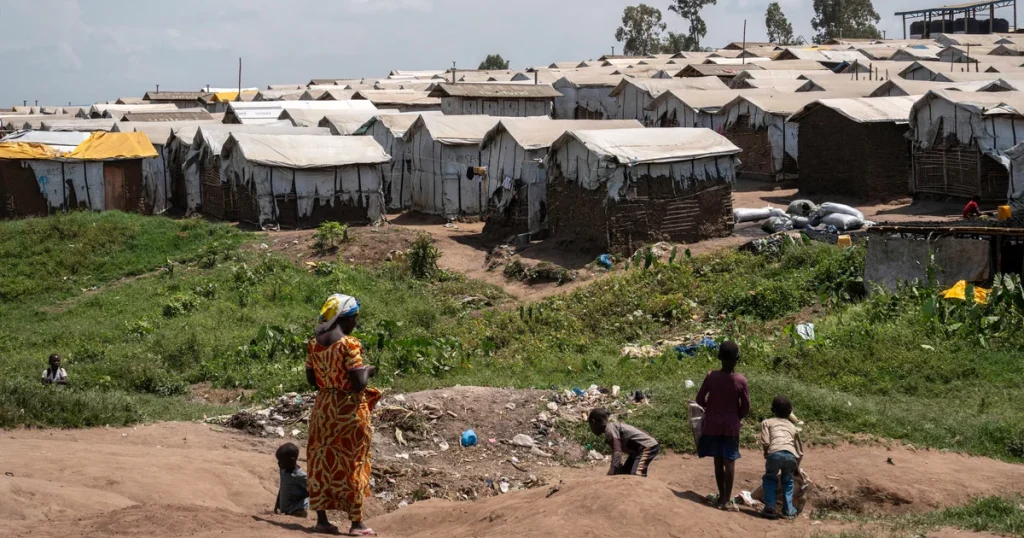
Camps along the Congo-Uganda border have become overcrowded shelters for those escaping violence, creating conditions ripe for the transmission of infectious diseases. Nzali’s refuge, one such camp, is a microcosm of the broader crisis. While these sites provide temporary relief for displaced families, they also serve as incubators for outbreaks. Health workers must navigate not only physical barriers but also the social and psychological challenges posed by communities that remain wary of the virus’s true nature.
Border Crossings and the Fragility of Containment
In Uganda, where CBS News recently visited a quarantine site for refugees, the situation highlights the logistical hurdles in controlling the disease. The facility, situated near the border, is currently housing James Peter, a recent arrival from the DRC. He has been in isolation for a week, with minimal access to basic amenities. “No TV, no radio, just a bed and the breeze,” he said, describing the monotony of his stay. The 21-day quarantine period is intended to monitor his health, but the ease with which he crossed the international border—paying just $10 for a six-hour journey over Lake Albert—demonstrates the fragility of containment efforts.
Peter fled his hometown of Goma after anti-government forces attacked the city, forcing him to seek refuge in Uganda. His story is not unique. Thousands of Congolese have crossed into neighboring countries, drawn by the promise of safety. Yet, their movement has created new risks. While some refugees embrace health education, others carry lingering misconceptions that delay action. For instance, Peter initially believed the virus was a punishment from the gods, a belief common in parts of the DRC where traditional medicine and spiritual explanations often take precedence over scientific understanding.
The combination of conflict and disease has created a dual crisis. In the DRC, aid workers must balance immediate humanitarian needs with the goal of preventing further infections. “We’re trying to get people to understand the risk, but it’s hard when they’re more concerned about their families’ survival,” Lipe explained. The emotional weight of displacement often overshadows public health messaging, making it difficult to enforce critical precautions like handwashing or safe burial practices.
Uganda’s health officials are also grappling with the implications of the cross-border movement. The country’s quarantine measures, while effective in theory, are tested by the influx of people from high-risk areas. “Every new arrival is a potential case,” said a Ugandan public health officer. “We need to move quickly, but the process is slow.” The lack of resources and the sheer volume of displaced individuals mean that even small outbreaks can spiral out of control. This dynamic is particularly concerning given the proximity of the DRC’s outbreak to Uganda’s borders, where the risk of cross-contamination is highest.
Historical Context and the Weight of Expectations
The current outbreak is a stark reminder of the virus’s capacity to devastate populations. The West African epidemic, which claimed over 11,000 lives, was a turning point in global efforts to combat Ebola. It revealed how communities can be both vulnerable and resilient, depending on the clarity of information and the support of local leaders. Jean Kaseya’s warning echoes this past experience, as he emphasizes the need for swift action to avoid a similar catastrophe.
In the DRC, the battle against Ebola is compounded by the presence of armed groups and the instability they create. Health workers often operate in precarious conditions, where the threat of violence looms as large as the threat of the virus. “We have to be careful with our words,” Lipe noted. “If we say the wrong thing, people might think we’re trying to scare them.” This delicate balance between education and reassurance is critical, but it’s a challenge that grows more complex with each displaced person who enters a new community.
While the international community has mobilized resources to address the crisis, the scale of the problem remains daunting. The virus’s spread through densely populated camps and refugee sites underscores the interconnectedness of global health issues. In a world where conflict and disease often coincide, the lessons of the past must guide present strategies. As Kaseya stated, the stakes are high: a failure to act decisively could mean a resurgence of a virus that has already claimed countless lives.
Efforts to combat Ebola in the DRC are now intertwined with the broader refugee crisis. Health workers are not only fighting the virus but also rebuilding trust in the face of skepticism. Their work is essential, yet it is hindered by the very circumstances that have driven people to seek refuge. The story of Peter and Nzali, though personal, reflects a larger struggle—where the pursuit of safety has become a silent contributor to the spread of a deadly disease. This paradox highlights the need for coordinated, culturally sensitive approaches that address both the immediate humanitarian needs and the long-term health risks.
The road ahead is uncertain, but one thing is clear: the fight against Ebola in the DRC cannot succeed without addressing the root causes of displacement. As the virus continues to spread, the human cost will rise, and the international community must remain vigilant. The lessons from West Africa are a cautionary tale, and the current outbreak is a test of whether those lessons have been learned. For now, the battle is being fought in the shadows of conflict, where every step forward is met with both hope and uncertainty.