
North Korean soldier crosses border in suspected defection, South Korean news agency says
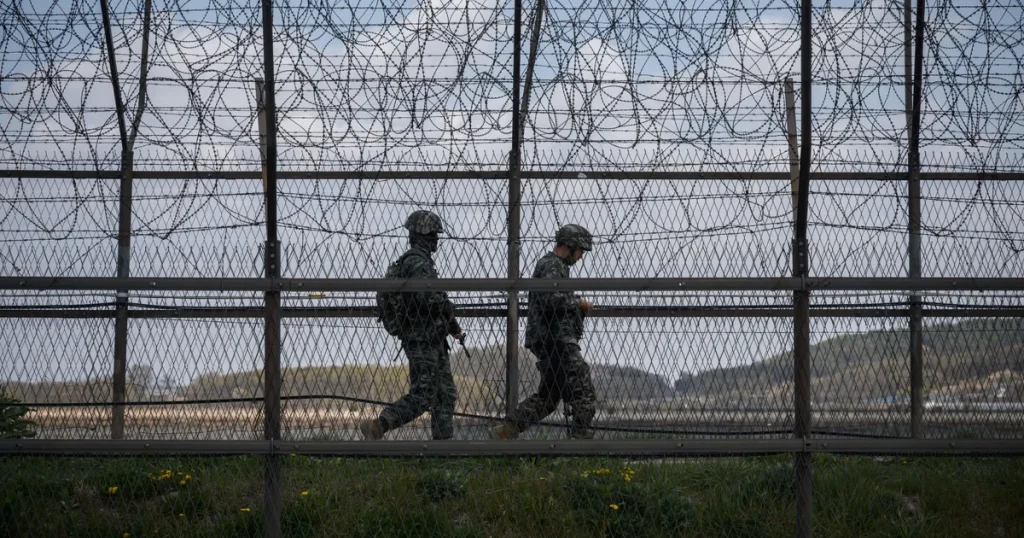
North Korean Soldier Detained in Suspected Defection, South Korean Reports
North Korean soldier crosses border in suspected – A North Korean soldier has reportedly crossed the border into South Korea, prompting authorities to detain the individual. The incident, which occurred this week, is believed to be a defection, according to South Korea’s Yonhap news agency. This development has raised questions about the stability of the divided Korean peninsula and the risks faced by those who abandon their homeland.
Defection Confirmed by Military Officials
Seoul’s Joint Chiefs of Staff confirmed the detention of the North Korean soldier, stating that the military apprehended the individual during a cross-border operation on Tuesday night. “The military secured one North Korean soldier in the central front Tuesday night, and relevant authorities are currently investigating the details,” the officials said, as reported by Yonhap. The soldier’s escape highlights the ongoing challenges of maintaining the country’s tight control over its borders.
“The military secured one North Korean soldier in the central front Tuesday night, and relevant authorities are currently investigating the details.”
The central front, a heavily contested region between the two Koreas, has historically been a hotspot for border crossings. While defections are not uncommon among civilians, the escape of a soldier is a rare and significant event. This marks the first known instance of a North Korean military personnel defecting since October 2025, according to the latest update from Yonhap.
Historical Context of Defections
Since the Korean War divided the peninsula in the 1950s, over 34,000 North Koreans have fled to the South. The majority of these defectors follow a well-established route, crossing into China first before proceeding to a third country such as Thailand or Vietnam. Only after securing asylum in a neighboring nation do they typically make the final journey to South Korea.
Defections across the land border are particularly uncommon due to the dense forests, landmines, and constant surveillance that make the journey perilous. The North Korean military maintains a strict grip on the border, and any unauthorized movement is met with swift action. However, the recent capture of a soldier suggests that the regime’s control may be facing new pressures.
Processing of Defectors
Once a North Korean reaches South Korea, they are usually handed over to Seoul’s intelligence agency for evaluation. This process involves screening the individual’s background, assessing their motivations, and determining whether they pose a security risk. The soldier’s case is likely to follow a similar protocol, with officials analyzing the circumstances of their departure.
The Unification Ministry, which tracks defector numbers, reported that 236 North Koreans arrived in South Korea in 2024. Women constituted 88 percent of these arrivals, indicating a growing trend of female defectors. While the majority of defectors are civilians, the escape of a military personnel adds a new dimension to the ongoing exodus.
Regime’s Response to Defectors
North Korea has long criticized those who flee the country, labeling them as “human scum.” This phrase, used by Pyongyang to dehumanize defectors, underscores the political and ideological stakes of such acts. The regime’s harsh rhetoric often serves to deter others from following suit, but the soldier’s defection may signal increasing dissatisfaction among North Korean citizens.
Historically, the North Korean government has relied on a combination of propaganda, economic hardship, and political repression to prevent mass departures. Yet, the cumulative effect of decades of isolation and limited opportunities has led to a steady stream of defectors. The recent incident could be a sign that this trend is gaining momentum, even within the military ranks.
Implications for Inter-Korean Relations
The defection of a North Korean soldier may have broader implications for inter-Korean relations. While the two nations have experienced periods of cooperation, tensions often flare over issues such as border crossings and political dissent. This event could reignite debates about the North’s control over its people and the potential for further defections in the future.
Analysts suggest that the soldier’s escape reflects a growing willingness among North Koreans to risk everything for a better life. The military, which has traditionally been a symbol of loyalty to the regime, now appears to be a potential source of dissent. Such defections could also influence public perception of the North Korean government, particularly among those stationed along the border.
As South Korean authorities investigate the details of this case, the broader context of defector movements remains critical. The Unification Ministry continues to monitor these trends, with data showing that the number of defectors has fluctuated over the years but remains a consistent feature of the divided peninsula. The soldier’s defection, if confirmed, adds a new chapter to this long-standing phenomenon.
While the exact motivations of the defector remain unclear, the event highlights the complex dynamics at play in North Korea. The regime’s ability to maintain internal security is constantly tested by the desire of its citizens to escape. The soldier’s bold act may inspire others to follow, potentially leading to a larger wave of defections in the coming months.
South Korea’s response to the defection will likely depend on the individual’s intentions and the information they provide. If the soldier’s escape is part of a larger pattern, it could signal a shift in the North’s political landscape. However, for now, the focus remains on the immediate investigation and the implications for the two Koreas’ relationship.