
Live Updates: Iran and U.S. ramp up tit-for-tat strikes as Khamenei laid to rest
U.S. and Iran Escalate Military Actions Amid Ceasefire Uncertainty
Strait of Hormuz Operations Continue Despite Hostilities
Live Updates: Iran and U.S. ramp up tit-for-tat strikes as Khamenei laid to rest – The American armed forces made clear on Thursday that Iran maintains no authority over the strategic Strait of Hormuz. This assertion appeared in a statement shared through social media channels by U.S. Central Command, the organization responsible for directing American military activities throughout the Middle Eastern region. According to their announcement, American personnel have facilitated the passage of over eight hundred commercial ships alongside three hundred eighty million barrels of crude petroleum through the waterway since the beginning of May.
This official position follows reports that Iranian forces targeted three merchant vessels navigating the strait earlier in the current week. Those attacks have intensified tensions between Washington and Tehran, occurring during what observers describe as a fragile pause in hostilities between the two nations.
Maritime industry publication Lloyd’s List reported Thursday that shipping movements through the critical waterway have “fallen sharply” following the exchange of military strikes that commenced on Tuesday between the conflicting parties.
Khamenei’s Funeral and Leadership Transition
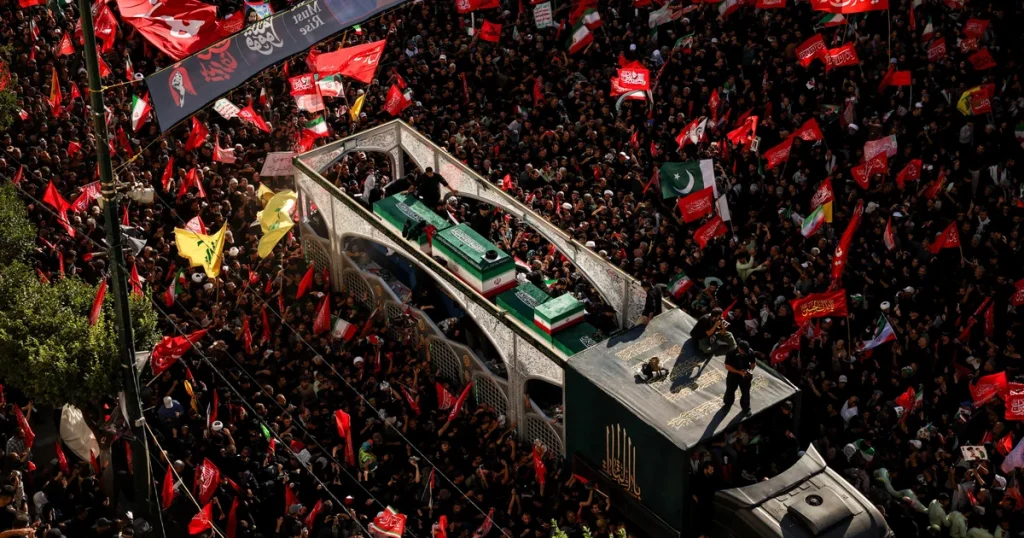
Meanwhile, Iranian authorities announced that the eldest son of the late Ayatollah Ali Khamenei, who perished during an initial strike at the onset of the Iran conflict, presided over funeral ceremonies on Thursday as his father received final burial rites.
According to an official statement published on the X platform, Mostafa Hosseini Khamenei conducted the funeral prayer for his father. The second son, Mojtaba Hosseini Khamenei, had already been designated as Iran’s new supreme leader during March, though he has remained out of public view since prior to the outbreak of war.
Iranian state television confirmed late Thursday that the state funeral for the former supreme leader had concluded. Khamenei’s remains were interred in Mashhad, a city located in northeastern Iran, following an extended period of national mourning during which his coffin traveled across various regions allowing tens of thousands of citizens to honor his memory.
Diplomatic Efforts and Regional Reactions
Iran’s foreign minister, Abbas Aragchi, used a telephone conversation with Pakistan’s army chief on Thursday to express strong opposition to American military actions against his nation. Pakistan has functioned as a mediator in discussions between Washington and Tehran.
“Araghchi said U.S. officials’ statements rejecting their commitments under the Islamabad Memorandum demonstrate continued treaty violations and warmongering policies,” according to a readout from the government of Iran. “He reaffirmed Iran’s firm determination to defend its sovereignty, territorial integrity and national security.”
These diplomatic statements contrast with observations made by President Trump, who commented during his overnight return flight from a NATO gathering in Turkey that Iranian leaders were actively seeking to negotiate an agreement.
“They want to make a deal so badly,” Trump said of Iran. “I just don’t know if they’re worthy of making a deal. I don’t know that they’re going to honor the deal, that’s the problem.”
Israeli Military Posture and Market Responses
Israeli Defense Minister Israel Katz declared on Thursday that his nation stood prepared to restart military operations against Iran should circumstances require it, pledging to act “with even greater force” if necessary.
“The army is ready and on alert for a resumption of fighting, in order to regain air superiority and strike again … in Iran, to eliminate threats, including a third time if necessary,” Katz said at a military ceremony.
“If we have to go back, we will go back, with even greater force,” he added.
During the same ceremony, Prime Minister Benjamin Netanyahu observed that Iran had experienced significant weakening through Israel’s two prior military campaigns against the Islamic republic. However, he cautioned that the broader conflict had not yet concluded.
“The Iranian axis is weaker than ever before, while Israel is stronger than ever before,” Netanyahu said.
Financial markets responded positively on Thursday, with Wall Street stocks climbing and petroleum prices declining slightly as investors awaited further developments following President Trump’s expressions of doubt regarding the temporary truce with Iran.
The S&P 500 index increased by 0.7 percent, recovering from the previous day’s decline despite fresh American airstrikes against Iranian targets.