
Fighter jet crashes in Washington state, sparking wildfire
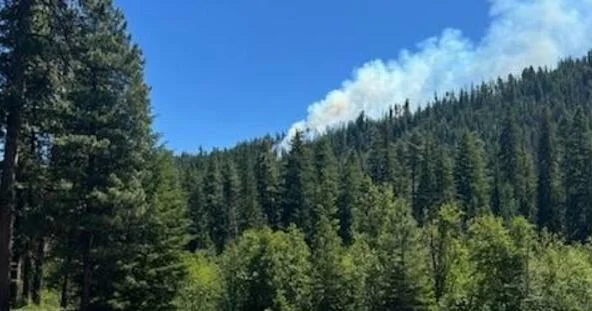
Fighter Jet Crash in Washington State Sparks Wildfire, Pilot Survives
Fighter jet crashes in Washington state – A fighter jet crashed into a mountain in Yakima County, Washington, on Saturday afternoon, igniting a wildfire that forced the evacuation of nearby campers, according to local authorities. The incident occurred at approximately noon near Rimrock Lake, a serene spot in the state’s eastern region known for its scenic trails and recreational opportunities. The crash, which involved an F/A-18 Hornet, resulted in a fire that quickly spread through the forested area, prompting emergency crews to mobilize swiftly.
Pilot Survives with Minor Injuries
The pilot, whose identity has not been officially released, managed to eject from the aircraft safely and was taken to a local hospital with minor injuries, the Yakima County Sheriff’s Office reported. While the exact nature of the injuries remains under review, officials confirmed that the individual is expected to recover fully. The ejection sequence, a critical safety measure, was executed without complications, highlighting the pilot’s quick thinking amid the sudden disaster.
“The pilot experienced a non-fatal aviation mishap while conducting routine training approximately 55 miles southeast of Seattle, Washington,” stated the U.S. Marine Corps in a formal release. This description aligns with the account provided by local authorities, who emphasized that the crash occurred during a standard flight operation, underscoring the unexpected nature of the incident.
Local firefighters and aerial units, including helicopters, were deployed to contain the blaze, which has since been described as a controlled but active fire. The Naches Fire Department, alongside personnel from the Okanogan-Wenatchee National Forest, is leading the suppression efforts. Firefighters reported that the wildfire is currently being managed with the assistance of at least one engine from the U.S. Forest Service’s regional crew. The coordination between agencies has been praised for its efficiency, though the full extent of the fire’s spread remains unclear.
Marine Corps Aircraft and Training Context
The crashed jet, an F/A-18 Hornet, is part of Marine Aircraft Group 11, a unit under the 3rd Marine Aircraft Wing. Based at Marine Corps Air Station Miramar in San Diego, California, this group is responsible for a variety of missions, including air superiority and combat readiness exercises. The aircraft’s location during the crash—approximately 55 miles from Seattle—places it in a region where such training is common, given the open terrain and favorable weather conditions.
Marine Corps officials noted that the incident occurred during a routine training session, which typically involves low-risk maneuvers and familiar airspace. However, the sudden crash has raised questions about the circumstances leading to the mishap. Investigators are examining factors such as mechanical failure, pilot error, or environmental conditions, though no definitive conclusions have been drawn yet.
“While the cause of the crash is under investigation, the focus remains on ensuring the safety of personnel and protecting the surrounding environment,” said a spokesperson for the Marine Corps. This statement reflects the dual priorities of the incident response: securing the pilot’s well-being and mitigating potential damage to the area.
The crash site, near Rimrock Lake, is located in a remote area with limited access, which posed challenges for emergency responders. Despite this, helicopters and ground crews were able to reach the location within hours, deploying equipment and personnel to combat the fire. The terrain’s ruggedness also contributed to the difficulty of containing the blaze, as it allowed the flames to spread rapidly through dry vegetation.
Residents in the vicinity of the crash reported hearing a loud explosion before seeing the plane go down. “It was like a thunderclap,” said one eyewitness, who described the scene as chaotic but controlled. Campers at the lake were among the first to evacuate, with some expressing relief that the fire was contained quickly. “We didn’t know how bad it could get,” another camper noted, highlighting the uncertainty that followed the incident.
Environmental and Community Impact
The wildfire, though not yet fully contained, has been reported to cover an area that could reach several acres. Environmental experts are monitoring the situation to assess potential damage to local ecosystems, particularly the forests and wildlife habitats in the region. The Okanogan-Wenatchee National Forest, a critical part of Washington’s natural landscape, has been a focal point for firefighting efforts, with crews working to prevent the blaze from spreading further.
Authorities are also working to determine the exact cause of the crash. Initial reports suggest that the aircraft was in good condition prior to the incident, but investigators are reviewing maintenance logs and flight data to identify any contributing factors. The Marine Corps has emphasized the importance of safety protocols in such missions, though the crash serves as a reminder of the inherent risks involved in aerial operations.
Residents in the area have expressed concern about the proximity of the crash to Rimrock Lake, a popular destination for outdoor enthusiasts. “It’s a beautiful place, but now it’s a hazard,” said a local resident, reflecting the community’s mixed emotions about the event. The fire’s threat to nearby homes and infrastructure has also prompted officials to increase monitoring efforts in the region.
Ongoing Investigations and Public Response
As the investigation into the crash continues, officials are urging the public to remain vigilant and report any unusual activity near the crash site. The Yakima County Sheriff’s Office has established a temporary command center to coordinate with federal agencies and ensure a unified response. “We are working closely with the U.S. Forest Service to monitor the fire and assess its impact,” a spokesperson added.
Meanwhile, the pilot’s condition is being closely tracked by medical professionals. While the injuries are described as minor, the ejection process itself is a high-stakes maneuver that requires precise timing and coordination. The pilot’s survival has been celebrated as a positive outcome, but the incident has sparked a broader discussion about aviation safety and the preparedness of emergency response teams.
Local media outlets, including CBS affiliate KIRO-TV, have been covering the event extensively, providing real-time updates on the fire’s progress and the pilot’s recovery. The Marine Corps has also shared statements on social media, reassuring the public about the safety of their operations and the commitment to investigating the cause of the crash.
As the situation evolves, officials are hopeful that the fire will be fully extinguished by the end of the day. The incident has served as a stark reminder of the delicate balance between military operations and environmental protection in Washington state. For now, the focus remains on containing the blaze and ensuring the safety of those affected by the crash and the subsequent fire.