
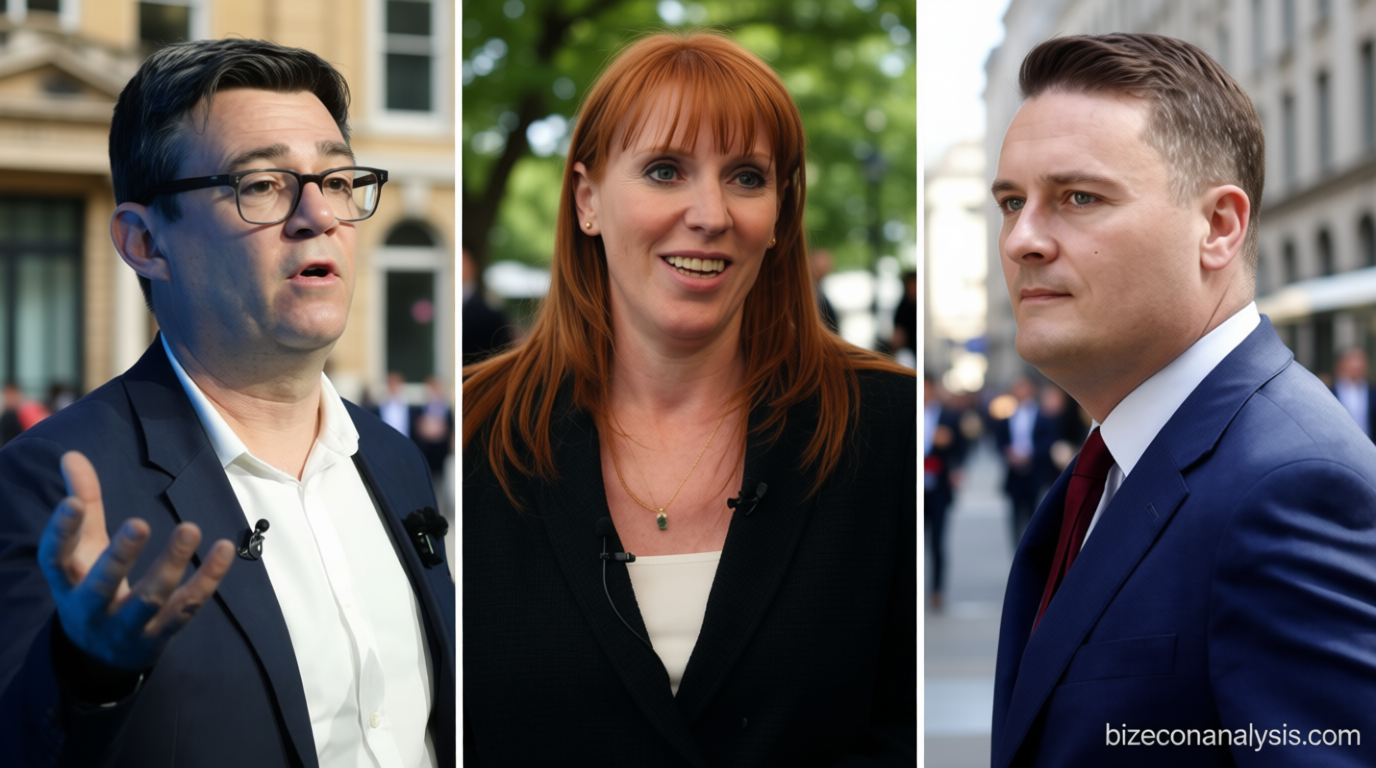
Who Could Replace Keir Starmer as UK Leader?
Who could replace Keir Starmer as Labour – As Keir Starmer faces mounting pressure to step down as Labour leader, the question of who might replace him looms large. Nearly 100 lawmakers have publicly urged his resignation, yet Starmer remains steadfast, inviting potential rivals to formally challenge his leadership. While no candidate has yet secured the 81 signatures required to trigger a contest, the political landscape is shifting, with several figures emerging as frontrunners. Their diverse backgrounds and policy priorities are shaping the debate over the party’s next direction and the possibility of a new prime minister.
Wes Streeting: A Progressive Reformer
Wes Streeting, the current health secretary, has positioned himself as a key contender in the leadership race. His progressive stance on public policy, including a push for modernizing the NHS, has earned him both admiration and scrutiny. Streeting’s career, which began with activism in university politics, reflects his commitment to systemic change. His advocacy for public-private partnerships and technological integration in healthcare has drawn criticism from traditional Labour members, yet his ability to connect with younger voters and reformists makes him a formidable player in the contest.
“The NHS must modernize or die,” Streeting once asserted, highlighting his determination to overhaul Britain’s healthcare system. This statement, made during a heated debate, underscores his reputation as a forward-thinking leader. However, his association with Tony Blair’s centrist approach and Peter Mandelson—linked to the Jeffrey Epstein scandal—has sparked concerns about his alignment with the party’s core values.
Streeting’s political journey has been defined by his ambition to bridge the gap between Labour’s traditional ideals and contemporary challenges. While his reformist policies have galvanized support among modernizers, they have also drawn accusations of drifting away from the party’s socialist roots. His potential to lead the Labour Party into a new era remains a topic of discussion, especially as Starmer’s leadership comes under increasing pressure from within.
Andy Burnham: The Pragmatic Mayor
Andy Burnham, mayor of Greater Manchester, represents a contrasting approach to leadership. With a strong grassroots following, he has positioned himself as a pragmatic alternative to Starmer. His focus on economic growth and local governance has made him a popular figure in the Labour Party, yet he has struggled to gain traction at the national level. Burnham’s recent statement about breaking free from bond market dependence—though controversial—demonstrates his willingness to challenge the status quo.
“Britain has got to get beyond this thing of being in hock to the bond markets,” Burnham declared, a remark that has since become a focal point in discussions about his fiscal vision. His leadership style, often referred to as “Manchesterism,” blends business-friendly policies with social welfare commitments. While his 15-year tenure as an MP has provided him with experience, his ability to translate local popularity into national influence remains a critical test.
Burnham’s campaign for leadership has faced obstacles, including a 2023 blockage of his parliamentary bid by the National Executive Committee. Despite this setback, his support among the general public—cited in recent polls as the highest among Labour figures—suggests he could still pose a significant challenge. Whether he can navigate the party’s internal dynamics and unify its factions will determine his viability as the next prime minister.
Other potential candidates, such as Sir Keir Starmer’s own allies, are also vying for the leadership. Their varied approaches reflect the Labour Party’s internal divisions, with some prioritizing stability and others pushing for bold reforms. The contest to replace Starmer will not only shape the party’s future but also influence the direction of British politics. As the race intensifies, the focus keyword “Who could replace Keir Starmer” will continue to dominate the discourse, signaling the uncertainty surrounding the nation’s next leader.





