
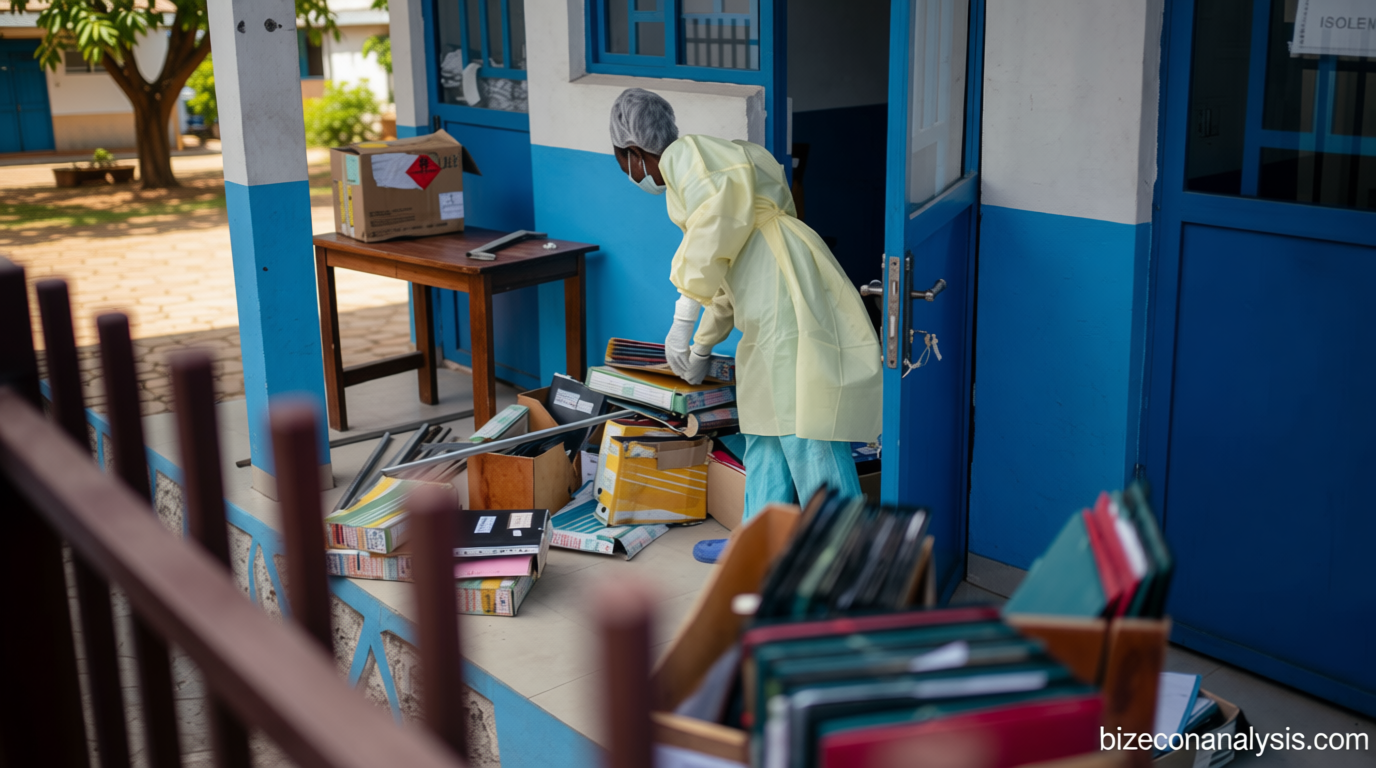
What We Know About the Latest Ebola Outbreak in DRC and Uganda
What we know about the latest developments in the Ebola crisis reveals a rapidly evolving situation that has prompted the World Health Organization (WHO) to classify the outbreak as a “public health emergency of international concern.” This designation, announced on Sunday, highlights the urgency of global action as the virus spreads across borders, threatening to escalate further. The current outbreak, linked to the Bundibugyo strain, has already claimed at least 80 suspected lives in the Democratic Republic of Congo (DRC) and Uganda, with confirmed cases reported in both nations. While the WHO has not yet declared a full pandemic emergency, the cross-border transmission underscores the need for immediate and coordinated efforts to curb the spread.
Understanding the Outbreak and Its Origins
The Bundibugyo virus, a strain of the Ebola family, has been responsible for multiple outbreaks in the region over the past decades. The latest surge in infections is centered in the remote Ituri province of the DRC, a location marked by fragile healthcare systems and ongoing political challenges. As of Saturday, health authorities reported eight confirmed cases and at least 80 suspected deaths, though precise figures may shift as testing expands. This outbreak is the third involving the Bundibugyo virus since 2007, with previous incidents in Uganda and the DRC, indicating a recurring threat to local populations.
What we know about the latest transmission patterns shows that the virus is spreading beyond traditional hotspots. In Uganda, two confirmed cases were traced back to travel from the DRC, with one fatality recorded in Kampala. The return of a Congolese man’s body to the DRC after his death in Uganda has intensified fears of the virus crossing borders. This movement underscores the interconnectedness of the two nations and the potential for the outbreak to gain momentum in new regions. The WHO’s alert aims to rally international support to address the spread before it becomes uncontainable.
Global Response and Expert Insights
“The rapid escalation of cases and deaths within a short timeframe, coupled with the virus’s spread across multiple health zones and into Uganda, signals a critical phase,” remarked Trish Newport, MSF’s emergency program manager, in a statement on Saturday. “In Ituri, where healthcare access is limited and security remains a challenge, swift intervention is vital to prevent further outbreaks.”
Medical organizations like MSF are expanding their operations in Ituri to tackle the crisis head-on. The outbreak has exposed vulnerabilities in local infrastructure, including a lack of diagnostic tools and treatment facilities. Experts warn that without rapid containment measures, the virus could exploit these gaps, leading to a larger-scale epidemic. The Bundibugyo strain, while less lethal than the Zaire variant, still poses a significant threat, with fatality rates estimated between 25% and 40%.
What we know about the latest containment strategies involves a combination of community engagement and international aid. In the DRC, efforts to educate residents about safe burial practices and hygiene protocols are underway, as these customs have historically contributed to transmission. Meanwhile, Uganda has implemented travel restrictions and increased surveillance to limit the virus’s spread. The WHO’s declaration has also prompted discussions about vaccine distribution and the need for more funding to support affected regions.
Historical Context and Future Implications
The DRC has faced 17 Ebola outbreaks since the first recorded case in 1976, with the Bundibugyo strain accounting for several of these. The current epidemic follows earlier outbreaks in the region, including a notable incident in 2012 and a prior one in Uganda between 2007 and 2008. This history suggests that the strain has a tendency to resurge, particularly in areas with limited resources and weak health systems. The latest outbreak has raised questions about long-term preparedness and the effectiveness of current prevention measures.
As the situation unfolds, health officials are closely monitoring the potential for the virus to reach new regions. Countries bordering the DRC, such as Rwanda and Uganda, are at heightened risk due to frequent cross-border interactions. The WHO’s global health emergency status is intended to mobilize resources and expertise to address the outbreak. However, challenges like delayed diagnosis, community movement, and environmental persistence of the virus remain obstacles to containment. The next steps will determine whether this is a contained crisis or a larger global threat.





