
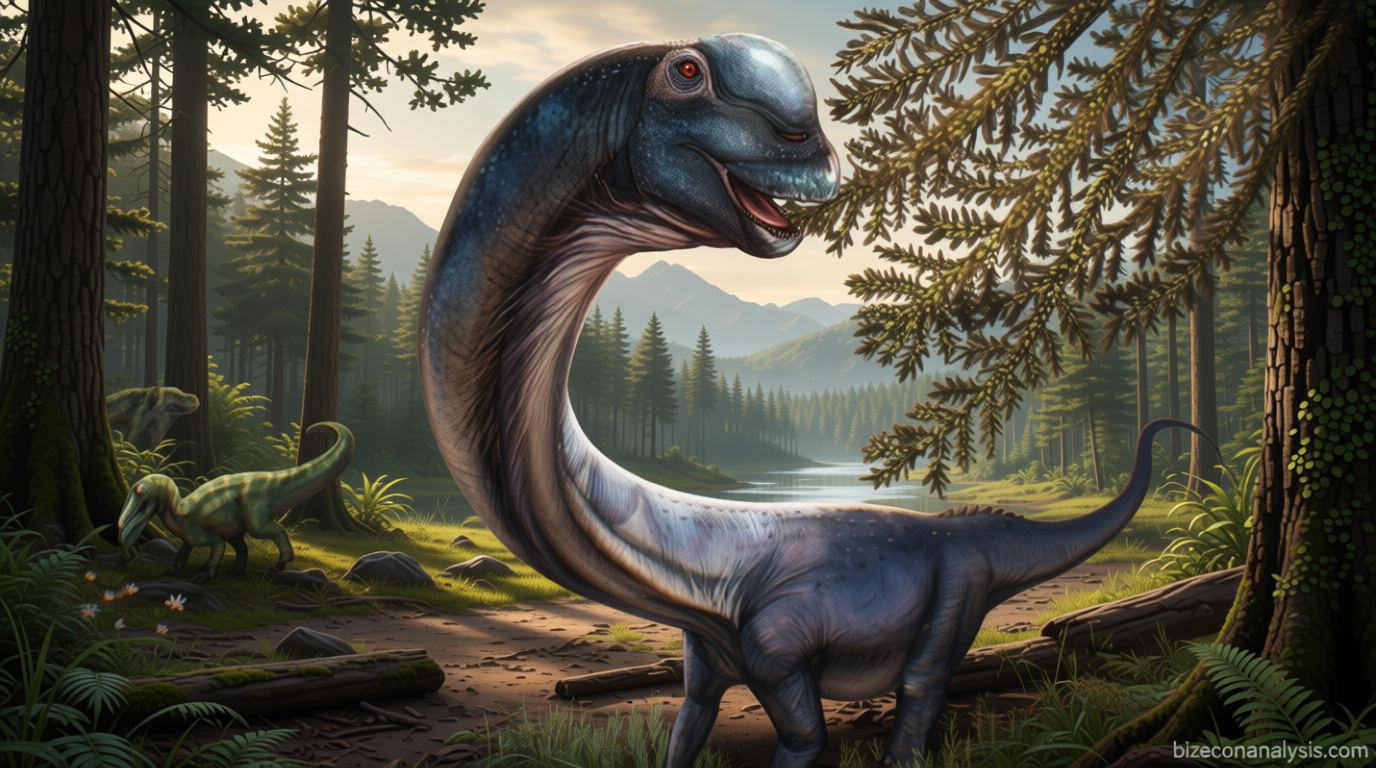
New Species of Giant Dinosaur Identified from Thailand Remains
New species of giant dinosaur identified – A decade ago, a collection of bones unearthed near a pond in Thailand sparked a groundbreaking discovery that has now introduced a previously unknown dinosaur to the scientific community. Researchers from Thailand and the UK have classified the reptile as a new species, Nagatitan chaiyaphumensis, marking it as the largest dinosaur ever found in Southeast Asia. Its colossal dimensions, including a length of approximately 27 meters and an estimated weight of 27 metric tons, place it among the titanic creatures that once roamed the Earth.
Name and Cultural Roots
The name Nagatitan chaiyaphumensis weaves together mythological and geographical elements. The term “naga” derives from South and Southeast Asian folklore, where these serpents are often depicted as powerful, water-associated beings. The researchers chose this name to reflect both the creature’s immense size and its connection to the location of its discovery—a communal pond in northeastern Thailand. “The choice of ‘naga’ felt fitting,” explained Thitiwoot Sethapanichsakul, a PhD student at University College London and lead author of the study.
“The Nagas are also often associated with water, and considering the dinosaur was found on the side of a communal pond, it just seemed very apt to have a serpent giant be the name.”
The suffix “chaiyaphumensis” honors the Thai province where the fossils were unearthed, adding a regional touch to the scientific nomenclature.
Discovery and Fossil Analysis
The initial discovery of the dinosaur’s remains occurred in 2016 when a local resident stumbled upon a leg bone near a communal pond during the dry season. Over the following years, fieldwork from 2016 to 2019 uncovered additional skeletal fragments, and further excavations in 2024 allowed for a more comprehensive analysis. The fossils, including parts of the leg bones, spine, ribs, and pelvis, were meticulously scanned using 3D technology to reconstruct the dinosaur’s anatomy. This method enabled scientists to identify unique features that set Nagatitan apart from other sauropods.
Sauropods, the group to which Nagatitan belongs, are renowned for their towering stature and herbivorous diets. These creatures, characterized by their elongated necks, lengthy tails, and robust legs, dominated terrestrial ecosystems for millions of years. Nagatitan joins this lineage, with its sheer size rivaling some of the most famous sauropods like Diplodocus and Brontosaurus. However, Sethapanichsakul noted that this new species is roughly twice as large as other known sauropods in the region. “We don’t have a lot of specimens that are of that scale in Thailand,” he said.
“When I first laid eyes on the humerus, it was taller than me, and that was quite surprising.”
The front leg bone, measuring 1.78 meters in length, was a key indicator of the dinosaur’s massive proportions.
Historical Context and Habitat
The Nagatitan is believed to have thrived during the late Early Cretaceous period, roughly 120 to 100 million years ago. This era was marked by a warm, arid climate, which likely shaped the environment in which the dinosaur lived. The site of discovery, a meandering river system, would have been home to a diverse array of creatures, including freshwater fish, sharks, and crocodiles. Sethapanichsakul described the area as a dynamic ecosystem, teeming with life. “It would have lived alongside smaller, medium-sized plant-eating dinosaurs, such as Iguanodons, and even early forms of Ceratopsians,” he noted. These companions, though less massive, would have shared the same ancient landscapes.
The location’s significance extends beyond its geological features. Sethapanichsakul emphasized that Thailand’s sedimentary rock layers from the Mesozoic Era—spanning 252 to 66 million years—have preserved a wealth of dinosaur fossils. Unlike other regions where erosion has obscured many remains, the relatively dry conditions in this area have helped protect the bones. “These rocks are exposed to less rain and vegetation, which could end up eroding or destroying those bones,” he said. This preservation has allowed for a detailed study of the dinosaur’s anatomy and its role in prehistoric ecosystems.
Scientific Impact and Future Research
The identification of Nagatitan not only expands our understanding of sauropod diversity but also highlights Thailand’s potential as a hotspot for paleontological finds. Sethapanichsakul, whose home country is Thailand, expressed personal fulfillment in naming the dinosaur after his homeland. “It fulfills a kind of childhood promise,” he said.
“That, yeah, I’m going to name a dinosaur one day. And I want it to be from Thailand.”
His continued work on Southeast Asian sauropods underscores the region’s growing importance in global dinosaur research.
A research center has been established at the discovery site, ensuring ongoing study of the fossils and their implications. The team, comprising experts from the University College London, Thailand’s Department of Mineral Resources, and institutions like Mahasarakham University and Suranaree University of Technology, aims to uncover more about the dinosaur’s biology and the broader prehistoric environment. “This find has opened new doors for understanding the evolutionary history of sauropods in Asia,” Sethapanichsakul remarked. The work also reflects a broader trend in paleontology, where collaborative efforts between international scientists and local researchers are yielding remarkable insights.
Exhibiting the Past in Bangkok
Public engagement with the discovery has been further enhanced by the display of a life-sized reconstruction of Nagatitan chaiyaphumensis at the Thainosaur Museum in Bangkok. This exhibit offers visitors a tangible glimpse into the dinosaur’s existence, illustrating its massive frame and the unique features that set it apart. The museum’s efforts to showcase the find highlight the intersection of science and cultural heritage, bridging the ancient past with modern Thailand.
The identification of Nagatitan has also added to the ongoing debate about the diversity of dinosaurs in Asia. While some regions are well-known for their fossil records, Thailand’s contributions have been less recognized until now. Sethapanichsakul’s team believes the country holds some of the highest dinosaur fossil diversity in the continent, with its sedimentary layers providing a rich repository of ancient life. The new species underscores this potential, offering a glimpse into a world where giants once ruled the land and water coexisted in harmony.
As the study continues to gain traction, scientists are eager to explore further implications. The presence of Nagatitan challenges existing assumptions about the distribution and evolution of sauropods, suggesting that Asia may have harbored a broader range of large herbivores than previously thought. The combination of mythological inspiration and scientific rigor in the dinosaur’s name reflects the dual legacy of the region’s natural history and cultural imagination. With more research and excavations planned, the future promises deeper revelations about this remarkable creature and its place in the prehistoric world.





