
Meet ‘the Crab’: Why the US keeps talking with Raul Castro’s bodyguard grandson
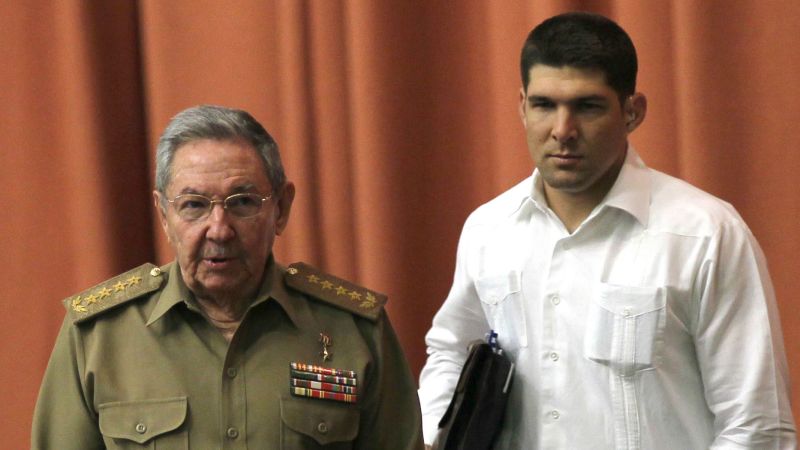
Meet the Crab – In 2016, during a state visit to Paris, Raúl Castro was celebrated by French officials as he walked the red carpet toward a government palace. But the moment quickly turned into a comedic spectacle when photographers, frustrated by the lack of a clear shot, began shouting at the Cuban official trailing the president. “Please! Bodyguard!” they cried, their frustration directed at the man who had just stepped into the frame. The incident, though minor, became a talking point in Cuba’s state media and a source of humor for French late-night comedians. What made this moment unusual was not the photographers’ antics, but the identity of the bodyguard in question—also a Castro.
The Unlikely Diplomat
Raúl Guillermo Rodríguez Castro, the grandson of Cuba’s former leader, has long operated in the background, serving both as a bodyguard and a key advisor to his grandfather. For over a decade, he has been a constant presence during Raúl Castro’s public appearances, often whispering names of officials into his ear during receptions or alerting him to the arrival of foreign journalists. Despite his role in safeguarding the nation’s most powerful figure, his name rarely appears in Cuba’s state-run press, which tightly controls narratives about the Castro family. Yet, as tensions between the United States and Cuba reach a boiling point, Rodríguez Castro is stepping into the spotlight as a surprising intermediary with the Trump administration.
The younger Castro, a colonel in the Interior Ministry, has recently emerged from his grandfather’s shadow to engage in high-level discussions with U.S. officials. On Thursday,
“He wants positive changes for Cubans,”
said Sandro Castro, his second cousin, during an interview in March. The quote underscores the generational shift in the Castro family’s approach to U.S. relations. While Raúl Guillermo remains a figure of quiet authority, his cousin Sandro Castro has become a vocal advocate for economic reform, often leveraging his social media presence to promote a deal with the Trump administration. This dynamic creates an interesting contrast: one cousin is a military man, the other a media-savvy influencer.
The Crab and the Castle
Rodríguez Castro’s moniker, “El Cangrejo” or “the Crab,” originated from a unique physical trait—he was born with a sixth finger on one hand. This quirk, combined with his familial ties, has given him a distinct status within Cuba’s elite circles. While his grandfather, Raúl Castro, has been a central figure in Cuban politics for decades, the younger Castro’s role is less defined, yet no less impactful. He is often seen in Havana’s upscale dining spots, driving a new SUV with his own security detail, and enjoying the rare luxury of private yachts and discotheques—amenities most Cubans can only dream of.
During his time in the spotlight, Rodríguez Castro has maintained a steady presence alongside his grandfather, from meetings with Russian President Vladimir Putin to encounters with former U.S. President Barack Obama. His influence extends beyond security, as he is regarded by some as a gatekeeper to the Castro family’s inner circle. “He has his grandfather’s confidence,” Sandro Castro explained. “He has risked his life for him. That’s why they have given so much trust.” This trust, however, is not without its complexities. While Rodríguez Castro’s family connection grants him access to resources typically reserved for the highest echelons of power, his cousin Sandro Castro believes his cousin shares his desire for change, albeit in a different capacity.
The younger Castro, though not as visible in public life as his cousin, is said to enjoy the same privileges. “He’s cool,” Sandro Castro remarked. “He is not a communist, either. He wants things to open up, too.” This perspective highlights the generational divide within the Castro family, where traditional political roles are being challenged by a more modern, economically oriented outlook. Rodríguez Castro’s role in the Trump administration’s talks with Cuba is emblematic of this shift. As the U.S. seeks to revitalize its economic ties with the island, the Castro family’s grip on power may be softened by the younger generation’s willingness to engage with American interests.
A Family Legacy and a New Chapter
Rodríguez Castro’s significance is further amplified by his lineage. He is the son of Raúl Castro’s daughter, Deborah, and Luis Alberto López-Calleja, a late general who once headed GAESA, a military conglomerate overseeing Havana’s sprawling economic empire. López-Calleja’s influence, and his son’s connection to it, has positioned Rodríguez Castro as a pivotal figure in Cuba’s transition from a rigid socialist system to one that is slowly embracing market reforms. His participation in meetings with U.S. officials, including CIA chief John Ratcliffe in Havana, signals a broader strategy to navigate the complexities of international diplomacy.
While the Castro family has long been associated with centralized control, Rodríguez Castro’s actions suggest a more flexible approach. His cousin Sandro Castro, who runs a nightclub and has built a reputation as a controversy-seeking influencer, views their differing paths as complementary. “Raulito has his life and I have mine,” Sandro said, emphasizing the independence each cousin has carved out. Yet, the shared family legacy remains a constant, with Rodríguez Castro’s role as a bodyguard and advisor reflecting the ongoing influence of the Castro dynasty.
As negotiations with the Trump administration continue, the potential for Rodríguez Castro to benefit from U.S. investment in Cuba’s economy is growing. His position as a trusted intermediary positions him to play a key role in shaping the island’s future. Whether this marks the beginning of a new era for the Castro family or a calculated maneuver to consolidate power remains to be seen. What is certain is that “the Crab,” with his blend of tradition and modernity, is no longer just a figure of the past—his actions may redefine the present.
In a country where the state press rarely acknowledges the younger Castro, his visibility in international talks is a quiet but significant shift. His presence at the table with U.S. officials, coupled with his family’s historical influence, presents a unique opportunity for Cuba to balance its socialist roots with the promise of capitalist revival. While his grandfather, now officially retired, continues to be a symbol of revolutionary resilience, Rodríguez Castro’s role as an emissary suggests a more pragmatic future for the Castro family—one where power is not just held, but shared and adapted.
As the world watches the evolving relationship between the U.S. and Cuba, the younger Castro’s journey from shadow to stage is a testament to the adaptability of political dynasties. His nickname, once a curiosity, now carries the weight of a symbol for a new generation of Cubans who may see his family’s legacy as both a burden and a bridge to a more open society. Whether this transition will lead to lasting change or merely a strategic realignment remains uncertain, but one thing is clear: “the Crab” is now a name that resonates beyond the walls of Havana’s elite circles.





