
Can hackers pull your fingerprints from photos on social media? Experts explain.
Can Hackers Extract Fingerprints from Social Media Photos? Experts Weigh In
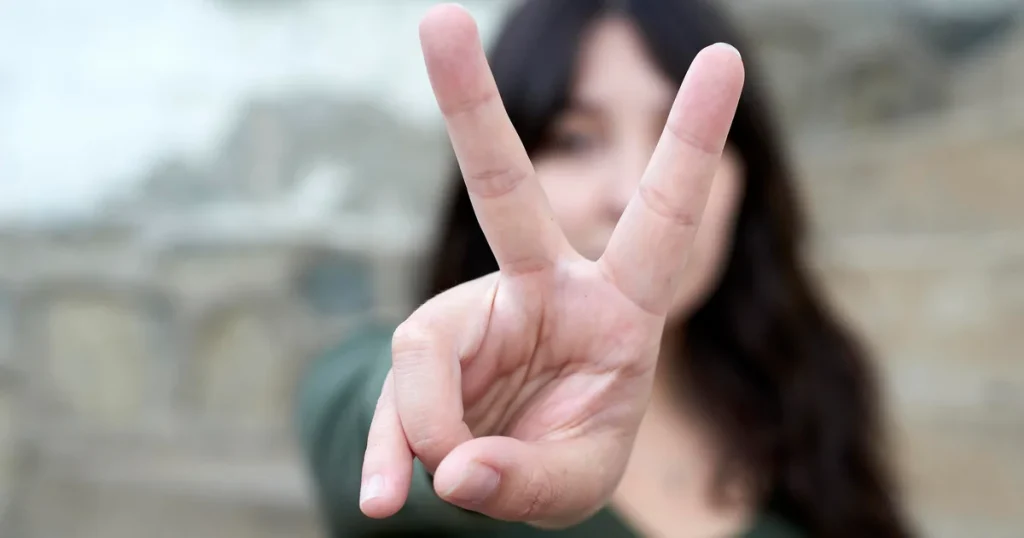
Can hackers pull your fingerprints – Recent concerns about digital security have taken a new turn, fueled by claims that hackers can retrieve fingerprints from online photos. A viral trend involving peace sign selfies has sparked fears, with some users convinced that their biometric data is vulnerable to theft through high-resolution images shared on platforms like Instagram. While the idea may sound alarming, cybersecurity experts caution that the risk remains relatively low for everyday users.
The Peace Sign Selfie Phenomenon
Stories circulating online suggest that a simple gesture—a peace sign posed in front of a camera—could expose someone’s fingerprints to malicious actors. These claims gained traction after a segment on a Chinese television show demonstrated how close-up photos of hands could be used to digitally reconstruct fingerprint patterns. The demonstration, shared widely on social media, led to a surge in public anxiety, with some users accusing artificial intelligence of posing an existential threat to privacy.
“Just end AI already!” wrote one Instagram user, whose comment received over 16,000 likes. “It’s clearly a threat to humanity and not here to help regular people.”
Many social media users have since adjusted their habits, opting for more cautious selfie-taking practices. Some have even suggested altering their posture or positioning to obscure fingerprints. However, experts argue that such measures may be overkill for the average person. “The risk is minimal unless you’re actively sharing high-quality images with known threats,” said Justin Cappos, a cybersecurity professor at New York University and researcher for companies such as Google and Palantir.
How the Extraction Process Works
According to Cappos, the process involves analyzing photos to identify unique fingerprint ridges and valleys. Advanced AI algorithms can then use this data to create a digital replica, which could potentially bypass fingerprint scanners. While the technology exists, its practical application depends on factors like image resolution, lighting, and the distance between the subject and the camera. “It’s not just about having a photo; it’s about capturing the right details,” he explained.
The Chinese TV segment highlighted this method, showing how a peace sign selfie taken within a few feet of the camera could yield enough data for a cybercriminal to exploit. However, the example has been amplified by social media, leading to widespread speculation about its real-world implications. “This sounds like the stuff out of spy novels or ‘Mission Impossible,’” said Vyas Sekar, an electrical and computer engineering professor at Carnegie Mellon University. “In theory, it’s possible, especially if people are posting high-resolution images.”
Historical Precedents and Real-World Examples
Although the peace sign selfie trend is recent, the concept of extracting fingerprints from photos isn’t new. In 2014, a hacker reportedly cloned the fingerprint of European Commission President Ursula von der Leyen using close-up photographs taken at a press event. The same year, researchers at the cryptocurrency exchange Kraken successfully recreated a fingerprint from a photo of a hand marked on a surface, using tools like Photoshop, a printer, and glue.
These cases demonstrate that biometric data can be compromised through imaging techniques. Unlike passwords, which can be reset, fingerprints are permanent. Once stolen, they remain usable indefinitely, making them a prized target for cybercriminals. However, experts emphasize that the extraction process is complex and requires specific conditions to work effectively.
“You have a better chance of being hit by a car tomorrow than this happening to you in your lifetime,” said Cappos, who has studied the intersection of AI and cybersecurity for years.
Why the Average User Isn’t at Risk
Despite the hype, most people don’t need to worry about their fingerprints being stolen from social media. Cappos noted that the probability of such an event occurring is low, especially when compared to more common threats like phishing scams. “For most individuals, the likelihood of being targeted through an email with malware or a fake website is far higher,” he said.
Additionally, the process of using a stolen fingerprint to access accounts requires access to the physical scanner. Whether it’s a laptop or a biometric pad at a bank, hackers need a device that matches the specific fingerprint database. This limitation makes the threat more manageable for security systems, which are designed to detect anomalies and prevent unauthorized access.
The Role of Determination in Cyberattacks
Vyas Sekar added that cybercriminals must be “fairly determined” to exploit this vulnerability. “They’re likely to target high-value individuals, such as those with access to secure facilities,” he said. This focus on valuable targets suggests that the issue isn’t an immediate crisis but rather a potential future risk.
While the technology is advancing, experts believe it’s still in its early stages. “I don’t think cyber criminals have started to weaponize it at any scale,” Cappos explained. He acknowledged that the landscape could shift in the coming years, but for now, the threat remains theoretical. “Ten years from now, who knows if the landscape has changed? But definitely, where we are today, this isn’t going to happen.”
Broader Implications for Digital Security
The debate over fingerprint extraction from photos raises broader questions about the security of biometric data. As more devices integrate fingerprint scanners, the risk of such vulnerabilities grows. However, this also highlights the importance of layered security measures. “Fingerprint authentication is a convenient tool, but it’s not foolproof,” said Sekar. “Combining it with other methods, like PINs or passwords, reduces the risk of unauthorized access.”
Furthermore, the incident underscores how misinformation can spread quickly online. The peace sign selfie example, though technically valid, has been magnified by social media platforms, creating a sense of urgency where none might exist. “The media plays a key role in amplifying these fears,” Cappos said. “But it’s important to separate the sensational from the practical.”
In conclusion, while the possibility of extracting fingerprints from photos is a valid concern, it’s unlikely to become a widespread threat in the near term. Cybersecurity experts stress that the average user should remain vigilant but not overly panicked. “The technology exists, but it’s not a one-size-fits-all solution,” Sekar said. “For now, the risk is manageable, and the focus should be on understanding how to protect ourselves from more immediate dangers.”
Looking Ahead: Future Risks and Mitigation Strategies
As AI and imaging technology continue to evolve, the risk of fingerprint theft could increase. Experts warn that future advancements may make the extraction process more efficient, potentially leading to larger-scale cyberattacks. However, this also means that security systems will need to adapt. “We’re already seeing improvements in biometric authentication, such as multi-factor verification and dynamic fingerprint scanning,” said Cappos. “These innovations will make it harder for hackers to exploit stolen data.”
For now, the peace sign selfie remains a cautionary tale rather than a headline-worthy threat. It serves as a reminder of the delicate balance between convenience and security in the digital age. “While it’s possible to extract fingerprints from photos, the real challenge lies in using them effectively,” Sekar said. “Until the technology becomes more accessible, the average person can rest assured that their data is safe from such attacks.”