
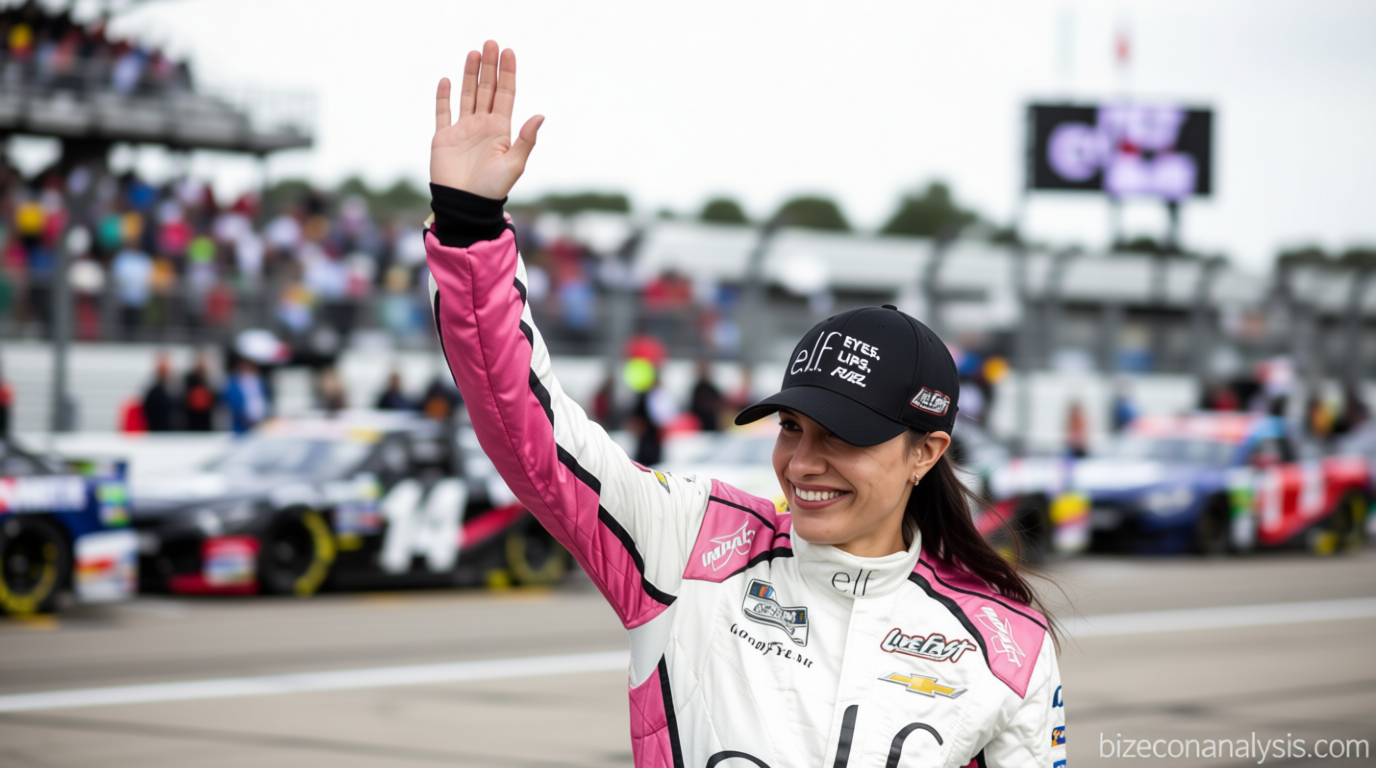
Katherine Legge aims to make history by racing the Indy 500 and Coca-Cola ‘double.’ She’s just looking forward to bedtime
Katherine Legge aims to make history – Katherine Legge, a motorsport racer, is embarking on a remarkable endeavor that tests the limits of endurance and strategy. The Memorial Day “double” – a grueling feat combining the Indianapolis 500 and the Coca-Cola 600 – is a challenge she’s prepared to tackle head-on. As the sixth driver to attempt this dual race and the first woman, her mission is both historic and personal. The Indianapolis 500, a 500-mile race known for its speed and intensity, will be followed by the Coca-Cola 600, a 600-mile endurance test on the NASCAR circuit. She admits the magnitude of the task has yet to fully sink in, even as she anticipates the physical and mental strain of the day.
A Test of Endurance and Precision
The double demands more than just raw skill. It’s a race against time, requiring seamless transitions between two vastly different motorsport disciplines. Legge described the effort as akin to maintaining high-speed focus for an entire day, likening it to “driving from New York to Daytona Beach at an average of 200 miles an hour.” The comparison underscores the relentless pace of the challenge, where a single lapse in concentration could mean the difference between success and failure.
“Being focused for a three-to-four-hour IndyCar race then a five-hour NASCAR race, it’s the same as driving from New York to Daytona Beach pretty much at, gosh, an average of 200 miles an hour,” she explained. “You cannot lose focus for a second of any of that. I don’t think anybody can comprehend that.”
When asked about her preparation for the unprecedented event, Legge responded with a touch of humor, joking, “tequila.” The mix of physical stamina and logistical coordination makes the double a unique puzzle. She noted that even during interviews this week, her thoughts have drifted to the next phase of the day, struggling to keep both the race and her own mental state in order.
“I was thinking about what I’m going to do with a hybrid strategy at the same time as telling people about how I’m going to do the double. I don’t know if my brain’s gonna be fit for anything next week,” she said.
Legge’s approach highlights the psychological and physical demands of the double. She admitted to being a “crazy person,” acknowledging the risk of getting swept up in the excitement without fully grasping the intricate details. “It’s this weird disconnect, right? Where you’re like, ‘That’s so cool.’ And conceptually, you know exactly what’s involved, but it doesn’t sink in,” she reflected.
The logistics of the event are as complex as the races themselves. A helicopter will transport her from the Indianapolis Motor Speedway to an airstrip, followed by a private jet flight to North Carolina. Upon arrival, another helicopter ride will take her to the Charlotte Motor Speedway infield, and a shuttle will guide her to the pit lane. Every step of this journey hinges on timing, with no margin for error. If delays occur at the Brickyard, the entire plan could unravel.
A Legacy of Challenges
The Memorial Day double has a storied history, with notable figures having attempted it over the years. John Andretti was the first to do so in 1994, finishing 10th in the Indy 500 before engine failure hindered his progress in Charlotte. Robby Gordon has attempted the double five times, while Kyle Larson has done it twice and Kurt Busch once. Tony Stewart, however, stands out as the only driver to complete all 1,100 miles of the double, achieving this in 1999 and 2001.
“Having taken on two liters of fluid during the flight, Stewart landed 55 minutes later, changed his uniform and boarded the second helicopter. Just twenty-five minutes after landing at the track, he was racing to an incredible third-placed finish,” she said, recalling his 2001 campaign.
Stewart’s 2001 race exemplifies the razor-thin margins that define the double. He started the Indy 500 at 11 a.m. ET, finished in sixth place by 2:30 p.m., and was airborne within 15 minutes. A mere 23 minutes later, he was wheels up on his jet, illustrating the efficiency required to navigate the event. Despite the physical toll, Stewart later remarked, “You’re very, very content to lay your head on a pillow. And even when you do that, it still feels like it’s not stopped moving yet.”
Legge plans to draw from Stewart’s experience, as well as insights from Kyle Larson and his team, whom she described as “invaluable” in their guidance. She’s also considering the necessity of a hydration plan, with an IV drip on the plane to combat the extreme physical demands. As for fuel, she’s contemplating a menu of gels, gummies, bananas, and baby food to sustain her energy throughout the day.
Shifting Gears and Defying Labels
The transition from IndyCar to NASCAR is no small feat. Legge emphasized the mental shift required, noting that the two disciplines are as different as their vehicles. “You have to switch gears – pun intended – from IndyCar, which is fast; 230 miles an hour, lots of downforce, completely different beast, to driving one of those big old heavy stock cars which moves around a lot and obviously different set of rules, different drivers, different teams,” she explained.
As one of the most prominent women in motorsport, Legge has always felt the weight of being a trailblazer. Though she’s the only woman racing in Indianapolis this weekend, she prefers to be recognized for her ability rather than her gender. “I don’t like the female driver label, because it should,” she said, leaving the sentence unfinished but clearly signaling her desire to be judged solely on her performance.
Her preparation reflects both determination and a touch of humor, blending the rigorous with the relatable. While the technical aspects of the double are daunting, she’s also focused on the simple joys, like the anticipation of bedtime. “I’m just looking forward to bedtime,” she joked, highlighting the human side of a challenge that pushes the boundaries of what’s possible in racing.
The Memorial Day double is more than a race; it’s a milestone in motorsport history. For Legge, it’s an opportunity to redefine expectations and prove that speed, strategy, and resilience can transcend traditional labels. As the event approaches, her focus remains on the task at hand, even as she contemplates the toll it will take. “What am I going to eat when I get out of the Indy car?” she mused, hinting at the delicate balance between preparation and performance. With every detail meticulously planned, she’s ready to make her mark on the track – and the annals of motorsport.





