
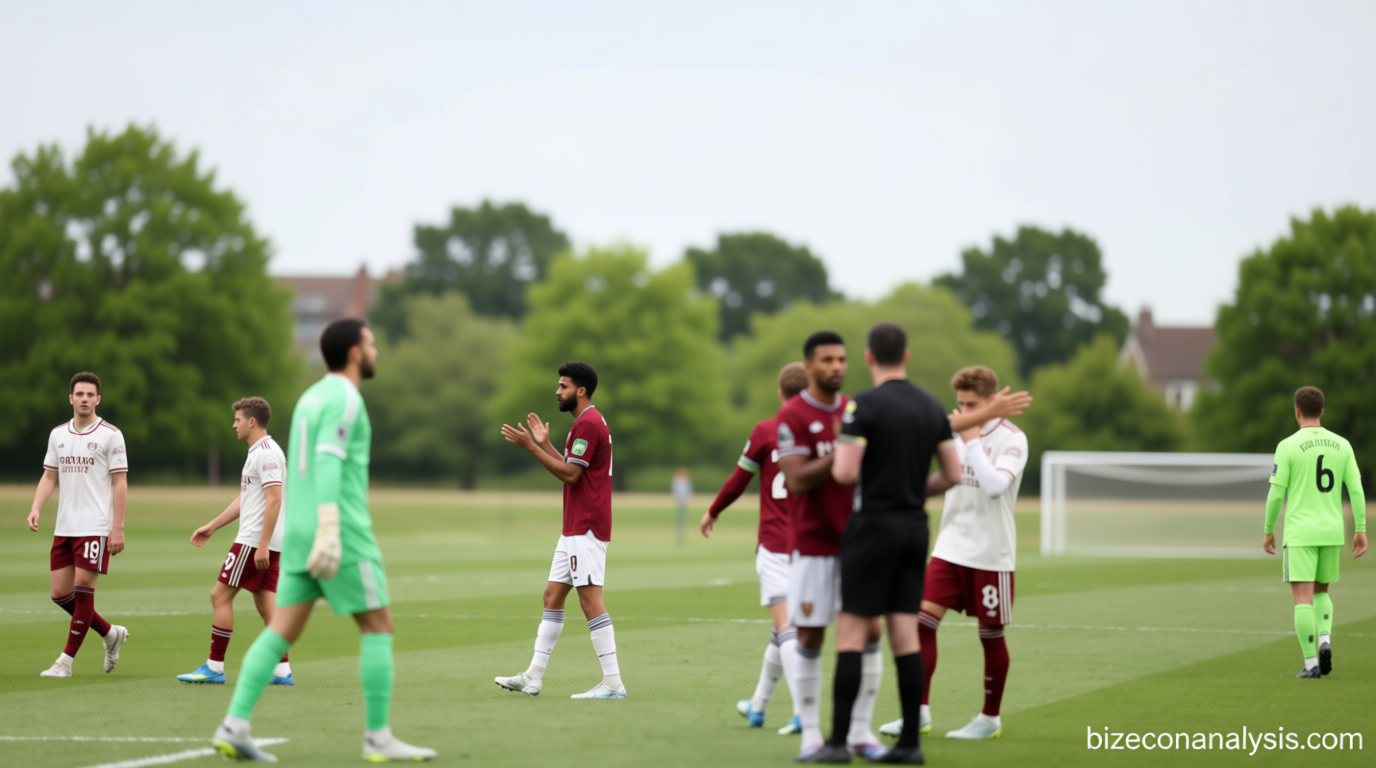
Explained: The four-minute wait that could decide the Premier League title race
Explained – The Premier League title race took a dramatic turn during Arsenal’s encounter with West Ham, as a crucial VAR decision in the final moments of the match altered the course of the season. For over four minutes, the tension at London Stadium reached a fever pitch, with fans and analysts around the world watching intently as the outcome hinged on a single, controversial call. The decision, which came after 96 minutes of play, not only decided the fate of a potential title but also sparked intense debate about the role of technology in football.
Setting the Scene
Arsenal and West Ham have long been fierce rivals, their matches often charged with historical significance and competitive intensity. This particular clash, occurring just one month before the 2026 World Cup, was no different. The stakes were high, with Arsenal needing a win to maintain its charge toward a first league title in 22 years, while West Ham sought a result to keep its Premier League survival hopes alive. The emotional weight of the game was palpable, making the final moments all the more critical.
The Dramatic Turn
Arsenal’s goal in the 83rd minute seemed to secure their position at the top of the table, putting them within five points of the title. With just two games left in the season, the Gunners’ victory would have solidified their position as champions. However, the drama intensified in added time when West Ham equalized through a goal that appeared to be a textbook example of a rebound after a missed clearance. Callum Wilson’s strike, which came at 94 minutes and 18 seconds, was met with cheers from West Ham supporters, but Arsenal’s fans were left holding their breath.
Referee Chris Kavanagh’s quick decision to award the goal—just two seconds after the ball crossed the line—was a pivotal moment. The 266-second wait that followed was filled with anticipation, as the VAR system stepped in to review the incident. This moment marked a turning point, as the entire narrative of the match shifted depending on the outcome of the review. The VAR’s involvement added an extra layer of uncertainty, with fans around the world glued to replays to see if the goal would stand.
The VAR Controversy
The Video Assistant Referee (VAR) was activated, signaling a potential reversal of the decision. Viewers immediately noticed that the system was checking for a foul on Arsenal goalkeeper David Raya. In the corner buildup, Raya had attempted to catch the ball but was seemingly obstructed by West Ham defender Pablo. The replays, looping endlessly on television screens, revealed the exact moment of the infringement, leading to a heated debate over whether the goal should have been disallowed.
As the clock ticked toward 97 minutes, the tension reached its peak. Kavanagh’s decision to consult the VAR screen was a clear indication that the on-field call might be overturned. After a brief review and a discussion with VAR official Darren England, the referee returned to the pitch and announced the final verdict. “After review, West Ham number 19 commits a foul on the goalkeeper. Final decision is a direct free kick,” he declared, sending the stadium into a frenzy. The goal was disallowed, and Arsenal’s lead was preserved, shifting the title race in their favor.
Reactions and Reflections
The result sent Arsenal five points clear in the standings, securing their place at the top of the table. West Ham, on the other hand, remained in the relegation zone, their survival hopes now in jeopardy. The decision was met with mixed reactions, with Arsenal’s supporters celebrating the reversal as a moment of justice, while West Ham players and fans expressed frustration over the timing and impact of the VAR review.
“I think that’s the biggest moment in VAR history in the Premier League,” said Sky Sports pundit and former Manchester United star Gary Neville on his podcast. “There are a lot who aren’t fans of VAR, and maybe rightly so, but tonight, it could have just made Arsenal champions. And it could have got a decision right, that wouldn’t have been right.”
Neville’s analysis highlighted the duality of VAR’s role: both a tool for fairness and a source of controversy. For Arsenal, the decision was a relief, ensuring their title ambitions remained intact. For West Ham, it was a bitter setback, as the goal that might have salvaged their season was suddenly negated. The club’s captain, Jarrod Bowen, acknowledged the frustration but called for consistency in VAR decisions. “People are going to think I sound bitter but I’m just being honest,” he said. “If you look at something for long enough you’ll find something to give and I think that’s what happened in the end.”
The four-minute wait became a symbol of the high-stakes environment in modern football, where technology can redefine the outcome of a match in an instant. For Arsenal, it was a reminder of their resilience, as they held their composure under pressure and maintained their lead. For West Ham, it underscored the challenges of competing at the top of the league, especially when the margin for error is slim. The VAR decision, though brief, carried immense weight, reflecting the growing importance of technology in decision-making processes.
Arsenal manager Mikel Arteta praised the officials for their swift and accurate review, calling it “very brave” during his post-match press conference. The decision not only preserved the Gunners’ title hopes but also demonstrated how VAR can correct errors in real time, even in the final moments of a game. However, the controversy surrounding the call also sparked a broader discussion about the balance between technology and human judgment in football.
As the dust settled, the match served as a microcosm of the Premier League’s current state—a league where every goal, every missed chance, and every VAR intervention can shape the final standings. The four-minute drama at London Stadium became a defining moment of the season, reminding fans of the unpredictable nature of football and the profound impact of technology on the game’s outcome.





