
Telescope captures most detailed image yet of Milky Way’s heart: “Cosmic magnifying glass”
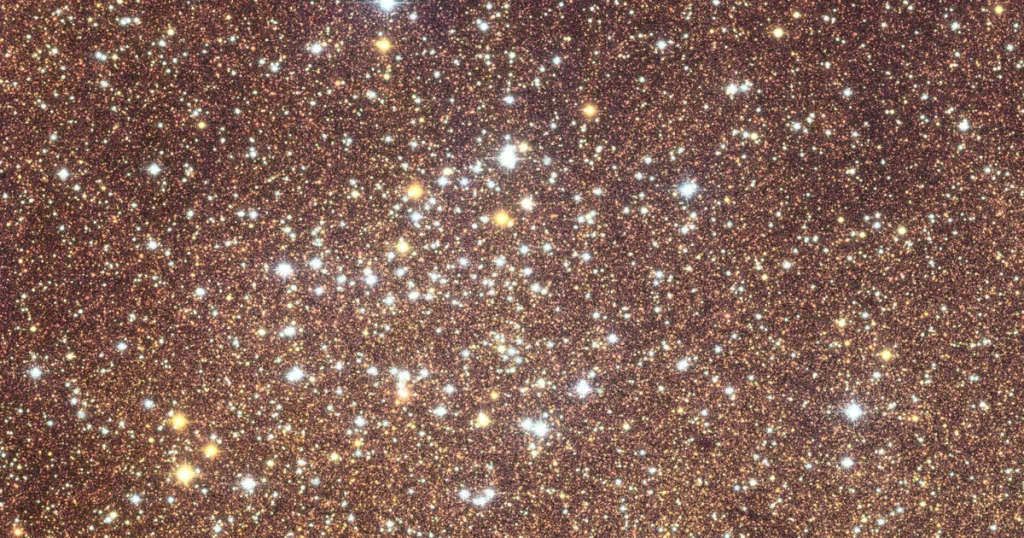
Euclid Telescope Captures Most Detailed Image of Milky Way’s Core
Telescope captures most detailed image yet – The Euclid telescope has achieved a major breakthrough by capturing the most detailed image of the Milky Way’s central region to date. This remarkable achievement, announced by the European Space Agency (ESA), provides an unprecedented view of the galaxy’s dense stellar bulge, which contains over 60 million stars. The image, taken in March 2025, showcases the telescope’s ability to deliver high-resolution data, making it a pivotal tool for studying galactic structures. With its precision and clarity, Euclid’s latest work sets a new standard in astronomical imaging.
Exploring the Galactic Heart with Cosmic Precision
Euclid, launched in 2023, was initially designed to map one-third of the sky and investigate dark matter and dark energy. However, its recent focus on the Milky Way’s core highlights its versatility. The telescope’s ability to capture such a detailed image underscores its potential to analyze complex cosmic phenomena. “The core of our galaxy is a dynamic region where light and gravity interact in fascinating ways,” said Jean-Charles Cuillandre, a French astronomer involved in the project. This image represents a significant step forward in our understanding of the galaxy’s structure and evolution.
“The bulge at the galaxy’s center is a region of intense activity, hosting billions of stars within a compact area,” Cuillandre added. “This image not only reveals the sheer density of stellar populations but also offers insights into how light is distorted by gravitational forces in this region.”
The image itself is a composite of nine high-resolution photographs, each spanning an area larger than the Moon. By combining these, scientists created a seamless panoramic view of the galactic core. While the initial data was presented in black and white, color was introduced using data from the Canada-France-Hawaii Telescope, enhancing the visual depth and accuracy of the findings. This collaborative approach ensures that the most detailed image captures both the structure and dynamics of the Milky Way’s heart.
Revolutionizing Exoplanet Studies Through Microlensing
Euclid’s capabilities extend beyond mapping the galaxy; it also plays a critical role in exoplanet research. The telescope utilizes microlensing, a phenomenon where a star acts as a natural lens to magnify the light of distant objects. This technique enables scientists to detect exoplanets by observing subtle shifts in brightness. “The most detailed image has been instrumental in refining our ability to measure planetary masses and track their movements,” ESA highlighted in its statement.
“This new image builds on a two-decade-long tradition of microlensing studies, which have already identified nearly 300 exoplanets,” explained Jean-Philippe Beaulieu, a key contributor to earlier research. “Euclid’s space-based observations offer a unique perspective, allowing us to explore planetary systems hidden within the galaxy’s dense core.”
Euclid’s use of microlensing in space has the potential to uncover exoplanets that were previously undetectable. The technique’s application in the galaxy’s center, where stellar density is highest, opens new avenues for studying alien worlds. By capturing the most detailed image of this region, the telescope not only documents stars but also their accompanying planets, offering a deeper understanding of planetary formation and distribution.
Over the past two decades, ground-based telescopes have relied on microlensing to identify exoplanets, but Euclid’s contributions mark a shift toward more precise space-based data. The most detailed image provides a clearer picture of how these phenomena interact, aiding scientists in their quest to discover and characterize new worlds. This advancement in imaging technology has the potential to revolutionize the field of astrophysics.
Euclid’s Journey and Groundbreaking Achievements
Euclid’s mission began on July 1, 2023, with its launch from Cape Canaveral aboard a SpaceX Falcon 9 rocket. Positioned one million miles from Earth, it orbits beyond the Moon’s path, minimizing atmospheric interference. This vantage point allows the telescope to capture data with exceptional clarity, which is essential for producing the most detailed image of the Milky Way’s core. Its design ensures that it can handle both large-scale cosmic surveys and focused studies of intricate galactic features.
Before its recent focus on the galactic center, Euclid gained attention for its earlier achievements. In 2023, it delivered a wide-angle view of the Perseus galaxy cluster, revealing 1,000 gravitationally bound galaxies. This image, along with its 2024 observations of the Abell 2390 cluster, which contains over 50,000 galaxies, demonstrated the telescope’s power in mapping distant cosmic structures. These accomplishments pave the way for more detailed imaging in the future.
Euclid’s ongoing efforts to capture the most detailed image of the Milky Way’s core are part of a broader scientific goal: to understand the universe’s structure and the forces that shape it. The data collected from these observations will be invaluable for researchers studying star formation, galactic dynamics, and the distribution of dark matter. As the telescope continues its mission, it promises to unlock new discoveries that will deepen our knowledge of the cosmos.