
With Obama’s backing, Democrats aim to flip two seats on the Georgia Supreme Court
With Obama s backing Democrats aim – Georgia’s state Supreme Court elections have traditionally been low-key affairs, but that’s changing. This year, two races have drawn significant attention as liberal-backed candidates seek to challenge conservative-appointed justices. The outcome could reshape the ideological balance of the court, which has been a focal point in debates over voting rights and election procedures. The pivotal contest will take place on Tuesday, with the potential to alter the course of judicial politics in the state for years to come.
Key Candidates and Their Backers
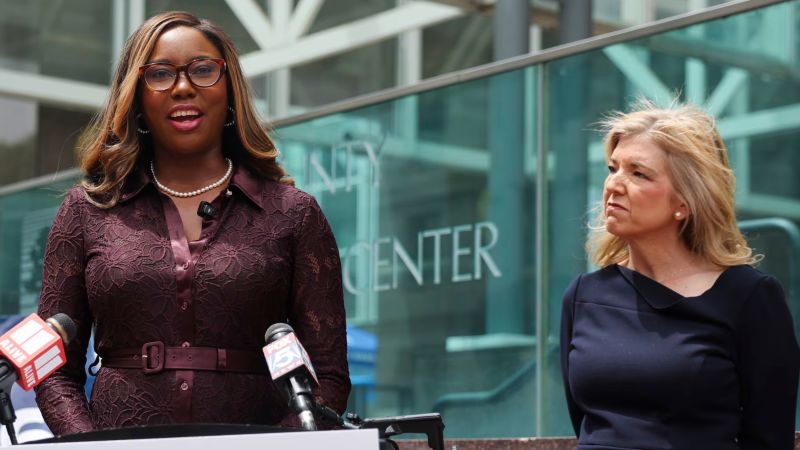
Two prominent Democratic candidates are vying to unseat their Republican counterparts in the Georgia Supreme Court. Former state Senator Jen Jordan is challenging Justice Sarah Warren, while personal injury attorney Miracle Rankin is targeting Justice Charlie Bethel. Justice Benjamin Land, the third incumbent, faces no opposition, securing his position automatically. The battle, however, extends beyond the courtroom, as the campaign has become a proxy war between opposing political forces.
Former President Barack Obama has thrown his weight behind Jordan and Rankin, signaling a broader Democratic strategy to influence state-level judicial outcomes. In contrast, two-term Republican Governor Brian Kemp has aligned with the current justices, his leadership PAC investing $500,000 in the race to bolster their chances. Kemp’s support underscores the high stakes of the election, which is seen as a critical test of the state’s political landscape.
Political Implications of the Court’s Role
For years, Georgia’s Supreme Court has been at the center of election-related controversies. The court’s rulings on the 2020 presidential election, voting laws, and state-level prosecutions of former President Donald Trump have drawn national scrutiny. These decisions have positioned the state’s high court as a key player in shaping the legal framework for elections, a role that has only grown more prominent in recent months.
The recent US Supreme Court decision in Louisiana v. Callais, which weakened a major provision of the Voting Rights Act, has further amplified the importance of state courts. This ruling has paved the way for new waves of redistricting, with state judiciaries now expected to approve updated maps. Governor Brian Kemp has already called for a special session of the legislature to address redistricting efforts, emphasizing the urgency of the issue.
Democrats see the Georgia races as an opportunity to gain control of the court, which currently holds a conservative majority. If Jordan and Rankin succeed, it would mark the first time the ideological balance of the court has shifted in decades. The potential for such a change raises questions about how the state’s judiciary might influence future elections, particularly as three additional GOP-appointed justices face reelection in 2028.
Endorsements and Campaign Strategies
Obama’s endorsement of Jordan and Rankin has energized Democratic voters and added national visibility to the race. The former president’s involvement highlights the growing intersection between federal and state judicial politics. Jordan expressed surprise at the level of support, noting that the campaign had not anticipated such high-profile backing. “I was blown away. We had no clue that it was coming,” she said, recounting the moment she received the endorsement.
“I tell you, I was blown away. We had no clue that it was coming.”
Jordan also highlighted the significance of the campaign, emphasizing that it was a “heavy lift” to communicate the importance of the race. “But look, he gets it. He’s always gotten it,” she added, acknowledging Obama’s understanding of the issues at play. Meanwhile, Rankin underscored the broader implications, stating, “I believe Callais is a powerful reminder that state courts matter.”
Rankin’s remarks reflect the Democrats’ argument that state courts are essential in safeguarding voting rights. With the US Supreme Court reshaping federal legal standards, the state judiciary will bear the responsibility of interpreting those changes in local contexts. “So, when the US Supreme Court changes the federal legal landscape, more questions about voting rights, fair representation, election rules, and constitutional protections will be heard and dealt with in our state court,” Rankin explained.
Financial and Political Momentum
While the Georgia races may not have matched the financial scale of similar contests in Pennsylvania and Wisconsin, they have still attracted substantial investment. Over $4 million has been spent on campaign ads, split roughly evenly between supporters of the incumbents and their challengers. This level of spending reflects the strategic importance of the court in shaping the state’s political future.
Charlie Bailey, the state Democratic Party chair, noted that this election marks the first time the party has launched a coordinated offensive in the Supreme Court races. “This is the first time we’ve gone on offense, and we have raised a bit of money for it,” Bailey said, citing previous successes in defeating conservative appointees on the Public Service Commission. The party’s victories in Wisconsin last year and this year, along with its gains in Pennsylvania in November, have positioned it as a formidable force in state judicial elections.
Republican Concerns Over Partisanship
Republican officials have voiced concerns about the increasing partisanship in the races. Governor Brian Kemp criticized the campaigns as a “partisan attack” on the nonpartisan nature of the Georgia Supreme Court. “It’s unfortunate the other side backed by money that’s from outside the state is trying to make a nonpartisan race political,” Kemp said, urging voters to prioritize the incumbents.
“That’s not how our judiciary works in our state. And I would urge people to vote for the incumbents. They have bipartisan support from people who really understand how important it is to have a nonpartisan judiciary.”
Kemp’s comments align with the views of conservative allies, such as Heath Garrett, an adviser for Justice Sarah Warren. Garrett echoed Kemp’s sentiment, stating, “There is a partisan attack on our nonpartisan Georgia Supreme Court.” He emphasized that Justice Warren enjoys broad support across the political spectrum due to her commitment to fairness and impartiality.
Broader Context and National Impact
These races are part of a larger trend where state courts have become central to national political debates. The increased funding in Georgia’s races mirrors similar efforts in Pennsylvania and Wisconsin, where campaign spending reached tens of millions of dollars last year. In Wisconsin, for instance, Elon Musk made appearances on the campaign trail, underscoring the role of outside influencers in shaping state-level judicial outcomes.
Despite the higher spending in Wisconsin, Georgia’s contest remains a key battleground for the Democratic Party. The $4 million invested in advertising signals a significant effort to sway public opinion, even as the race has not yet reached the same level of financial intensity as those in other states. The campaign’s focus on issues like voting rights and election integrity highlights the national significance of the Georgia Supreme Court’s decisions.
The outcome of Tuesday’s election could have lasting effects on the state’s legal landscape. If the Democrats succeed in flipping two seats, it would create a more balanced court and potentially shift the direction of key rulings. This could influence everything from redistricting to the interpretation of state laws governing elections. As the race intensifies, the state’s judiciary is once again becoming a flashpoint in the broader fight over democratic processes and political power.
With the stakes higher than ever, both sides are mobilizing to ensure their candidates win. The support from Obama and the strategic spending by Democrats signal a determined push to change the court’s composition. Meanwhile, Kemp and his allies argue that the current justices are the best equipped to uphold the state’s nonpartisan judicial traditions. As the election approaches, the focus remains on the impact of these races on the future of Georgia’s legal and political systems.





