
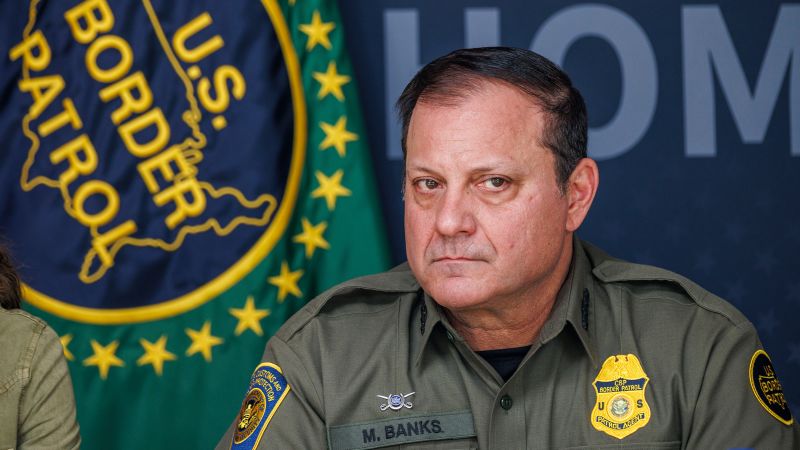
Border Patrol Chief Michael Banks Resigns Amid Leadership Shifts at Homeland Security
Border Patrol chief Michael Banks resigns – On Thursday, Michael Banks, the head of the United States Border Patrol, announced his resignation, effective immediately. This move marks the most recent high-profile departure from the Department of Homeland Security (DHS), following a string of senior immigration officials leaving the agency under the leadership of Secretary Markwayne Mullin. Banks’ exit underscores ongoing challenges and internal dynamics within the department as it navigates evolving priorities and political pressures.
Years of Service and a New Chapter
Banks, who has dedicated nearly three decades to the nation’s immigration efforts, expressed pride in his contributions during a statement released to CNN. He highlighted his belief that the border has achieved its most secure state in history, attributing this success to the collective work of his team. “After almost 37 years of public service, now is my time to enjoy family and life,” he said, signaling a personal decision to step away from the role.
“After almost 37 years of public service now is my time to enjoy family and life,” Banks said.
The Customs and Border Protection (CBP) commissioner, Rodney Scott, commended Banks for his “decades of service to this country,” acknowledging his impact on shaping the agency’s approach to border security. Banks’ tenure has been marked by a blend of operational leadership and political maneuvering, particularly in his capacity as Texas’ border czar. In that role, he served as an adviser to Governor Greg Abbott during the implementation of Operation Lone Star, a state initiative aimed at addressing the influx of migrants under the Biden administration.
Operation Lone Star and Political Backing
Operation Lone Star, launched in response to what Texas officials called a border crisis, became a focal point of Banks’ career. His strategic guidance during the operation earned recognition from President Donald Trump, who appointed him to the top Border Patrol position in January 2025. The initiative, which emphasized stricter enforcement at the southern border, was praised by Trump as a model for addressing immigration challenges, aligning with his broader policies on border control.
Banks’ leadership also extended to the federal level, where he oversaw a significant shift in priorities. During his time at the helm, Gregory Bovino, a subordinate Border Patrol official, assumed responsibility for the interior immigration crackdown. This decision received approval from then-Secretary Kristi Noem, who had previously championed aggressive policies targeting unauthorized arrivals. Bovino’s assertive approach, however, sparked debate within the agency, with some agents criticizing the tactics as overly harsh or inconsistent with Border Patrol’s traditional methods.
Leadership Changes and Political Context
Banks’ resignation follows a series of leadership changes at DHS, each reflecting the administration’s shifting strategies and internal conflicts. In March, Trump dismissed Kristi Noem as secretary of the department after months of controversy over her spending practices and the fatal shootings of two U.S. citizens by Border Patrol officers in Minneapolis. Noem’s removal paved the way for Markwayne Mullin to take over as the new head of DHS, a role that has become central to the Trump administration’s immigration agenda.
The recent turnover also includes Todd Lyons, the acting director of Immigration and Customs Enforcement (ICE), who announced his departure last month. Lyons cited a desire to prioritize family life, with his final day set for May 31. His exit has been filled by David Venturella, a veteran immigration official with experience in the private prison sector. This transition highlights the ongoing reshuffling of key positions within the department as it adapts to new political directions.
Legacy and Future Implications
Banks’ career has been defined by a commitment to border security, yet his departure raises questions about the stability of the agency’s leadership. His tenure at the Border Patrol coincided with the Trump administration’s focus on reducing migration and expanding detention capabilities. However, the subsequent appointment of Bovino to lead interior enforcement suggests a continued emphasis on hardline measures, even as tensions within the department persist.
The resignation of high-profile figures like Banks and Lyons reflects a broader pattern of leadership turnover at DHS, with each change bringing new strategies and challenges. While some view these departures as a sign of internal discord, others see them as necessary adjustments to align the agency with evolving national priorities. As the department prepares for new leadership, the question remains whether these transitions will strengthen its mission or exacerbate existing divisions.
Banks’ decision to leave the Border Patrol comes at a pivotal moment for U.S. immigration policy. His leadership during Operation Lone Star demonstrated a proactive approach to managing the border, but his exit also signals the end of an era for the agency. The transition to his replacement will test the new administration’s ability to maintain consistency in its approach to immigration enforcement. With the border at its most secure state, according to Banks, the focus now shifts to ensuring that this progress is sustained under new leadership.
As the Department of Homeland Security continues to evolve, the resignations of key officials highlight the complex interplay between policy, politics, and personnel. Banks’ journey from a frontline agent to a top leader illustrates the career paths many within the agency have taken, yet his departure also underscores the challenges of maintaining a unified vision in a rapidly changing landscape. The new appointments, including Venturella and the ongoing role of Mullin, will shape the next phase of the department’s mission, setting the stage for potential shifts in focus and strategy.
The timeline of these resignations reveals a pattern of political realignment. Trump’s firing of Noem and subsequent support for Mullin reflects his desire to steer the agency toward his preferred immigration policies. Similarly, Lyons’ decision to resign, citing personal reasons, adds a human dimension to the broader institutional changes. These shifts may influence the agency’s operational direction, as new leaders bring their own perspectives and priorities to the table.
For the Border Patrol, Banks’ resignation marks the end of a leadership chapter that spanned over three decades of service. His role in both state and federal capacities, particularly during Operation Lone Star, has left a lasting impact on how the agency approaches border security. As the department moves forward, the legacy of his tenure will be weighed against the challenges of maintaining the same level of effectiveness under new management. The secure border he described may now be a benchmark for future evaluations of the agency’s performance.
In the wake of these resignations, the Department of Homeland Security faces a critical juncture. The leadership changes not only reflect the political climate but also the internal debates over enforcement methods and resource allocation. As the agency adapts to new personnel, its ability to execute its mission will depend on the cohesion of its leadership and the alignment of its strategies with national goals. Banks’ exit, while personal, has broader implications for the continuity of policies and the future of immigration enforcement in the United States.





