
Supreme Court Rejects Big Pharma Appeals Challenging Medicare Drug Price Negotiations
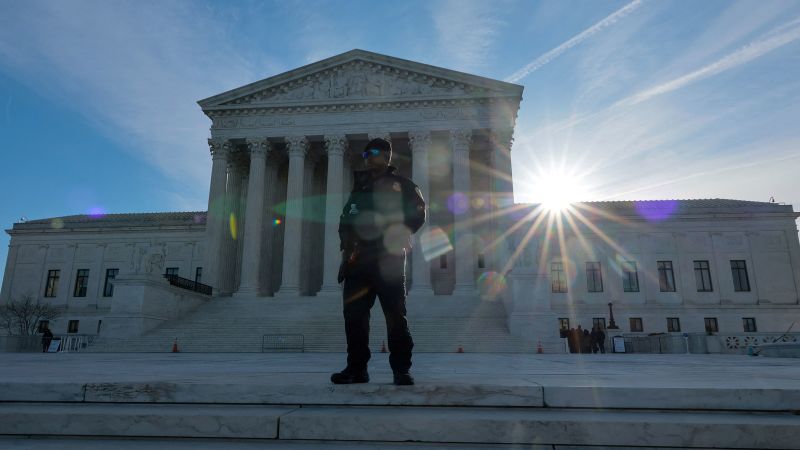
Supreme Court rejects big pharma appeals – On Monday, the U.S. Supreme Court dismissed a number of appeals brought by major pharmaceutical companies against a program designed to cut costs for taxpayers and the federal government. This initiative, which allows Medicare to engage in price negotiations for specific medications, is projected to save billions by compelling drugmakers to agree to lower rates on some of their most widely used drugs. The court’s decision to reject the appeals—without providing explanations—left intact several prior rulings from lower courts that had upheld the program, which was established by Congress in 2022.
At the heart of the legal dispute is a clause from the 2022 Inflation Reduction Act, which grants Medicare the authority to negotiate drug prices for the first time in decades. This provision has sparked ongoing debates about whether government intervention in pricing could be seen as price fixing. Despite these concerns, the program has been implemented, with its first round of negotiations targeting ten medications and expected to yield significant savings. The federal government anticipates a $6 billion reduction in costs, while seniors will see a $1.5 billion cut in out-of-pocket expenses once the changes take effect in January.
Among the drugs included in the initial negotiations is Farxiga, developed by AstraZeneca, a medication used to manage diabetes, heart disease, and kidney disease. AstraZeneca argued that the negotiated price for Farxiga resulted in a 68% discount compared to its listed price. Another drug in the first round was Eliquis, a blood thinner produced by Bristol Myers Squibb, which helps treat and prevent blood clots and strokes. The company’s representatives emphasized that the program’s negotiation process was not a fair exchange but rather a forced agreement that undermined their rights.
Legal Arguments and Judicial Responses
Drugmakers and their allies have pursued legal challenges against the program for the past three years, filing multiple lawsuits in different federal districts. Their primary claims centered on two key points: the program violated their due process rights and infringed upon their freedom of speech under the First Amendment. They contended that being compelled to accept negotiated prices without adequate compensation was akin to a government seizure, potentially unconstitutional under the Fifth Amendment. Additionally, they argued that the program forced them to adopt the government’s narrative, thereby restricting their ability to express opposing viewpoints.
“The challenges that the industry presented were weak in law. They were grasping at constitutional straws,” said Andrew Twinamatsiko, director of the Center for Health Policy and the Law at Georgetown University’s O’Neill Institute. Twinamatsiko, alongside a colleague, published an article in March for Health Affairs, asserting that federal courts have “spoken unequivocally” on the constitutional issues raised by the pharmaceutical sector.
Lower courts have consistently ruled in favor of the program, noting that drug companies retain the option to withdraw from Medicare and Medicaid if they disagree with the negotiated prices. This flexibility, according to judges, means participation is voluntary, and the program does not constitute a mandatory agreement. In 2021 alone, the federal government spent over $250 billion on medications covered by Medicare, underscoring the financial stakes for both the government and the pharmaceutical industry.
The second round of negotiations, covering fifteen additional drugs, is expected to save Medicare approximately $12 billion and reduce out-of-pocket costs for beneficiaries by $685 million when prices go into effect next January. The Trump administration highlighted these projections in November, emphasizing the program’s potential to alleviate the financial strain on seniors and the broader healthcare system. As the third round of discussions unfolds, drugmakers continue to push back against the initiative, citing procedural flaws and constitutional concerns.
Industry’s Concerns and Congressional Intent
Pharmaceutical companies argue that the program forces them to accept prices without proper compensation, effectively amounting to a “taking” under the Fifth Amendment. They claim that if they refuse to agree to the negotiated terms, they would either have to exit Medicare and Medicaid programs—vital markets for their business—or face steep excise taxes. These arguments suggest that the program could have a substantial impact on their profitability, prompting calls for more transparent processes and fairer pricing mechanisms.
Despite these objections, the program’s framework has been validated by federal courts, which have repeatedly rejected the industry’s claims. The Supreme Court’s decision to reject the appeals further solidifies the program’s legal standing, indicating that the courts are unlikely to intervene in its implementation. The rejection also highlights the difficulty the pharmaceutical sector faces in persuading the judiciary to overturn the policy, especially since no lower court had previously ruled in their favor.
While the industry has been on the defensive, the program has already demonstrated its effectiveness. The first round of negotiations led to cost reductions for Medicare and beneficiaries, with the Biden administration announcing the savings in 2024. The program’s success has been attributed to its ability to leverage the government’s purchasing power, a strategy that has become a focal point for healthcare reform advocates. Critics, however, argue that the program could lead to long-term consequences for drug innovation and pricing strategies.
As the Supreme Court’s decision stands, the program remains in place, with negotiations continuing for the third round. The drugmakers’ appeals were based on the premise that the process was unfair and that the government had overstepped its authority. They also highlighted the lack of a public comment period for the initial rounds, a procedural element they claim deprived them of due process. These arguments, though well-rehearsed, have not gained traction in the courts, which have consistently upheld the program’s legality.
The ongoing legal battle reflects a broader tension between the government’s efforts to control healthcare costs and the pharmaceutical industry’s push for market-driven pricing. With the Supreme Court’s rejection of the appeals, the program is set to proceed, offering a potential model for future negotiations. The decision also signals a shift in judicial support for Medicare’s role in shaping drug prices, a development that could influence similar policies in other sectors.
For the drugmakers, the loss at the Supreme Court means they must accept the program’s framework, at least for now. While they continue to voice concerns about fair compensation and due process, the legal landscape has become increasingly unfavorable. The program’s ability to generate savings, combined with its constitutional defenses, positions it as a key component of the government’s strategy to curb rising prescription costs. As the third round of negotiations nears completion, the focus will shift to the long-term implications of these price adjustments for both the industry and the patients they serve.
Ultimately, the Supreme Court’s decision reinforces the government’s authority to negotiate drug prices under Medicare, a step that could reshape the dynamics of healthcare spending in the United States. The pharmaceutical sector, while not entirely defeated, faces the challenge of adapting to a new reality where Medicare’s influence on pricing is more pronounced than ever. With the program in place, the next phase of negotiations will be closely watched, as they may set a precedent for future cost-saving measures in the healthcare sector.





