
Who will replace Graham Platner if he drops out? Here’s how Democrats could pick a new Maine Senate nominee.
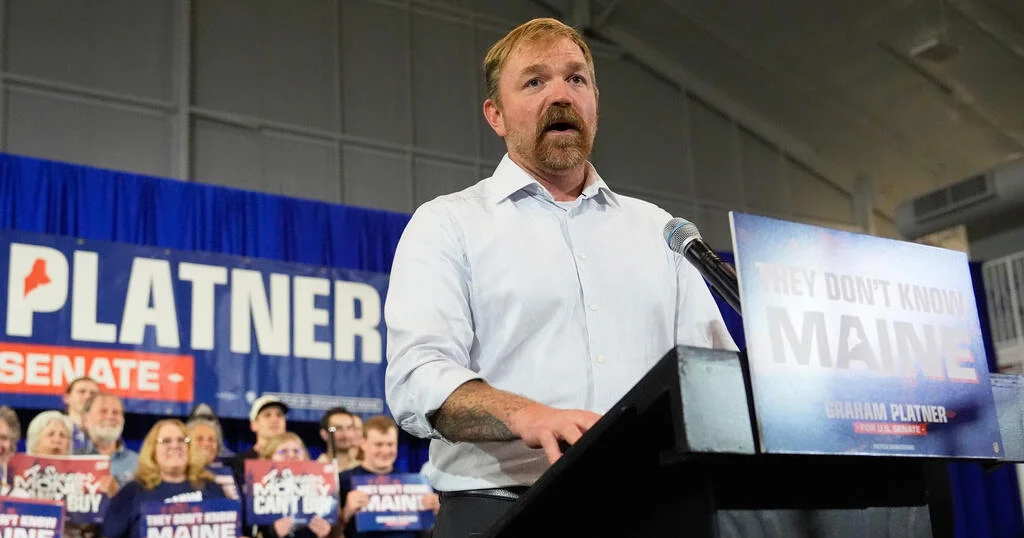
Democrats Race to Replace Maine Senate Nominee Amid Allegations
Who will replace Graham Platner if he – Washington — With a critical deadline approaching, Democrats in Maine are scrambling to prepare for a potential replacement of their Senate candidate, Graham Platner, should he withdraw from the race due to a sexual assault allegation. The decision comes at a pivotal moment in a Senate contest already regarded as one of the most closely watched and fiercely contested of the year. National Democrats aim to prevent Republican Senator Susan Collins from securing a sixth term, but Platner’s continued presence on the ballot may now be in jeopardy.
The Pressure to Step Down
Platner, who secured 72% of the vote in last month’s primary, faces mounting pressure to exit the race. The Maine Democratic Party, along with top national Democrats, has urged him to do so, citing the recent sexual assault allegation. A Maine woman he dated, Jenny Racicot, revealed the claim to Politico and CNN, stating that Platner had assaulted her in 2021. While Platner has denied the accusation, the controversy has already eroded support for his campaign.
His challenges extend beyond this latest allegation. Earlier this year, Platner had faced scrutiny over his past behavior, including claims of sending sexually explicit texts and problematic posts on Reddit. He also admitted to having a tattoo linked to a Nazi emblem, which drew criticism from some voters. Despite these controversies, Platner has maintained his candidacy, offering apologies for his past comments while attributing them to post-traumatic stress disorder from his military service.
The Replacement Process
Under state law, Platner has until next Monday, July 13, to withdraw from the race and remove his name from the general election ballot. If he steps down before that date, the Maine Democratic Party will have the authority to appoint a replacement. However, the party must finalize its decision by July 27 at 5 p.m., leaving little time for deliberation.
According to the law, if a replacement is chosen by the deadline, the Secretary of State will issue new general election ballots or update existing ones. The process, however, remains undefined by state legislation. Political science professor Dan Shea of Colby College in Waterville, Maine, noted that the party might convene a nominating convention to select a new nominee. Yet, details about how this convention would operate or who would be eligible to participate are still unclear, adding to the uncertainty surrounding the replacement.
“My guess is, they’ll do the best they can to make it open and democratic. So it’s going to be open and democratic and very efficient,” Shea said. “Those don’t usually go together.”
The Maine Democratic Party has not yet announced its specific plan for choosing a replacement. In a recent statement, Executive Director Devon Murphy-Anderson emphasized that the process would be “open, transparent, and inclusive,” ensuring “broad participation of Mainers and Democratic voters.” This approach aims to balance the need for swift action with public engagement, though the party’s timeline leaves little room for extensive vetting.
Possible Candidates
The identity of Platner’s potential successor remains a mystery, but several figures are being considered. Among them are Shenna Bellows, the current Secretary of State; Troy Jackson, the former state Senate President; and Nirav Shah, the former Maine Center for Disease Control and Prevention director. These candidates had previously vied for the Democratic gubernatorial nomination, with Bellows, Jackson, and Shah all calling for Platner to withdraw due to the sexual assault allegation.
Former state House Speaker Hannah Pingree emerged victorious in the gubernatorial primary, but she has not yet expressed interest in running for Senate. Jackson, a former ally of Platner, told the Bangor Daily News that he would consider stepping into the Senate race if Platner exited. “If Graham’s stepping away, I am very, very interested and think I’m the best person to replace him,” Jackson stated.
“I think Maine Democrats are keeping in mind some of the controversy surrounding the … very narrow process leading to Kamala Harris’s nomination — the very quick, truncated process,” Shea explained.
Shea drew a parallel to a similar scenario two years ago, when former President Joe Biden withdrew from the presidential race, necessitating a replacement by Vice President Kamala Harris. While the process for selecting Harris was swift, it was also criticized for its brevity. This precedent may influence how Maine Democrats navigate their current dilemma, as they seek to balance urgency with public perception.
Unprecedented Situation?
Shea acknowledged that the sudden need to replace a statewide office nominee in Maine is an unusual event. However, he noted that national Democrats had faced a comparable situation during the 2020 election, when Biden’s withdrawal led to Harris’s nomination. This comparison highlights the party’s experience with rapid decision-making in high-stakes races, even if the circumstances differ.
Platner’s withdrawal would not only require a quick replacement but also demand a strategy to retain momentum in the Senate race. With Collins, a Republican senator, maintaining a strong lead, Democrats must ensure their nominee can compete effectively. The party’s choice of replacement could determine whether they can challenge Collins’s re-election or face an uphill battle.
As the deadline looms, the focus remains on how the Maine Democratic Party will unite behind a new candidate. While some may argue that the replacement process needs more time for consensus, others believe the party must act decisively to avoid losing ground. The outcome of this decision could shape the political landscape of Maine for months to come, with national Democrats closely watching the developments.
In the absence of a clear frontrunner, the party’s internal dynamics and external pressures will play a significant role in determining the next step. The selection of a Senate nominee is not just a procedural matter—it is a critical test of Democratic unity and strategic focus in a race that could influence the broader national picture.