
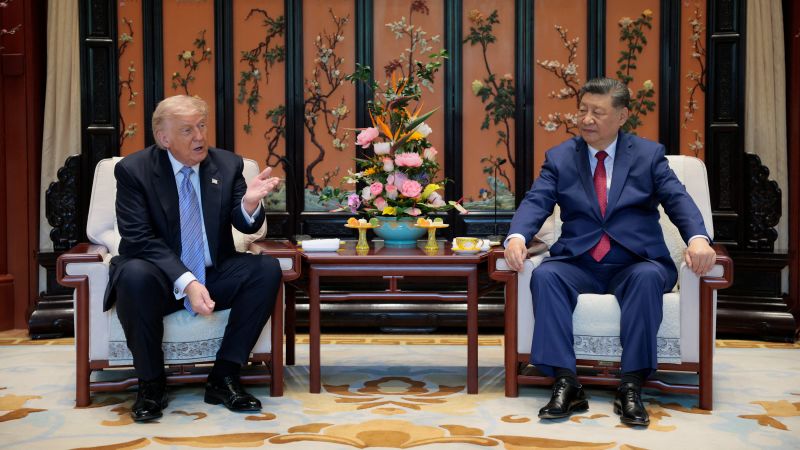
Trump’s Departure and the Stabilized Relationship
Trump leaves China short on deliverables – President Donald Trump departed Beijing on Friday afternoon, local time, without clear evidence that the United States and China had made definitive progress on resolving their deep-seated disagreements. However, the visit appeared to signal a temporary easing of tensions, with both leaders expressing a renewed sense of mutual respect and collaboration. Despite the lack of concrete outcomes, the meeting marked a potential turning point in the relationship between the two superpowers, which had been fraught with disputes over trade, technology, and regional conflicts.
Key Discussions and Diplomatic Maneuvers
Over the course of two days, the leaders engaged in extensive bilateral talks covering a wide array of subjects, from global security to economic partnerships. The summit featured both formal negotiations and informal gestures, with Trump emphasizing the significance of the encounter as a moment of “great respect” in his interview with Fox News. Meanwhile, Xi Jinping extended a warm welcome to his American counterpart, using both literal and symbolic acts to underscore the importance of the relationship.
“
I think it will go down as a very important moment in history. And maybe more than anything else, a great moment of respect,” Trump stated during the interview, highlighting the symbolic value of the meeting. This sentiment came amid a backdrop of cautious optimism, as the two leaders navigated a complex landscape of competing interests and shared goals.
Trump’s visit followed a period of heightened friction, during which he had redefined Washington’s global approach, shifting focus from multilateral alliances to bilateral leverage. Xi, meanwhile, had consolidated domestic authority and accelerated China’s technological advancement, positioning the nation as a key player in global affairs. Their meeting in Beijing, the first between the two since 2017, offered a chance to recalibrate their dynamic, which had been marked by ideological clashes and strategic rivalries.
Soft Diplomacy and Strategic Flexibility
The summit was not only a platform for hard negotiations but also a stage for soft diplomacy. Trump acknowledged that the two leaders had “settled a lot of different problems” during their talks, though he provided no specific examples. This ambiguity underscored the delicate balance between advancing tangible agreements and maintaining a favorable public image.
“
We discussed the Taiwan, the whole thing with the arm sales, in great detail, actually, and I’ll be making decisions, but you know, I think the last thing we need right now is a war that’s 9,500 miles away,” Trump remarked as he boarded Air Force One, reflecting on the discussions with Xi. His remarks highlighted the strategic importance of Taiwan, a long-standing flashpoint in U.S.-China relations.
While Trump declined to directly address whether the U.S. would defend Taiwan in the event of a conflict, he suggested that the issue had been thoroughly examined. The conversation included a focus on U.S. arms sales to the island, with Trump framing the discussions as a critical step toward avoiding further escalation. This exchange came at a time when the relationship between the U.S. and China was heavily influenced by regional tensions, particularly the ongoing conflict in the Middle East.
The Iran Conflict and Global Implications
The U.S.-Iran war loomed large during the summit, as both nations sought to position themselves as key players in the broader geopolitical narrative. China, a long-standing ally of Iran and its largest oil importer, was expected to play a diplomatic role in easing the crisis. However, the discussions yielded mixed results, with Trump expressing hope that Beijing would support efforts to bring the conflict to a close.
“
We discussed the Taiwan, the whole thing with the arm sales, in great detail, actually, and I’ll be making decisions, but you know, I think the last thing we need right now is a war that’s 9,500 miles away,” Trump remarked as he boarded Air Force One, reflecting on the discussions with Xi. His remarks highlighted the strategic importance of Taiwan, a long-standing flashpoint in U.S.-China relations.
Despite high expectations, the talks did not produce a definitive commitment from Beijing to pressure Tehran into compliance with U.S. demands. Instead, both sides reiterated their existing positions, with the White House releasing a statement that emphasized agreement on keeping the Strait of Hormuz open and preventing Iran from acquiring nuclear capabilities. The readout also noted Xi’s assertion of China’s opposition to the militarization of the Strait and any attempt to impose tolls on its use.
Trade Deals and Economic Ambiguity
One of the most anticipated topics during the summit was the potential for sweeping trade agreements. Trump had previously promised significant deals, but the details remained elusive. While top officials and the president made bold declarations, no concrete measures had been finalized or confirmed by China. This lack of clarity left analysts questioning whether the visit would result in meaningful economic concessions or merely a symbolic gesture of cooperation.
Experts had speculated that Xi might hold the upper hand in these negotiations, given China’s growing economic influence and its role as a major supplier of oil. However, the summit revealed some flexibility from the Chinese leader, particularly on the issue of Taiwan. By engaging in detailed discussions about the island’s status and arms sales, Xi appeared to adopt a more measured approach, balancing assertiveness with diplomatic openness.
Resetting the Tone of U.S.-China Relations
Amid the discussions, the visit served as an opportunity to redefine the tone of the U.S.-China relationship. Xi’s efforts to charm Trump included grand displays of hospitality and a symbolic red carpet, which underscored the leaders’ mutual recognition of the need for stability. This gesture, combined with the leaders’ public praise for each other, suggested a shift toward a more cooperative dynamic, even as underlying tensions persisted.
Secretary of State Marco Rubio, in a separate interview with NBC News, noted that the U.S. had not explicitly requested China’s assistance in resolving the Iran conflict. Nevertheless, Trump claimed that Xi had pledged to avoid providing Iran with military equipment, a move that could potentially reduce the risk of further escalation. These statements, while not binding, indicated a willingness to find common ground, even in areas of deep disagreement.
Energy Deals and Uncertain Outcomes
The summit also touched on energy partnerships, with reports suggesting that a deal for China to increase oil imports from the U.S. was under consideration. This shift would be significant, as Beijing has traditionally relied on Iranian oil to fuel its economy. However, the potential agreement remains unconfirmed, and its impact on the broader conflict with Iran is yet to be determined.
As Trump left Beijing, the political landscape remained fluid. While the visit fostered a sense of camaraderie between the leaders, it also highlighted the challenges that lie ahead. The U.S. and China continue to grapple with issues that have defined their relationship over the past decade, from trade imbalances to technological competition. Yet, the summit provided a rare moment of stability in a world increasingly defined by uncertainty.
A Path Forward or a Temporary Truce?
The question now is whether the Trump-Xi meeting represents a lasting improvement in U.S.-China relations or a temporary truce amid ongoing disputes. The leaders’ ability to find common ground on issues such as Taiwan and Iran’s nuclear ambitions may signal a broader realignment, but the absence of concrete commitments suggests that the relationship will remain delicate. As both nations continue to navigate their shared interests and divergent priorities, the path forward will depend on the willingness of each to compromise and build trust.
With the world watching closely, the summit’s legacy will be judged by its ability to foster cooperation in a time of global volatility. While the U.S. and China may not have resolved all their differences, the visit underscored the importance of maintaining a stable relationship, even as the challenges of the future loom large. The outcome of these talks will likely shape the trajectory of international diplomacy for months to come.





