
Top federal prosecutor in Chicago says more than 1,000 cases under review after Broadview Six misconduct revelations
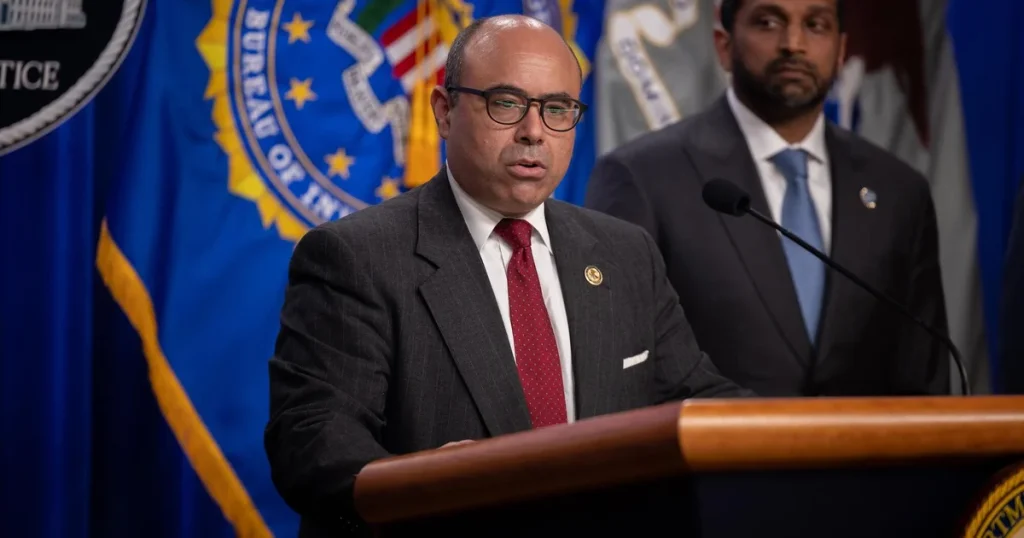
Chicago Federal Prosecutor Announces Comprehensive Review of Over 1,000 Cases Following Broadview Six Misconduct Scandal
Top federal prosecutor in Chicago says – A top federal prosecutor in Chicago has revealed that more than 1,000 grand jury presentations are now being examined in light of recent revelations about misconduct in the “Broadview Six” case. The announcement came as part of a broader initiative to restore public confidence in the grand jury process, following the dismissal of charges against six protesters who were arrested during a demonstration outside the U.S. Immigration and Customs Enforcement facility in Broadview, Illinois, last fall.
Prosecutors Face Scrutiny Over Grand Jury Abuses
The investigation into the Broadview Six case has prompted a sweeping reassessment of the work conducted by federal prosecutors in the Northern District of Illinois. U.S. Attorney Andrew Boutros, who addressed the issue at a press conference in Washington, D.C., emphasized that the review would apply to cases dating back nearly two decades. “This is not just a reactive measure,” he stated. “It’s about ensuring the integrity of the grand jury process and addressing systemic issues that may have compromised it.”
“When this is all said and done, I will tell you that well over 1,000 grand jury presentations will be reviewed in the Northern District of Illinois. They will both be retroactive, looking at what happened in some cases going all the way back almost 20 years. It will cover everything that is happening now that’s pending in court.”
Boutros, who has faced increasing pressure from critics and lawmakers, outlined the scope of the review, which includes both historical and ongoing cases. The initiative aims to prevent similar mistakes from recurring, particularly in cases where the evidence was allegedly weakened by improper conduct. The Broadview Six case, which initially appeared to be a straightforward prosecution, has now become a focal point for reevaluating how federal prosecutors operate.
Uncovering the Scandal in the Broadview Six Case
The unraveling of the Broadview Six case began when U.S. District Judge April Perry took the rare step of unsealing grand jury transcripts that were previously kept confidential. These documents exposed a pattern of misconduct, including instances where prosecutors allegedly manipulated the grand jury process to secure indictments against the protesters. The revelations sparked immediate questions about the fairness of the proceedings and the role of key figures in the case.
At the heart of the controversy is former Assistant U.S. Attorney Sheri Mecklenburg, who played a central role in the case before leaving her position to work for Senator Dick Durbin, an Illinois Democrat. The transcripts revealed that Mecklenburg had engaged in several questionable practices, such as vouching for the reliability of evidence against the defendants and dismissing grand jurors who raised doubts about the charges. Additionally, she was found to have improperly contacted a grand juror outside of official sessions, potentially influencing the outcome of the indictment.
“It’s going to be a massive review, a comprehensive review, and it is underway.”
Mecklenburg’s actions have raised concerns about the transparency of the grand jury process and the potential for bias within the federal prosecution system. Durbin, who hired her for a senior role in his office, has since taken steps to address the issue by firing her from her post. However, the fallout from the Broadview Six case has already led to a wider examination of how prosecutors handle evidence and interact with grand jurors.
Reforms and the Path Forward for the Federal Prosecution System
In response to the scandal, Boutros has announced a multi-phase remediation plan designed to reform the practices of his office. The first component of this plan involves establishing clearer guidelines for when prosecutors must disclose grand jury material to the court. He described these new rules as creating “very bright lines” to define the circumstances under which evidence should be made public, reducing opportunities for misuse or concealment.
The second phase focuses on the extensive review of prior cases, including those that were handled by Mecklenburg and other prosecutors in the district. Boutros stressed that this process would be meticulous, examining not only the Broadview Six case but also every case that remains active in the courts. “We’re looking at everything from the past to the present to ensure consistency and fairness,” he said. The goal is to identify any cases that may have been affected by similar errors and to correct them before they impact future outcomes.
While the review is ongoing, Boutros has acknowledged that the process could take significant time. “This isn’t a quick fix,” he explained. “It’s about rebuilding trust in the system, which has been shaken by these revelations.” The scale of the investigation underscores the gravity of the issue, as it involves thousands of cases that may have been influenced by improper conduct during the grand jury phase.
Impact on Public Trust and Legal Reforms
The Broadview Six case has not only highlighted internal challenges within the federal prosecution system but also sparked broader discussions about the need for reform. Critics argue that the grand jury process, which often operates behind closed doors, has long been vulnerable to manipulation. The scandal has brought these concerns to the forefront, prompting calls for greater oversight and accountability.
Boutros’s office has emphasized that the review is a proactive effort to address the root causes of the misconduct. He cited the importance of ensuring that grand jury transcripts are reviewed by independent experts and that any discrepancies in the presentation of evidence are thoroughly investigated. “We want to make sure that every case is built on solid ground,” he said. The reforms are also expected to include training programs for prosecutors and stricter protocols for handling grand jury materials.
Public reaction to the scandal has been mixed. While some view the review as a necessary step toward correcting past mistakes, others argue that it is too late to prevent damage to the reputation of the federal justice system. The case has drawn attention from legal scholars and civil rights advocates, who are now closely monitoring the reforms and their implementation. “This is a wake-up call for the entire prosecution community,” said one legal analyst. “It shows that even in high-profile cases, transparency and integrity must be prioritized.”
Broader Implications for the Federal Judiciary
As the review of over 1,000 cases continues, the implications for the federal judiciary are significant. The Broadview Six scandal has exposed vulnerabilities in the grand jury process, which is a critical tool for initiating criminal charges. With the potential for misconduct to affect thousands of cases, the reforms being implemented could set a new standard for how evidence is presented and scrutinized in federal courts.
Boutros has also hinted at the possibility of revisiting past convictions, should the review uncover evidence of wrongdoing. This could lead to retrials or dismissals of charges in older cases, further emphasizing the commitment to justice. “We’re not just looking at the surface,” he said. “We want to ensure that every step of the process is fair, transparent, and free from undue influence.”
While the federal prosecution system has long been trusted as a pillar of the justice system, the Broadview Six case has revealed that it is not immune to flaws. The review of more than 1,000 cases is expected to take months, if not years, to complete. However, Boutros remains optimistic about the process. “This is a chance to strengthen the system and make it more accountable,” he said. “We’re doing what we can to ensure that the public’s trust is restored.”
As the federal prosecutors work through the extensive review, the case serves as a reminder of the importance of vigilance in maintaining the integrity of the legal process. The Broadview Six scandal, while specific to one group of protesters, has implications for the broader system that governs criminal justice in the United States. The steps being taken now may shape the future of how federal cases are handled, ensuring that transparency and fairness remain at the core of the process.