
Supreme Court allows Trump to implement key parts of order restricting mail voting ahead of midterms
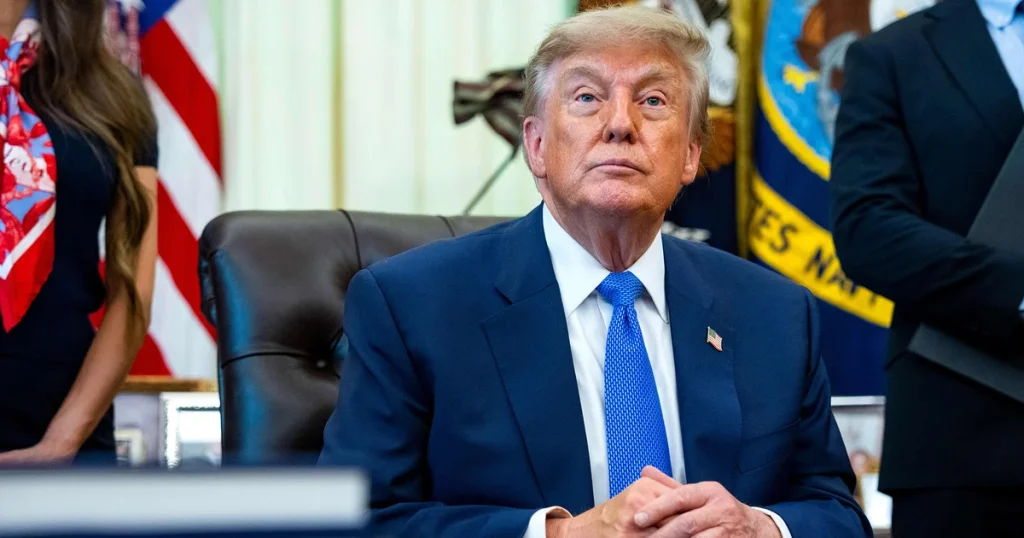
Supreme Court Clears Trump’s Mail-Vote Order
Bizeconanalysis.com – With the November 2026 midterm elections approaching, the Supreme Court allows Trump to implement key portions of an executive order that would reshape how mail-in ballots are processed and delivered across 23 Democratic-led states and the District of Columbia. The 6-3 ruling, delivered Monday in an unsigned opinion, vacates a district-court injunction that had frozen federal agencies from acting on the directive.
The justices did not bless the substance of the order. Their reasoning was procedural: because no finalized rule or enforcement action existed yet, the states’ challenge was premature and the lower court lacked jurisdiction to block implementation outright. Future suits targeting specific regulations remain available.
Jurisdictional Logic Behind the Ruling
The opinion draws a sharp line between contesting an executive order on paper and contesting the concrete steps taken under it. In a passage that signals the door remains open for later litigation, the Court wrote:
“The Court’s disposition of this application does not mean that any measure taken by the Government to implement the Order will necessarily be lawful… On that score, time will tell. But the Order itself does not harm the States, so the District Court lacked jurisdiction to bar the Government from trying to implement it.”
In practical terms, voting-rights groups and state officials retain the ability to sue once the Department of Homeland Security or the Postal Service publishes finalized rules or takes enforcement steps. The Supreme Court allows Trump to implement the order’s framework, but it does not immunize any particular action from judicial review.
What the Order Directs Across Agencies
Trump signed the directive in March of his second term, framing it as a guard against noncitizens voting in federal elections. Its provisions span multiple agencies:
DHS must compile what the order terms “state citizenship lists” by mining existing federal databases. The Postal Service would deliver mail ballots only to individuals appearing on its own voter-eligibility rosters. Separate clauses set visual-design specifications for federal mail-ballot envelopes and direct the attorney general to prioritize investigations of state or local officials who issue ballots to ineligible voters.
The Postal Service moved swiftly on the design front, publishing a final rule Friday that codifies required visual elements for those envelopes — placing a slice of the order’s logistics into immediate effect even as broader questions stay contested.
The Dissent and a Parallel District-Court Track
Justice Sonia Sotomayor, joined by Justice Elena Kagan, dissented. She argued the majority’s jurisdictional shortcut effectively delays meaningful review until after the election calendar has compressed.
“Today’s decision does not address whether the President’s attempts to interfere with States’ administration of the November 2026 elections are lawful,” Sotomayor wrote. “Nor does it suggest that the Executive Branch has any constitutional or statutory authority to implement the President’s directives.”
Meanwhile, in a separate proceeding involving voting-rights organizations, U.S. District Judge Indira Talwani issued an order earlier this month barring the administration from implementing the provisions that direct the Postal Service to develop new ballot-handling procedures. The Justice Department is expected to argue that the Supreme Court’s jurisdictional reasoning applies with equal force to that case. Talwani’s earlier ruling had sided with the coalition of states, holding that the Constitution does not vest the president with unilateral authority to alter how states administer their portions of federal elections — a question the Supreme Court has not yet resolved.
FAQ
Does this ruling mean mail-ballot rules change immediately? Only the envelope-design rule is in effect now. Broader provisions — citizenship lists, roster-based delivery, enforcement priorities — require finalized agency action before they take effect, and each step can be challenged in court.
Can states still sue over the order? Yes. The Supreme Court allows Trump to implement the order’s framework, but it explicitly left open the possibility that future lawsuits will target the specific rules and enforcement actions the administration adopts.
What happens if the administration finalizes a rule that states oppose? States and voting-rights organizations can file new suits in district court. The constitutional question of whether the president holds unilateral authority to alter state-administered portions of federal elections remains unresolved at the highest level.