
Latino voters could be key to midterms. What’s driving them? “The economy, and the economy, and the economy.”
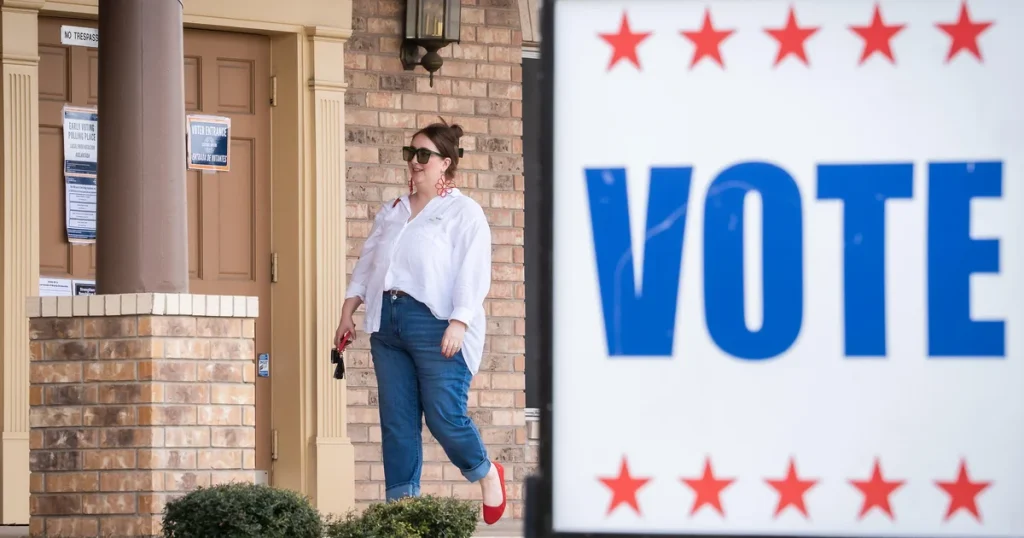
Latino Voters Key in Midterms: Economic Concerns Shape Political Landscape
Latino voters could be key to midterms – As midterm elections draw closer, Latino voters have emerged as a pivotal demographic in shaping congressional outcomes. Their growing influence, especially in key battleground states, has drawn significant attention from political analysts and campaign teams across the aisle. Carlos Odio, co-founder of Equis Research, emphasized that the House race map is particularly critical for Latino voters, with their support potentially deciding the balance of power. “The House map especially is very Latino,” Odio stated, underscoring the group’s importance in close races.
The political significance of Latino voters was highlighted at the Latino Vote Summit in Washington, D.C., where experts from both parties discussed how economic challenges are driving their engagement. The summit followed a notable trend: many Latino voters previously supported President Trump, but Democrats are now focusing on reclaiming that base. With less than five months until the midterms, the conversation remains centered on affordability, inflation, and job security as key issues. “The economy, economy, and economy,” Odio repeated, capturing the urgency of these concerns.
Latinos in Emerging Political Hubs
Democratic Senator Alex Padilla of California pointed to the expansion of Latino populations in states like Georgia, North Carolina, and Louisiana as a major factor. “Georgia, the biggest battleground state on the Senate map, has more than a million Latinos—something that surprised us,” Padilla noted. He also highlighted the growing Latino communities in North Carolina and Louisiana, where New Orleans now has a Latina mayor. “We’re everywhere where there’s work,” Padilla said. “We’re there, and we’re growing in numbers, and we’re growing in impact.”
Padilla’s remarks reflect a broader recognition of Latinos’ rising political clout. Across the country, the community’s presence in competitive districts is increasing, with economic factors often taking precedence. “Latino voters could be key to midterms,” Odio reiterated, emphasizing that affordability and inflation remain central to their decision-making. This focus suggests a potential shift in voter alignment, depending on how candidates address these concerns.
Historical Trends and Current Challenges
Experts observed that economic anxieties are mobilizing Latino voters similarly to the 2018 midterms, when Democrats captured over 40 House seats. However, the 2022 elections revealed a different pattern: Latino voters leaned more toward Republicans, according to exit polls. “The 2022 results show a shift, but 2024 is now aligning closer to the 2018 scenario,” Odio noted, hinting at a possible rebound for Democrats in this cycle.
Despite this trend, the economic landscape has evolved since 2018. Odio highlighted that Trump’s approval ratings on economic management have weakened, while ongoing inflation and rising living costs continue to shape voter priorities. “Latinos continue to view economic conditions as their top priority,” he stated. “But whether they choose Democrats or Republicans will depend on how effectively each side tackles these issues.”
Political strategists are closely tracking how candidates address these concerns, particularly in states with large Latino populations. In Texas, for example, the Senate race between Democrat James Talarico and Republican Ken Paxton is expected to hinge on the state’s Hispanic electorate. Exit polls from 2024 showed 55% of Hispanic voters supporting Trump, but recent surveys suggest a decline in Republican enthusiasm. “Latinos in Texas could be the deciding factor between Republicans securing four Senate seats and Democrats gaining one,” Odio explained, underscoring the stakes.
Meanwhile, in California, Padilla’s focus on economic stability highlights the challenges faced by the Latino community. With over one in four registered voters in Texas being Hispanic, the group’s influence in competitive districts is undeniable. Political campaigns are tailoring messages to address these concerns, recognizing that Latino voters’ economic priorities could determine the outcome of critical races. “If we collectively do our job, the political impact of our community will only continue to be louder and stronger,” Padilla added, emphasizing the need for targeted outreach.