
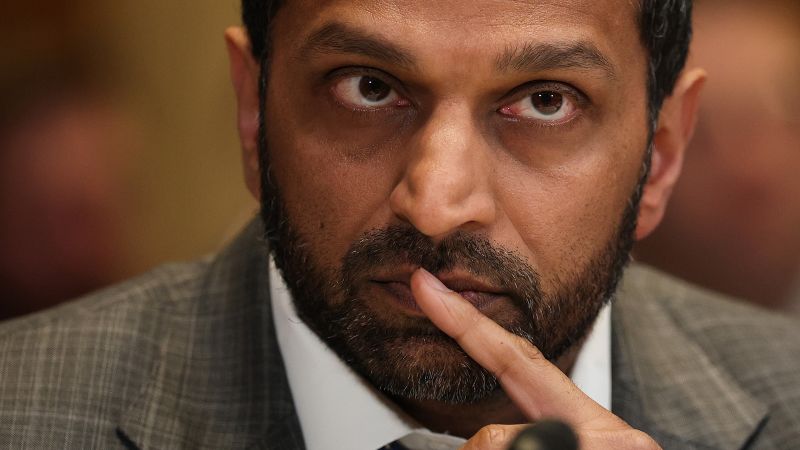
Kash Patel and the Trump administration’s mockery of congressional hearings
A Pattern of Dismissiveness
Kash Patel and the Trump administration – From the outset, top officials within the Trump administration have demonstrated a dismissive attitude toward congressional oversight. This trend has been evident in the way they’ve treated legislative inquiries, often shifting focus to personal attacks rather than addressing the substance of questions. For instance, former Attorney General Pam Bondi’s “burn book” became a focal point of ridicule during her February hearings, while Defense Secretary Pete Hegseth’s aggressive testimony further underscored the administration’s tendency to weaponize combative rhetoric. These tactics, though varied, share a common thread: undermining accountability by attacking lawmakers instead of engaging with their inquiries.
Patel’s Testimony: A Bold Deflection
However, the Senate Appropriations subcommittee’s hearing with FBI Director Kash Patel on Tuesday stood out as a defining moment of this strategy. Patel, testifying under penalty of perjury, was pressed about his leadership of the FBI and recent controversies surrounding his conduct. Among the questions was his alleged excessive drinking, a claim he denied and even took legal action against the Atlantic for publishing. Additionally, his celebratory behavior after the US hockey team’s Olympic victory in Italy was highlighted, with some suggesting it reflected a lack of decorum.
“The only person that was slinging margaritas in El Salvador on the taxpayer dollar with a convicted gangbanging rapist was you,” Patel told Van Hollen. “The only person that ran up a $7,000 bar tab in Washington, DC, at the Lobby Bar was you. The only individual in this room that has been drinking on the taxpayer dime during the day is you.”
Patel’s remarks were particularly pointed when addressing Democratic Senator Chris Van Hollen of Maryland. Van Hollen had previously criticized Patel for his handling of the FBI’s operations, but the director turned the tables, accusing the senator of misconduct. This exchange quickly escalated, with Patel framing Van Hollen’s actions as evidence of a broader pattern of negligence. Yet, the senator’s response was sharp, accusing Patel of perpetuating “urban legends in right-wing media.”
The Lobby Bar Controversy
Patel’s reference to the $7,000 bar tab at the Lobby Bar in Washington, DC, appeared to be a clever jab at Van Hollen. However, a closer look reveals the quote was based on a December 2025 bill listed in Van Hollen’s campaign finance reports. The charge was for “catering,” which can include food and beverages, yet Patel claimed it was for drinks during the day. Van Hollen clarified Tuesday that the tab was for a staff holiday party, not personal expenses. Moreover, the funds were campaign money, not taxpayer dollars—a detail Patel overlooked in his criticism.
Patel’s argument hinges on a misinterpretation of the transaction. While the total bill was $7,128, the term “catering” allows for flexibility in what was purchased. This ambiguity has led to debates about whether the spending was justified or if it reflected a frivolous use of resources. Despite this, Patel’s attempt to link the expense to Van Hollen’s alleged negligence highlights the administration’s strategy of framing opponents as wasteful and careless.
Abrego Garcia and the Deportation Saga
Patel’s remarks also targeted Kilmar Abrego Garcia, an undocumented immigrant from Van Hollen’s home state. The senator had visited El Salvador to assess Garcia’s situation after the Trump administration deported him to a harsh prison environment. Patel accused Van Hollen of slinging margaritas with a “convicted gangbanging rapist,” a claim that seemed to conflate Garcia’s alleged crimes with his personal actions. However, the evidence supporting Garcia’s status as a gangbanging rapist was never fully established. While he was indicted for human trafficking, he had not yet been charged with rape, a key point in Patel’s argument.
Patel’s testimony raises questions about the accuracy of his statements. The FBI director’s use of the term “convicted gangbanging rapist” appears to be a hyperbolic label, possibly based on incomplete information or a selective interpretation of facts. This aligns with the administration’s broader approach of casting doubt on Democratic narratives, even when the evidence is not fully in place. Critics argue that such tactics erode public trust in the justice system and the FBI’s impartiality.
Implications for Congressional Ethics
The incident underscores the tension between the Trump administration’s approach to accountability and the ethical standards expected of federal officials. Justice Department guidelines require that officials refrain from making false statements or prejudging someone’s guilt, yet Patel’s comments seem to blur the line between critique and defamation. His ability to shift blame to Van Hollen, despite the lack of direct evidence, exemplifies this pattern. Similarly, Bondi’s earlier press conference, where she cited unproven crimes against Abrego Garcia, highlights how the administration has consistently used selective facts to bolster its narrative.
Patel’s remarks also reflect a broader cultural shift within the administration, where personal attacks are prioritized over factual engagement. This has been evident in the way officials like Bondi and Hegseth have framed their responses to congressional questions, often turning them into political theater. The effectiveness of these tactics is amplified by the administration’s allies, who eagerly share such exchanges on social media, ensuring the narrative reaches a wider audience.
A Test of Accountability
Patel’s testimony serves as a test case for how the Trump administration views its relationship with Congress. By attributing Van Hollen’s actions to a lack of discipline, Patel not only defended his own conduct but also positioned the senator as a symbol of Democratic overreach. This strategy is designed to weaken the credibility of opposing lawmakers, making it easier for the administration to deflect scrutiny. The implication is clear: accountability is secondary to the political goal of undermining critics.
Van Hollen’s response to Patel’s allegations was measured, acknowledging the senator’s previous criticisms of the FBI while refuting the claim that he used taxpayer funds for personal drinks. The senator’s focus on the fact that the $7,128 bill was for a staff event and not individual expenditure demonstrates his attempt to reclaim the narrative. However, the rapid-fire nature of Patel’s remarks leaves little room for rebuttal, showcasing the administration’s advantage in shaping the tone of the hearing.
Ultimately, Patel’s testimony illustrates a systemic approach to congressional hearings: turning them into platforms for political attacks rather than forums for accountability. By framing Van Hollen as a negligent spender and Abrego Garcia as a criminal, the FBI director’s words challenge the very principles of impartiality and transparency. This pattern, repeated across multiple hearings, signals a shift in how the Trump administration perceives its role in the legislative process. While the hearing was brief, its impact on the perception of congressional oversight is long-lasting, setting a precedent for future debates.





