
Justice Department says it will stop work on $1.8 billion “anti-weaponization fund” after judge’s ruling
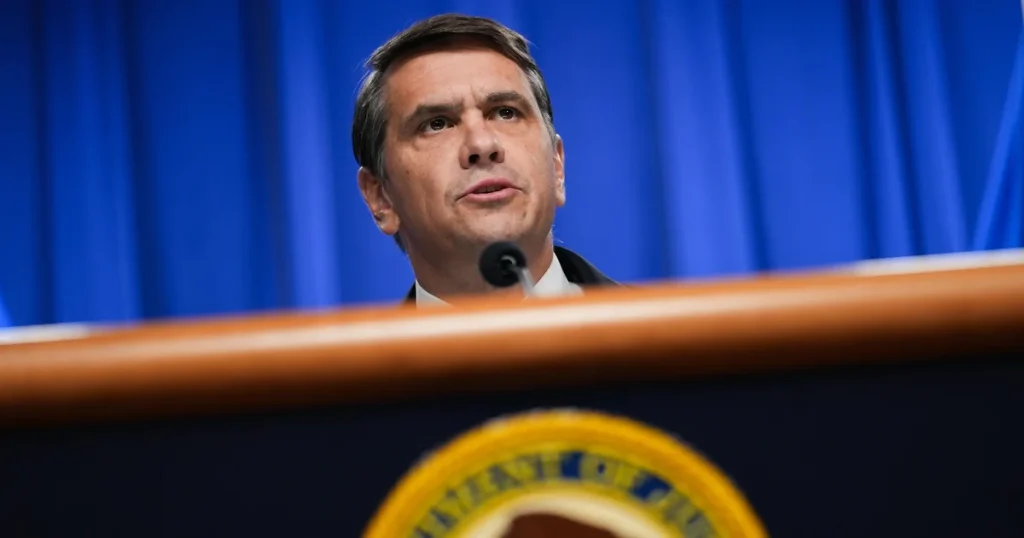
Justice Department Halts $1.8 Billion “Anti-Weaponization Fund” Amid Legal Challenge
Justice Department says it will stop – The U.S. Department of Justice announced Monday that it will pause operations on the $1.8 billion “anti-weaponization fund” following a court order issued by a federal judge in Virginia. The decision, which temporarily halts the program’s progress, stems from a legal challenge that has raised significant concerns among lawmakers and critics. The move signals a setback for the initiative, which was designed to provide taxpayer-funded compensation to individuals claiming the federal government had unfairly targeted them.
Background of the Legal Dispute
The fund’s creation was linked to a civil lawsuit involving former federal prosecutor Michael Gerhardt, who played a role in cases related to the January 6, 2021, Capitol attack. Alongside Gerhardt, several other plaintiffs have contested the program, arguing that its establishment could lead to unjust payouts. U.S. District Judge Leonie Brinkema issued a temporary injunction on Friday, preventing the Justice Department from proceeding with the fund until further legal clarity is achieved. The order ensures that no funds are permanently distributed while the judge evaluates whether to grant more extensive relief.
Brinkema’s ruling focuses on the legal standing of the program, emphasizing the need to prevent irreversible financial commitments. Her order specifically prohibits the Justice Department from taking any further actions related to the fund’s creation or operation. This includes halting the transfer of money, reviewing claims, and disbursing payments. A hearing is scheduled for June 12 to determine the next steps. The judge’s decision has effectively stalled the program, leaving its future uncertain.
The Fund’s Purpose and Controversy
The anti-weaponization fund was established as part of a settlement agreement between the Trump administration and the Internal Revenue Service. The initiative emerged after President Donald Trump filed a lawsuit against the IRS, alleging that the agency had improperly released his tax returns. The fund aims to compensate individuals who believe the federal government had weaponized its legal tools against them, particularly those targeted during the Jan. 6 Capitol attack.
However, the program quickly became a focal point of political debate. Allies of Trump, including some defendants convicted in connection with the Capitol riot, expressed interest in submitting claims. This sparked intense scrutiny, with critics arguing that the fund could be used to reward those who participated in the attack. The Justice Department’s own statement on X highlights its stance, asserting that the program was intended to address “tremendous abuse, harm, and hate” directed at individuals. It emphasizes that the fund is open to all, regardless of political affiliation.
“The Department of Justice disagrees strongly with the decision on the Anti-Weaponization Fund put forth by the United States District Court Judge in the Eastern District of Virginia, wherein the Court stated that, under no circumstances, may the Department of Justice proceed with the Anti-Weaponization Fund recently established in order to make up for the tremendous abuse, harm, and hate unfairly shown to so many people,” the department said on X.
Despite its inclusive language, the fund has drawn criticism for its timing and potential implications. Democrats, in particular, have accused the Trump administration of using the program to provide financial support to individuals who were involved in the Capitol assault. This criticism has intensified as the political landscape shifts, with Republicans facing pressure to align with the administration’s agenda.
Republican Pushback and Political Consequences
Republicans in Congress have been vocal in their opposition to the fund, viewing it as a threat to their legislative priorities. The backlash escalated during a Senate Republican conference meeting last month, where senators raised concerns about the program’s fairness and scope. Acting Attorney General Todd Blanche was reportedly presented with these objections, with some lawmakers expressing frustration over the initiative’s timing.
The pushback has led to a strategic dilemma for GOP leaders. While they initially supported the fund, the controversy has forced them to reconsider its integration into broader funding bills. During a recent meeting with President Trump at the White House, House Speaker Mike Johnson discussed the program’s challenges, according to multiple sources. The session highlighted the administration’s efforts to rally support despite the mounting resistance.
Democrats have seized the opportunity to challenge the fund, with Senate Minority Leader Chuck Schumer vowing to launch a coordinated campaign to block its implementation. California Senator Adam Schiff, a prominent figure in the Democratic effort, stated that the reconciliation process will offer the first chance to force a vote on the issue. However, he noted that additional avenues may be explored if the opportunity arises.
“There will be no hiding from this issue,” Schiff said at a news conference Monday evening.
The Republican revolt has also impacted the administration’s ability to advance its agenda. With Democrats threatening to force votes on the fund, GOP leaders have struggled to maintain momentum on other priorities, such as funding for the Department of Homeland Security’s immigration enforcement agencies. This has created a political crossroads, as lawmakers weigh the benefits of supporting the fund against the risks of alienating key factions within their own party.
Broader Implications for Government Accountability
The anti-weaponization fund’s legal hurdles reflect a broader debate over the use of taxpayer money to compensate individuals for alleged government overreach. Critics argue that the program could set a precedent for using federal funds to reward political dissent, while supporters contend it is a necessary measure to address systemic abuses. The Justice Department’s decision to comply with Brinkema’s ruling underscores the administration’s willingness to adapt to legal challenges, even as it faces political pressure.
Additionally, the fund has become a symbol of the Trump administration’s approach to governance. By offering financial relief to those accused of participating in the Capitol riot, the program highlights the administration’s focus on mitigating the impact of its policies. The president’s grant of clemency to approximately 1,500 defendants on his first day back in office has further fueled the narrative that the fund is a tool for redress.
As the debate continues, the anti-weaponization fund remains a key point of contention in Congress. Its temporary halt has allowed lawmakers to reassess its provisions and potential impact. While the program is not yet dead, the political and legal challenges it faces may determine its fate. The upcoming hearing on June 12 could provide critical insights into whether the Justice Department will resume work on the fund or seek alternative solutions.
Overall, the situation illustrates the complexities of balancing legal obligations with political strategy. The Justice Department’s compliance with the judge’s order reflects its commitment to procedural fairness, but it also highlights the challenges of implementing large-scale initiatives in a divided Congress. As the debate unfolds, the anti-weaponization fund will likely remain a central issue in the ongoing discussion about government accountability and the use of public funds in political contexts.