
House and Senate take different paths to avoid shutdown before midterms
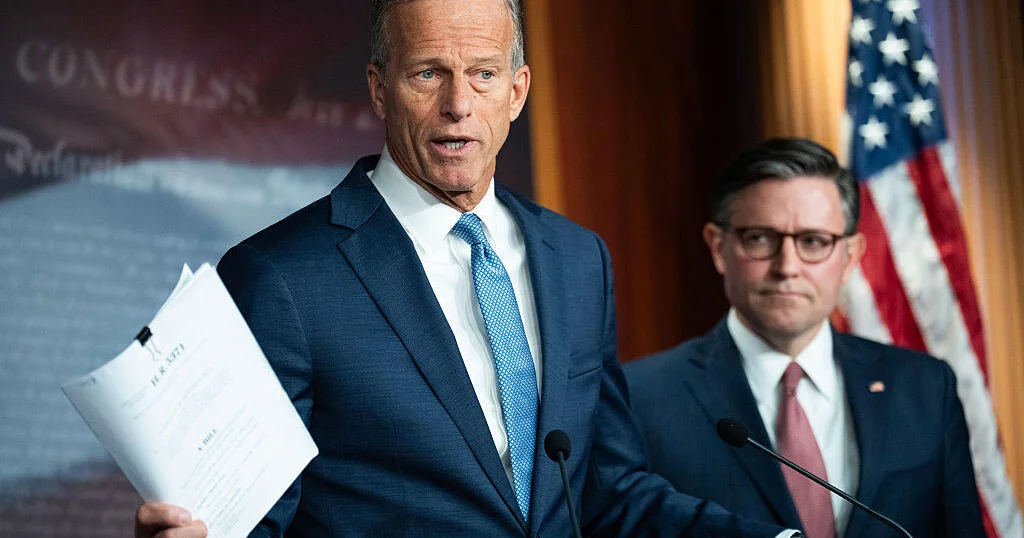
Legislative Branches Chart Separate Courses to Prevent Government Closure Before Election Season
Bizeconanalysis.com – As autumn approaches, Congress faces yet another critical deadline to secure federal funding, with lawmakers still recovering from a string of recent shutdown battles. These costly impasses have created a strong desire among members to avoid repeating history before the midterm elections arrive. Despite widespread warnings about an impending funding cliff, agreement on a unified strategy remains elusive. The current authorization for government operations concludes at the close of the fiscal year on October 1.
Diverging Strategies Between Chambers
Last week, signals suggested the House of Representatives was nearly ready to advance a temporary spending measure. However, simultaneously across Capitol Hill, Senate Majority Leader John Thune communicated a different timeline to CBS News. He confirmed that negotiations were underway, stating, “we are in discussions on that,” while emphasizing that “we’re working on solutions to fund the government.” By this week, the contrasting approaches between the two legislative bodies became increasingly apparent.
The House is preparing for a Tuesday vote on legislation designed to maintain government operations through the midterm elections. In contrast, Thune revealed plans to introduce a distinct continuing resolution to the Senate floor prior to the August recess. He referenced “productive conversation on both sides of the aisle” regarding the funding proposal. Meanwhile, House Speaker Mike Johnson has been championing the Republican-led initiative in the lower chamber. Democratic leaders in the House have criticized what they characterize as a hasty effort that does not allow sufficient time for bipartisan negotiations.
Structural Differences Shape Legislative Paths
These differing strategies highlight a fundamental division between the House and Senate that has influenced recent legislative battles. While both chambers operate under narrow Republican majorities, their procedural requirements differ significantly. The Senate must secure sixty votes to advance most legislation, necessitating Democratic support. Conversely, the House can advance measures through partisan voting alone.
Thune explained on Wednesday that he has requested Senator Susan Collins of Maine, who chairs the Appropriations Committee, to prepare a “bipartisan and clean continuing resolution” to finance the government through the post-midterm period. He indicated his intention to present this measure for a vote before the Senate adjourns for its August break. The majority leader noted that the Appropriations Committee is “hard at work” examining proposed funding modifications from the Trump administration to “ensure we have a bipartisan product ready to move quickly.”
Thune, representing South Dakota, has frequently addressed the unique dynamics within the Senate. On Wednesday, he minimized the significance of the chambers’ different approaches. “Everybody’s going the same direction,” Thune told CBS News. “It’s just, we have a slightly … different process. We need Democrats over here.”
Historical Context and Future Outlook
The Senate played a central role in last fall’s forty-three-day shutdown, during which Democrats utilized government funding as leverage to extend expiring healthcare tax credits. Earlier this year, a partial shutdown extended beyond seventy days as Democrats pursued reforms to immigration enforcement agencies. These funding disputes have significantly impacted this year’s appropriations process, which has experienced considerable stagnation in the Senate.
Republicans have anticipated for months that Democrats might trigger a government shutdown this fall before the midterm elections. “It was not a good year on the government funding front, with two record-breaking government shutdowns,” Thune remarked on the Senate floor Wednesday. “But we have an opportunity now to chart a new path.”
The majority leader expressed optimism, stating he is “encouraged that so far my Democrat colleagues have signaled that they do not want to force another government shutdown.” He anticipated introducing a bipartisan continuing resolution in the coming days while encouraging senators to support the legislation to “give the American people the certainty that they deserve.” Collins echoed this sentiment, telling CBS News she is “hopeful that we will be able to draft a bipartisan CR,” noting that Democrats have been amenable “so far.”
With the House scheduled to depart Washington for a five-week August recess later this week, and the Senate pursuing its independent strategy, the funding question will likely remain unsettled until lawmakers reconvene in September. Complicating matters further, the outcome has become connected to another funding dispute emerging in recent days. The House has been advocating for additional Pentagon funding, along with several other priorities, through the budget reconciliation process. This mechanism enables the governing party to approve measures with direct budgetary implications without cross-party assistance. However, Thune has remained noncommittal regarding a potential third reconciliation bill, cautioning on Tuesday that the Senate will “hold that” until they are