
Affordable healthcare emerges as a voter priority in purple Nevada
Affordable Healthcare Emerges as a Voter Priority in Purple Nevada
The Impact of Medicaid Changes on Individual Voters
Affordable healthcare emerges as a voter – Steven Cohen, a 38-year-old Las Vegas resident with autism, finds himself at the center of a critical debate over healthcare access in Nevada’s upcoming gubernatorial race. For him, the decision between candidates will hinge on which one can best safeguard his Medicaid coverage. As someone who is enrolled in both Medicaid and Medicare, Cohen fears that the upcoming implementation of work requirements and more frequent eligibility checks—set to begin in January under the Republican-led One Big Beautiful Bill Act—could force him off Medicaid. His concern is not isolated; it reflects a growing anxiety among voters in Nevada, a state often described as a battleground due to its shifting political landscape.
“When you’re going to some providers, notably mental health, once a month, or in the case of one provider, a couple of times a week, those copays quickly add up,” Cohen said.
Federal Policy Shifts and Their National Implications
The federal changes affecting Medicaid and the Supplemental Nutrition Assistance Program (SNAP) are part of broader efforts to reshape healthcare and food assistance systems. These reforms, which include budget cuts to Medicaid and new rules imposing work requirements, are projected to impact millions of Americans. According to estimates, the policies could lead to a nationwide increase of 7.5 million people without health insurance by 2034. Meanwhile, SNAP benefits are expected to decline by 2.4 million recipients on average each month between 2025 and 2034.
These adjustments are already creating ripples in Nevada, where the state’s economy is heavily reliant on tourism, hospitality, and gaming. Nearly 300,000 Nevadans are self-employed or work as independent contractors, often lacking employer-sponsored health insurance. Many of these individuals depend on the ACA health exchange for coverage, a system that saw a notable 5.5% drop in enrollment this year after a record 110,000 sign-ups for 2025. Even before the federal changes, Nevada’s 11.4% uninsurance rate was the fourth-highest in the country, according to 2024 data.
A Political Scientist’s Warning on Affordability
David Damore, a political science professor at the University of Nevada-Las Vegas, has warned that the affordability of healthcare is becoming a central theme in this election. “This is going to come down to an affordability election, and that’s going to hurt the Republicans,” he said. His assessment aligns with findings from a recent KFF poll, which revealed that two-thirds of respondents expressed worries about affording healthcare, surpassing concerns about food, housing, or gas. More than half of those surveyed reported that their healthcare costs have risen in the past year.
While affordability is a shared concern across all voters, it carries more weight among Democrats and independents. The Democratic Party, which is currently leading in healthcare policy discussions, faces challenges as some voters remain skeptical. Liz Hamel, a senior vice president at KFF and director of public opinion research, noted that about 30% of respondents lack trust in either major political party. This distrust could influence voting behavior, particularly in tightly contested races like Nevada’s, where the outcome remains uncertain.
Lombardo’s Campaign and Policy Divergence
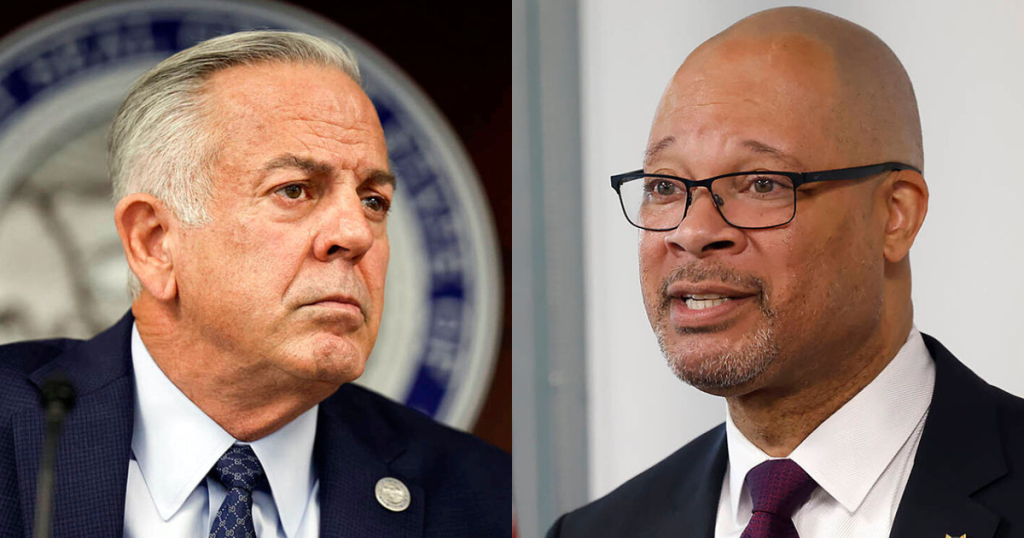
Republican Governor Joe Lombardo, running for reelection against Democratic state Attorney General Aaron Ford, has positioned himself as a candidate focused on both healthcare and economic growth. His campaign highlights several initiatives, including the construction of a new children’s hospital in Las Vegas, the consolidation of Nevada’s Medicaid program, ACA marketplace, and public employee benefits into a single agency, and the expansion of community behavioral health centers. These policies aim to address gaps in care while streamlining state services.
However, Lombardo’s approach to healthcare has diverged from traditional Republican strategies. Before his 2022 election, he served eight years as sheriff in Clark County, followed by 26 years with the Las Vegas Metropolitan Police Department. This background has shaped his stance on healthcare, where he emphasizes access and cost management over strict market-based reforms. For instance, his support for expanding Medicaid eligibility and improving behavioral health infrastructure contrasts with the Trump administration’s focus on work requirements and reducing federal subsidies.
The Ripple Effect Across the Nation
The nationwide impact of these policy shifts is significant. As health insurance premiums rise, many Americans are opting for cheaper plans with limited coverage or forgoing insurance entirely. This trend is exacerbated by the expiration of enhanced Affordable Care Act subsidies, which occurred at the end of last year. The result is a growing number of people struggling to afford care, particularly those in low-income brackets.
Despite these challenges, the Democratic Party maintains an edge in healthcare issues, according to KFF data. Yet, the party’s advantage is not absolute. Voters like Cohen, who face immediate financial pressures, are pivotal in determining the election’s outcome. Their concerns highlight a broader trend: as healthcare becomes more expensive, affordability is increasingly a defining issue for Americans, regardless of political affiliation.
Swing States and the Broader Election Context
Nevada’s race is part of a larger set of competitive gubernatorial elections across the country. Races in Arizona, Georgia, Iowa, Michigan, and Wisconsin are also considered toss-ups, with healthcare policy playing a critical role in shaping voter preferences. In these states, candidates are vying for support from populations that are increasingly wary of federal policies and their impact on daily life.
The stakes are high for both parties. For Republicans, the push to implement work requirements and cut Medicaid funding could alienate voters in states like Nevada, where Medicaid is a lifeline for many. For Democrats, maintaining their momentum in healthcare policy while addressing voter skepticism will be essential. The ability to articulate clear solutions to rising costs and access issues may determine the success of candidates in these pivotal races.
A State in Transition: Balancing Priorities
Nevada’s unique position as a “purple” state—where political leanings are split—adds complexity to the healthcare debate. While the state has a strong history of Republican leadership, recent shifts in voter sentiment suggest a potential realignment. The Medicaid changes, in particular, are drawing attention from a demographic that has traditionally leaned Republican but is now more cautious about economic impacts.
State officials have already noted the potential consequences of these policies. In May, a Medicaid official informed lawmakers that up to 70,000 Nevadans could lose coverage under the new rules. Additionally, around 28,000 individuals lost access to SNAP benefits during the same period, underscoring the interconnected nature of healthcare and food security. These figures highlight the urgency of the issue and the need for candidates to address both programs effectively.
As the November election approaches, the focus on affordability is likely to intensify. Voters will weigh the promises of each candidate against the realities of federal policy changes. For a state with a diverse economy and a significant number of self-employed residents, the outcome of the race could have far-reaching implications for healthcare access and economic stability. The race for governor may ultimately be a referendum on whether the state’s leaders can navigate these challenges while maintaining public trust.