
Transcript: Rep. John James on “Face the Nation with Margaret Brennan,” Aug. 30, 2026
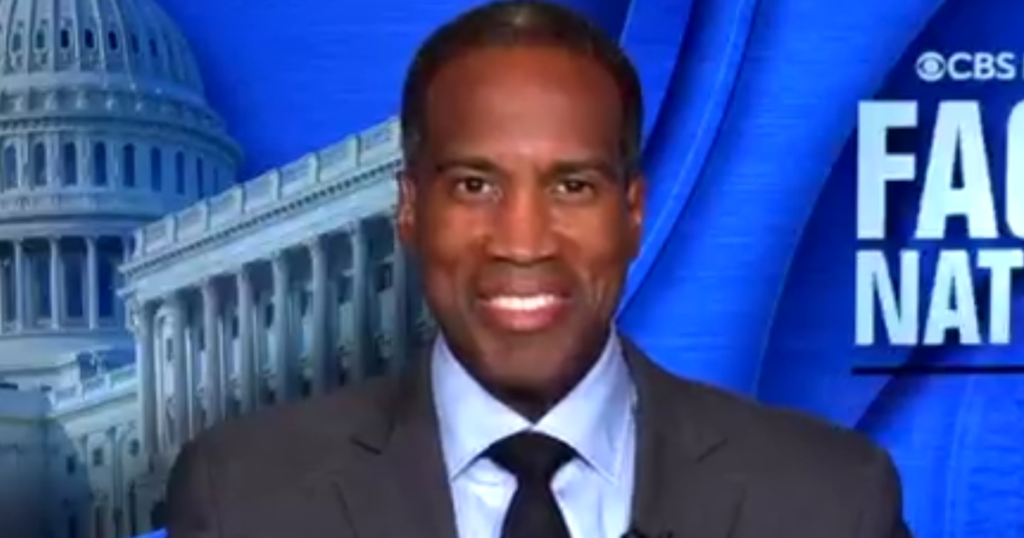
Transcript: John James on Face the Nation, Aug. 30, 2026
Bizeconanalysis.com – This transcript captures a wide-ranging interview in which Michigan Republican congressman and gubernatorial candidate John James sat down with host Margaret Brennan on Face the Nation, broadcast August 30, 2026. Speaking from Rockford, Michigan, James threaded together the state’s November ballot race, the escalating standoff with Iran, retaliatory tariffs from Ottawa, and everyday cost-of-living pressures. The transcript makes clear that James framed every foreign-policy question through the lens of what he called “ground zero” for the next presidential contest.
9/11 Remarks and the Democratic Slate
The transcript opens with James taking aim at the Democratic ticket. He named gubernatorial candidate Abdel Al Sayed and Senate candidate Jocelyn Benson, accusing them of campaigning alongside figures who had publicly suggested Americans “deserved” the September 11 attacks. With the 25th anniversary of those attacks approaching, James called the comments “way out of bounds” and demanded public clarification.
“They’re campaigning with extremists who say that America deserved 9/11, and I think that coming up on the 25th anniversary of 9/11, these are statements that are way out of bounds and should definitely be clarified.”
Brennan noted that influencer Hassan Piker had since walked back the remarks and that the Senate candidate had begun distancing himself. James acknowledged the retraction but pressed the broader point: that the transcript record showed a socialist ticket intent on exporting economic dysfunction beyond Michigan’s borders.
Iran at the Six-Month Mark
Shifting to foreign policy, Brennan pressed James on a conflict that had stretched well past the four-to-six-week window the administration initially projected. Polling cited on the program showed 61 percent of Americans disapproving of the operation, and gasoline prices had climbed. Brennan asked whether the pivot from kinetic action toward economic sanctions warranted a fuller accounting for constituents.
James, a West Point graduate of the class of 2004 and an Iraq war veteran, answered with a layered position. He stressed that his generation of officers had sworn an oath fully expecting combat and that his class bore the heaviest casualty toll of any service-academy cohort since Vietnam. That experience, he said, made him deeply skeptical of prolonged military entanglements.
“We understand the cost of war. We hate war, and we want to use every method, diplomatic or economic, to make sure that we keep Americans safe and we keep our young military members out of war.”
At the same time, the transcript shows James voicing strong support for preventing Iran from acquiring nuclear weapons and for pursuing a negotiated settlement. He framed the sanctions-and-diplomacy track as consistent with what ordinary Americans wanted, then quickly pivoted the conversation back to domestic priorities.
Cost of Living, Regulation, and the Canada Tariff Escalation
James devoted considerable time to what he described as the everyday economic anxieties of Michiganders: energy costs, grocery prices, housing affordability, and healthcare spending. As a candidate for governor, he pledged to trim state-level regulations he characterized as harmful, arguing that deregulation at the state level would translate into lower pump prices and cheaper staples.
Brennan then raised the trade dimension. Canada’s prime minister had announced that Ottawa would match American tariffs on Canadian goods dollar for dollar, effective September 8, 2026. Given Michigan’s deep integration with Canadian supply chains—particularly in automotive manufacturing—the question was whether James could quantify the damage to the state’s economy.
James answered by invoking his own background as an automotive supplier who has built jobs within the state. He acknowledged the centrality of the U.S.-Canada partnership to Michigan’s industrial base while simultaneously arguing that the pre-tariff status quo had already failed workers.
“Michigan has lost over 300,000 manufacturing jobs since the 90s, and that cannot continue. But at the same time, we need the negotiators to go back to the table, stop acting like children, and negotiate from strength.”
FAQ: Transcript and Interview Details
Where can I find the full transcript of this interview? The complete transcript was published by CBS News following the August 30, 2026 broadcast of Face the Nation with Margaret Brennan. It covers roughly 30 minutes of conversation spanning foreign policy, trade, and Michigan state politics.
Who is John James, and what role does he hold? John James is a U.S. congressman representing Michigan and the Republican nominee for governor in the November 2026 election. He is a West Point graduate (class of 2004) and an Iraq war veteran.
What did the transcript say about the Canada tariff deadline? James referenced Ottawa’s announced decision to match American tariffs dollar for dollar, effective September 8, 2026, and called for renewed bilateral negotiations while noting Michigan’s loss of over 300,000 manufacturing jobs since the 1990s.
Is the transcript available in video form? Yes. The interview aired on CBS’s Face the Nation and is available for streaming through the network’s digital platforms alongside the written transcript.