
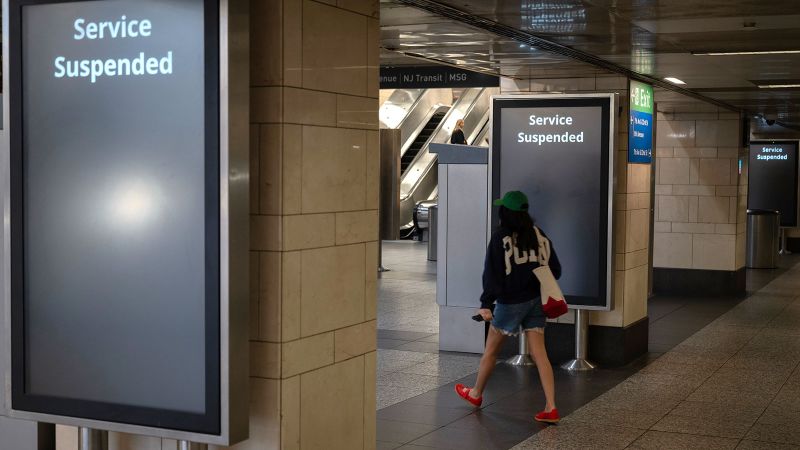
Talks Raise Hopes of Progress in LIRR Strike
Talks raise hopes of progress in strike – Monday’s developments in negotiations have sparked renewed optimism that the strike at the Long Island Rail Road (LIRR) may not persist beyond the week. With the nation’s busiest commuter railroad facing service interruptions, union representatives and MTA officials have signaled a potential breakthrough. James Louis, vice president of the Brotherhood of Locomotive Engineers, noted that the talks have shown “greater promise” than the previous day, offering a cautiously positive outlook on resolving the standoff.
Strike Details and Negotiation Progress
The strike, which began Saturday after last-minute efforts to prevent it failed, involves five unions representing over 3,500 workers. These unions are demanding a 4 to 5 percent wage increase, a request that has strained relations with the Metropolitan Transportation Authority (MTA). After Sunday afternoon discussions, which concluded late into the night, representatives from both sides gathered until nearly 1:30 a.m. ET on Monday. The National Mediation Board, a federal agency overseeing labor relations, has been instrumental in facilitating these talks.
MTA’s Contingency Plan and Impact
Amid the disruption, the MTA has rolled out a contingency plan to aid essential commuters. Starting at 4:30 a.m. ET Monday, shuttle buses will transport passengers from Long Island to New York City. New York Governor Kathy Hochul emphasized the effort to “minimize disruptions,” though the buses will handle only a fraction of the usual rail capacity, limiting their effectiveness for widespread relief.
Mayor Zohran Mamdani of New York City echoed the MTA’s concerns, advising residents to expect “heavier-than-usual traffic” and longer travel times. The LIRR, which serves over 250,000 weekday passengers, has become a critical lifeline for Long Island commuters. Its shutdown has forced many to rely on roadways and private vehicles, amplifying the city’s transportation strain.
Union leaders, including Louis, have highlighted the necessity of the strike, framing it as a response to stagnant wages and deteriorating working conditions. While Hochul criticized the action as “reckless,” she acknowledged the workers’ demands. The negotiations, however, remain at a critical juncture, with the final agreement yet to be determined.
Historically, similar strikes have had brief durations. A recent walkout at New Jersey Transit lasted only three days, suggesting the potential for swift resolution if both sides align. If a deal is reached Monday, train services could resume before Tuesday’s peak hours, allowing commuters to avoid the most severe delays. Nevertheless, the unions’ final approval is still pending, keeping the situation in flux.
“The talks yesterday were productive. The folks are working hard. We are headed in a positive direction, but we have to get it finished,” said Janno Lieber, CEO of the MTA, in a statement to CNN affiliate WABC-7. Lieber stressed the MTA’s commitment to resolving the dispute, though the outcome remains uncertain as negotiations continue.





