
Arrests of immigrant parents create mental health crisis for children
Immigrant Parent Deportations Spark Lasting Mental Health Concerns for Children
Arrests of immigrant parents create mental – In recent months, the emotional toll of separating children from their parents has become a growing concern across the United States. For many families, the loss of a caregiver—often a parent—has disrupted their daily routines and left children grappling with anxiety, depression, and other psychological struggles. Los Angeles has emerged as a focal point of this crisis, where the personal stories of affected families highlight the broader impact of immigration policies on children’s well-being.
A Family’s Heartbreak in the Wake of Deportation
Damian Zermeño, a 15-year-old student, experienced a dramatic shift in his life after his father, Saúl Zermeño, was unexpectedly deported on October 3. That day, Saúl, a 45-year-old single father, attended a routine immigration check-in at an Enforcement and Removal Office, a process he had followed for years to maintain his legal status. His attorney noted that Saúl had been granted deferred action, which allowed him to stay and work in the U.S., but the officers decided to remove him to Mexico, where he had not lived since childhood.
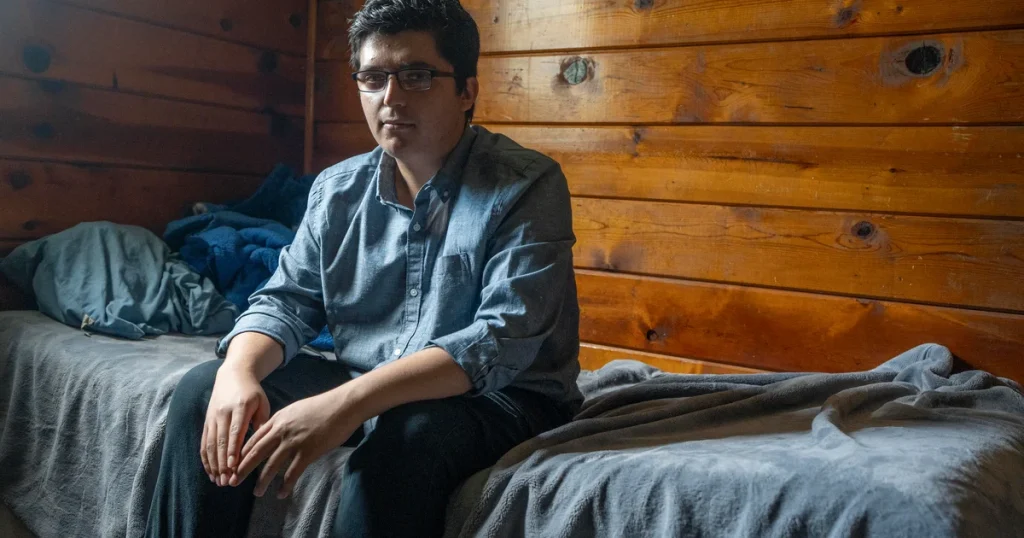
The separation was sudden and profound. Damian, who had been raised by his father since infancy, found himself alone after school, facing the reality of a parent’s absence. His aunt was the only one at home, crying in the dining room, while his father’s absence left a void that could not be filled by mere distance. Damian, who had previously been cheerful and engaged in school, now withdrew into silence. He stopped eating, avoided friends, and even abandoned his favorite video game, Fears To Fathom, as if the world had lost its color.
“I thought it wasn’t true,” Damian said. “I just went to my room. I didn’t want to leave. I didn’t even want to eat.”
His father’s deportation marked the beginning of a new chapter for Damian, one where he navigated his teenage years without the presence of the man who had been his constant companion. Despite his ability to manage basic tasks like cooking, the sudden change left him overwhelmed. The emotional impact of being separated from his primary caregiver—Saúl, who had attended to his medical needs and supported his education—became immediately apparent.
Broader Impacts of Deportation Policies
Across the country, hundreds of thousands of children, most of whom are U.S. citizens, have been displaced by the Trump administration’s aggressive deportation policies. Parents are often detained for months in facilities far from their families, or they are removed while still in the presence of their children. These separations can occur in schools, homes, or during routine check-ins, creating a sense of unpredictability that children struggle to cope with.
Experts in child psychology and immigrant advocacy warn that the trauma of losing a parent—especially one who has been a primary source of stability—can have lasting effects. Children with pre-existing conditions, such as attention-deficit/hyperactivity disorder or autism, may face even greater challenges as they adjust to the absence of their caregiver. The stress of separation can disrupt their emotional development, leading to heightened anxiety, depression, and post-traumatic stress symptoms.
The Reverend Tanya Lopez, a pastor at Downey Memorial Christian Church, has witnessed these impacts firsthand. She works with immigrant families in Los Angeles and describes the visible distress in children who have been separated from their parents. “You can just see it in their faces; it’s almost like the light has been dimmed in their eyes,” she said. This sentiment echoes the experiences of many families who have been torn apart by the policies that prioritize swift removal over family unity.
Long-Term Health Consequences
Research has consistently shown that the stress caused by parental separation can lead to long-term health issues. Children who experience such trauma are more likely to develop chronic conditions like heart disease, diabetes, or cancer later in life. The emotional distress can also weaken the immune system, making them more vulnerable to illness. For Damian, the absence of his father has already triggered symptoms of anxiety and withdrawal, which could persist into adulthood if left unaddressed.
Immigrant families have long relied on their parents as the foundation of their emotional and physical support. When a parent is removed, the child often bears the brunt of the disruption. This is particularly true for children like Damian, who had been raised in a home environment where their father was a central figure. The loss of this stability can lead to developmental delays and a sense of insecurity that lingers well beyond the initial separation.
Systemic Challenges and Policy Responses
Despite the clear emotional toll, some officials argue that family separations are necessary to enforce immigration laws. In a statement, the Department of Homeland Security emphasized that Immigration and Customs Enforcement (ICE) does not routinely split families, offering parents the option to designate a trusted relative to care for their children if they are removed. However, this option is not always accessible, and many parents are unaware of their rights when detained.
A report by the Women’s Refugee Commission and Physicians for Human Rights found that children are often left behind without adequate safeguards. The study revealed that many parents are not given the chance to arrange for their children’s care, and ICE officers frequently fail to assess the well-being of the children present during removals. Saúl Zermeño, for example, claimed that the officers did not ask about his son’s condition or check on Damian’s mental state before deporting him.
These policies have created a cycle of fear for immigrant families. Parents worry about being detained at any moment, while children internalize the anxiety of losing their caregivers. The psychological impact is compounded by the fact that many of those detained have no criminal record, with unauthorized presence in the U.S. typically classified as a civil offense. This means the removal is not always a result of serious wrongdoing, but still leaves children in a state of emotional turmoil.
Stories of Resilience and Loss
Damian’s story is not unique. Across the U.S., children have faced similar challenges, from preschoolers who develop speech delays to teenagers too anxious to leave their rooms. One family recounted how their young daughter began stuttering after her mother was detained in a nearby facility, while another described a son who started talking about suicide following his father’s deportation. These accounts underscore the far-reaching consequences of the policy, which extends beyond immediate emotional distress to affect long-term development.
The separation has also disrupted the daily routines of families. For Damian, this meant learning to manage tasks he had never done alone, such as cooking meals without his father’s guidance. The change in environment has left him feeling isolated, with his favorite subject—English—no longer offering the comfort it once did. “It’s like the world has turned upside down,” he said, reflecting on the abrupt shift in his life.
For Saúl Zermeño, the deportation marked the end of his time in the U.S. as a caregiver. He had been a steadfast presence in his son’s life, ensuring his medical needs were met and his education supported. Now, he is in Mexico, unable to be with Damian, whose emotional state continues to deteriorate. The family’s bond, once unbreakable, now exists only through the lens of a phone screen, a fragile connection in a world that feels increasingly distant.
As the policy continues, advocates warn that the mental health crisis among children from immigrant families will only deepen. Without intervention, these children may carry the scars of separation into adulthood, affecting their ability to form stable relationships and thrive in their communities. The question remains: how long will it take for the system to recognize the human cost of these separations and implement changes to protect the most vulnerable among us.