
Bill Gates tells Congress that meeting Epstein was “a grave error in judgment”
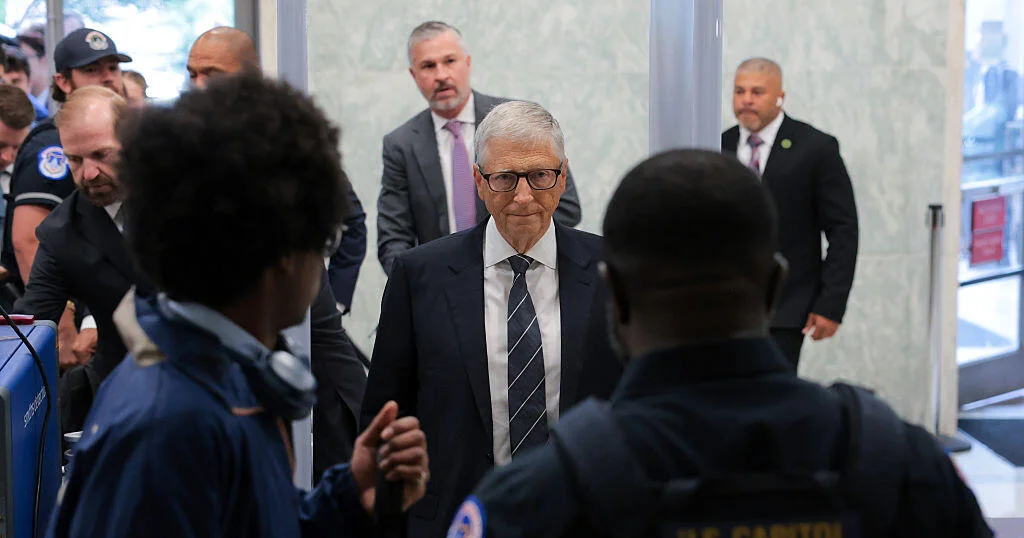
Bill Gates Testifies Before Congress on Jeffrey Epstein Connection
Bill Gates tells Congress that meeting – During a House Oversight Committee hearing on Wednesday, Bill Gates addressed his relationship with Jeffrey Epstein, describing their meetings as a “grave error in judgment” that jeopardized his philanthropy. The Microsoft co-founder, who spent nearly six hours testifying, faced questions about his ties to the controversial financier, whose case has drawn significant scrutiny from lawmakers. Gates’ remarks, shared with CBS News, provided insight into the nature of their interactions and the impact Epstein’s actions had on his work.
Background on Epstein’s Influence
The House Oversight Committee is investigating how the government managed the Jeffrey Epstein case, including his connections to prominent individuals. Gates, who appeared as a key witness, explained that he was first introduced to Epstein through reliable contacts when the financier was actively working to launch a charitable foundation. He described this as a professional encounter, focusing on collaborative efforts to establish new giving structures for his philanthropic initiatives.
“I want to state very clearly: I never witnessed nor had any indication that Epstein was engaged in ongoing criminal conduct,” Gates said. “I have never victimized anyone. While he may have sought to foster a personal relationship, I was never interested in that and never reciprocated.”
Gates emphasized that his meetings with Epstein were primarily business-oriented, highlighting their discussions about potential strategies for the foundation’s operations. However, he admitted that these interactions eventually evolved into more personal exchanges, which he now views as a misstep. The billionaire also revealed that Epstein gained access to sensitive details about his private life, including his marital infidelities, which he claims were used to pressure him into resuming work on the charitable project.
Denials of Social Interaction
Gates categorically denied any social relationships with Epstein, stating he had never visited the financier’s island, ranch, or Florida home. He also dismissed the idea of spending time with Epstein in his private plane, reinforcing his position that their meetings were strictly professional. The Microsoft co-founder noted that their collaboration between 2011 and 2014 centered on “potential giving structures,” though he described these talks as a dead end.
Additionally, Gates recounted an instance where Epstein was involved in negotiating an exit package for an employee leaving his private office. While he did not name the individual, the testimony included emails between Epstein and former Gates adviser Boris Nikolic, which suggest Epstein played a mediating role in the deal. These communications, Gates argued, were a precursor to his growing awareness of Epstein’s knowledge of his personal life.
Personal Affairs and Epstein’s Tactics
Gates disclosed that Epstein became privy to information about his extramarital affairs, which he said the financier used to manipulate him. In one email from February 2013, Epstein referenced unverified allegations that Gates had engaged in sexual relationships with Russian women, resulting in a sexually transmitted infection. He further claimed that Gates had attempted to discreetly administer antibiotics to his wife, Melinda, during this period.
“It was after this that I learned Epstein had become aware of sensitive information about my personal life, including the fact that I had been unfaithful in my marriage. These affairs had nothing to do with my interactions with Epstein, but they were painful for my family,” Gates stated.
Gates elaborated that Epstein leveraged these personal details to encourage him to re-engage with the charitable effort. He admitted that the financier’s tactics included “many lies” layered on top of the affair claims, which he said were meant to pressure him into continuing their collaboration. Despite these efforts, Gates maintained that Epstein failed to secure his full commitment, though he acknowledged the methods used to gain influence.
Impact on Philanthropy
Gates stressed that his reputation is central to his ability to build partnerships that drive social impact. He argued that meeting with Epstein compromised this foundation, as the financier’s behavior was “antithetical” to the values he promotes. “Reputation is the basis for developing partnerships that save lives,” he said. “Meeting with Epstein was a grave error in judgment and put this work at risk.”
Following his testimony, Gates issued a statement expressing his support for the committee’s investigation and his commitment to transparency. He praised the release of all relevant files, stating that his participation aimed to “get justice for the victims.” This aligns with his earlier apology to staff at the Gates Foundation in February, where he acknowledged his connection to Epstein from 2011 to 2014. Gates’ spokesperson also emphasized his willingness to testify, calling the committee’s work “important” and his cooperation “grateful.”
Epstein’s Role in Gates’ Affairs
Epstein’s influence over Gates was further illustrated by a 2013 email exchange in which he claimed the billionaire had engaged in sexual relationships with Russian women. These allegations, though unverified, were used to highlight Gates’ personal vulnerabilities. In response, a Gates Foundation representative dismissed the claims as “absolutely absurd and completely false” in January, though the statements were later contextualized by the broader narrative of Epstein’s connections to Gates.
Additional evidence emerged in the form of text messages from 2017, which showed Epstein communicating with an adviser to Gates about a donor-advised fund. The messages indicated Epstein was actively trying to convince Gates to support this tax-deductible charitable vehicle, which he intended to operate. The adviser noted that Gates had expressed interest in the idea, but Melinda Gates remained skeptical. These interactions underscore the complex dynamics between Epstein and Gates, who now describe their relationship as a professional misstep rather than a personal alliance.
Gates’ testimony has sparked renewed debate about the role of private relationships in public philanthropy. While he denies any wrongdoing, his admission that Epstein used personal information to sway his decisions adds a layer of scrutiny to their collaboration. The committee’s investigation continues to examine how Epstein’s network influenced various sectors, including government and private foundations, and whether Gates’ involvement played a part in that broader pattern.
Legacy of the Epstein Scandal
Epstein’s case has had far-reaching implications, with figures like Gates now taking responsibility for their associations. The Wall Street Journal reported that Gates had acknowledged having affairs with Russian women during a town hall event, though he maintained these were separate from his work with Epstein. His testimony before Congress marks a pivotal moment in the ongoing examination of the scandal, as it provides a firsthand account of the pressures Epstein exerted to maintain his influence.
While Gates insists his interactions with Epstein were limited to professional discussions, the emphasis on personal information underscores the complexity of their relationship. His statement that “if the time I spent with Epstein lent him any credibility, I am deeply sorry” signals a level of accountability, even as he distances himself from Epstein’s alleged crimes. The committee’s inquiry into these connections highlights the importance of transparency in high-profile philanthropy, particularly when dealing with individuals at the center of a major scandal.
As the investigation progresses, Gates’ testimony serves as a critical piece of evidence in understanding the extent of Epstein’s reach. His willingness to speak openly about the situation reflects both his commitment to accountability and the evolving narrative of his relationship with the financier. The case continues to raise questions about the intersection of personal and professional influence, and how it can shape public perception and institutional trust.