
Ross Fire still burning 14 days later, with over 90,000 acres scorched and more than 150 structures destroyed
Ross Fire Still Burning 14 Days: 90,000 Acres Scorched
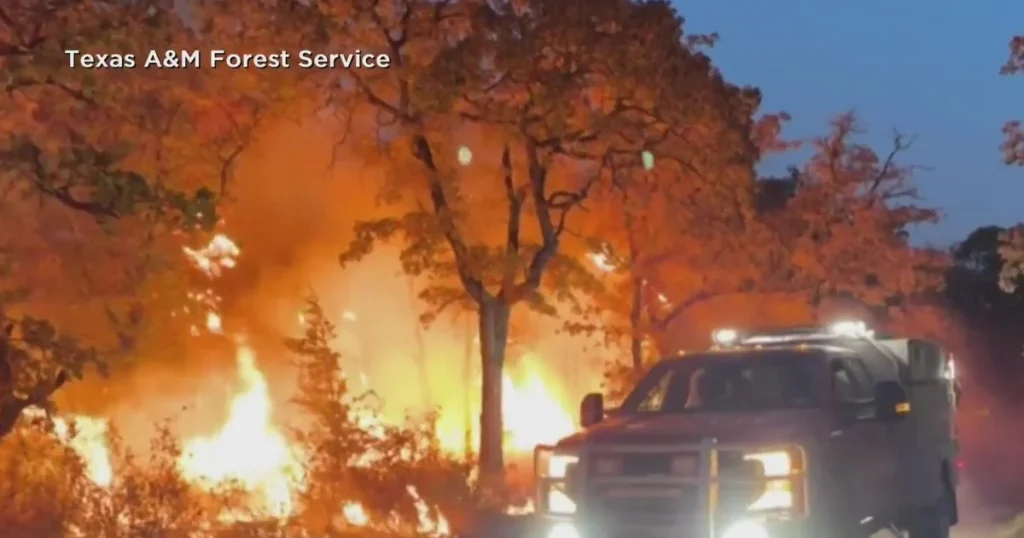
Bizeconanalysis.com – The Ross Fire still burning 14 days into its run has become one of the most destructive wildfires in recent North Texas memory. What began as a 25-acre ignition near the town of Ross in Palo Pinto County on Monday, Aug. 24, has consumed at least 90,400 acres across Palo Pinto and Jack counties. As of Monday, Sept. 7, the Texas A&M Forest Service reported the blaze at roughly 57 percent containment. The National Weather Service has classified it as the second-largest wildfire in the region’s modern record, a designation that underscores how quickly a small spark can metastasize under sustained wind and extreme fuel dryness.
From Pinpoint Ignition to Regional Emergency
The wildfire started just before 1:30 p.m. on Aug. 24, according to the Palo Pinto County Emergency Service District. Within hours, gusty winds and vegetation that had gone without measurable rainfall for over a month drove the fire from thousands of acres to tens of thousands. By the time containment lines gained traction, flames were already consuming land near U.S. 180 and Farm Road 919—corridors that serve as primary access routes for ranchers, commuters, and emergency vehicles alike.
Structures Lost, Structures Saved
The toll on built structures is severe. Of the properties in the fire’s path, 157 were destroyed outright, another 140 sustained damage ranging from roof loss to full structural compromise, and 453 were saved by containment lines and aggressive suppression work. Among the hardest-hit properties was Worth Ranch, operated by the Longhorn Council of Scouting America in Palo Pinto County. Multiple buildings there suffered what the council described as catastrophic damage. Fortunately, no scouts, campers, or guests were on site when flames reached the grounds, and camp ranger Pat Adams was evacuated safely before the fire front arrived.
Evacuations, Schools, and Daily Life Disrupted
On Tuesday, Aug. 25, Jack County Emergency Management ordered mandatory evacuations for residents along County Road 2210 heading toward Highway 281. Conditions improved quickly enough that those orders were lifted the following day, though officials continue to urge returning residents to remain alert while the blaze still burns in neighboring Palo Pinto County.
The disruption rippled through local school districts. Jacksboro ISD pushed its start time back two hours on Aug. 25 before resuming normal schedules the next day. Perrin CISD canceled classes entirely on Aug. 25 and delayed reopening to 10 a.m. on Wednesday, Aug. 26. Jack County Emergency Management directed both Bryson ISD and Graford ISD to cancel classes that same Wednesday. By Monday, Aug. 31, every affected district had returned to regular operations.
The smoke plume also reached industrial operations. A Molson Coors spokesperson confirmed the company temporarily paused certain canning lines at its Fort Worth facility as a precaution against degraded air quality.
“But beer lovers will see absolutely no impact,” the spokesperson said.
Roads, Skies, and Livestock Logistics
U.S. Highway 180, closed to all traffic between South FM 4 and FM 919 on Tuesday, has since reopened. A Temporary Flight Restriction remains active over the fire area, limiting commercial and general-aviation traffic to protect aircraft operating near smoke columns and suppression flights.
For ranchers and hobby farmers displaced by the conflagration, the Graham Livestock Commission opened space at the Old Mineral Wells Sale Barn, located at 2805 North Oak Ave, as a temporary holding station until owners can arrange alternative housing for their animals. Meanwhile, the Humane Society of North Texas coordinated with the Mineral Wells Animal Shelter to clear existing shelter populations and make room for pets displaced by the fire. Twelve dogs and 26 cats were expected to arrive at the Fort Worth shelter on Wednesday.
Why North Texas Is So Vulnerable Right Now
The wildfire did not erupt in a vacuum. After more than a month without measurable rainfall, fine surface fuels across the region have dried to critical or extreme levels, meaning even a minor spark can ignite vegetation that then spreads with alarming speed under gusty winds. The National Weather Service is tracking several active wildfires west of Interstate 35, with this incident ranking among the largest. Officials are urging residents to avoid outdoor activities that generate sparks or open flames—grilling, mowing dry grass, welding near brush—until conditions improve.
Resources on the Ground
The Texas Intrastate Fire Mutual Aid System (TIFMAS) Strike Team, working alongside the Texas A&M Forest Service, is providing aerial and ground suppression support around the clock. Additional state and federal assets have been staged at staging areas near Mineral Wells to sustain operations through the remaining containment phase.
Frequently Asked Questions
How large is the Ross Fire as of mid-September?
The Texas A&M Forest Service reported the blaze at roughly 90,400 acres and 57 percent containment as of Monday, Sept. 7. The National Weather Service has classified it as the second-largest wildfire in the region’s modern record.
Are roads and schools back to normal?
U.S. 180 has reopened between South FM 4 and FM 919. All affected school districts in Jack and Palo Pinto counties resumed regular schedules by Monday, Aug. 31. A Temporary Flight Restriction, however, remains in effect over the active fire area.
What should residents do while the fire is still active?
Officials advise avoiding activities that produce sparks or open flames—grilling, mowing dry grass, welding near brush—and remaining alert to any updated evacuation guidance from county emergency management. Displaced livestock owners should contact the Graham Livestock Commission for temporary holding arrangements.