
Woman attacked by otter while swimming in Lake Tahoe, receives nearly 40 stitches
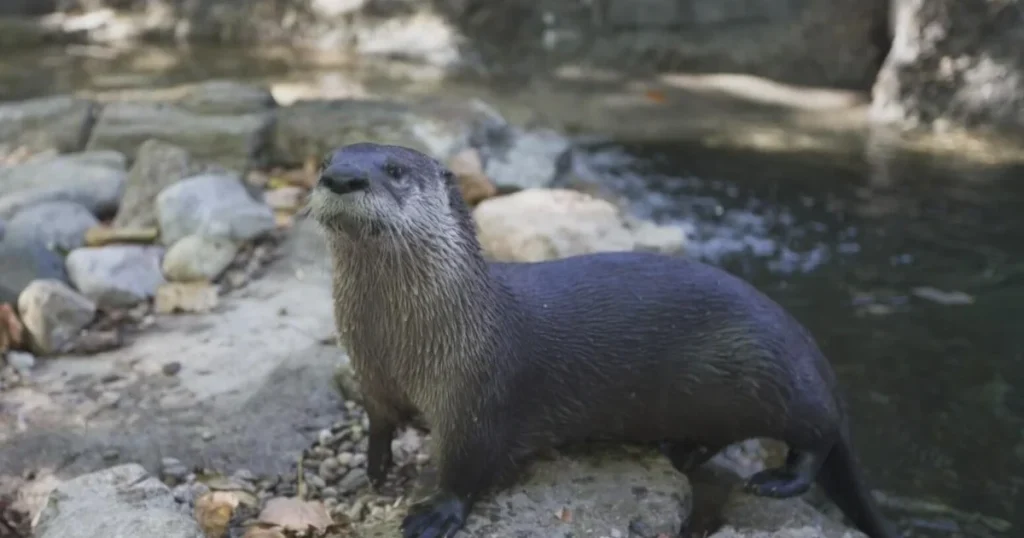
Woman Attacked by Otter While Swimming in Lake Tahoe
Bizeconanalysis.com – A woman attacked by otter while swimming in Lake Tahoe’s frigid alpine waters ended up with nearly 40 stitches and a two-week rabies vaccination schedule. The incident unfolded near Hidden Beach, close to Incline Village, at roughly 8 a.m. on a morning that had started like any other cold-water lap for a local regular.
What Happened During the Attack
Lynnette Bellin, who swims the Tahoe shoreline with some regularity, was treading water when a sudden, powerful grip seized her leg and dragged her beneath the surface. She surfaced, spun around, and found not a fellow swimmer but a river otter lunging at her with repeated bites and scratches.
“Something grabbed my 1eg and pulled me under,” Bellin recalled. “And it was so powerful I thought it was a human.”
Bellin thrashed toward a nearby rock cluster, trying to break free. The first formation she reached was too slick to climb. She called out for help; no one answered. The animal closed the distance again, pressing its assault with what she described as relentless, almost mechanical aggression.
“It was very painful. Yeah, it was just ruthless. It just kept coming after me,” she said.
After a second, longer push through the biting-cold water, Bellin hauled herself onto a different rock outcrop and pulled clear of the lake. The otter did not simply swim away. It lingered in the shallows, circling the area where she stood, its heavy breathing audible above the water.
“Once I got out and he stopped pursuing me, he kept circling the area. I could hear his heavy breathing. It was very menacing,” Bellin said.
She waded and crawled back to the beach, where first responders stabilized her wounds on site before transporting her to a hospital.
Medical Response and Rabies Protocol
Clinicians closed the lacerations with close to 40 stitches. Because the bite came from a wild mammal of unknown vaccination status, Bellin was started on standard rabies post-exposure prophylaxis — typically four vaccine doses over two weeks, sometimes paired with rabies immunoglobulin in the first 48 hours. The protocol mirrors what follows bites from raccoons, skunks, bats, and, in rare cases, otters, and it exists because rabies in wild carnivores and semi-aquatic mammals, though uncommon, carries a near-universal fatality rate once symptoms appear.
The stitch count and the multi-day shot schedule underscore how quickly a brief wildlife interaction can escalate into a significant medical commitment. For a swimmer who had simply wanted a cold morning lap, the physical and financial toll was substantial.
Why the Otter Turned Aggressive
River otters (Lontra canadensis) are semi-aquatic mustelids found along lakes, rivers, and coastal waterways across North America. They are playful, curious, and generally wary of people. Sustained aggression toward a human is, by any measure, exceptional.
Megan Isadore, executive director of the River Otter Ecology Project, confirmed that violent encounters between people and river otters are exceedingly rare and that most interactions end with the animal simply swimming off.
“We don’t always expect an attack when it happens,” Isadore said.
One plausible explanation, Isadore suggested, is that Bellin may have inadvertently swum too close to a mother otter tending her pups. Otters are fiercely protective of their young, and a perceived intrusion into their immediate space can trigger a defensive charge that looks, from the human’s perspective, like unprovoked aggression.
“They don’t know what we’re doing. They don’t know why we’re there. They can be frightened of us. They’re usually not after us,” Isadore explained.
In short, the animal was likely defending territory or offspring it could not identify rather than hunting Bellin. The circling behavior after she reached the rocks is consistent with a protector maintaining vigilance over a threat that has not yet fully departed.
FAQ: Practical Questions About Otter Encounters in Lake Tahoe
How common are otter attacks on swimmers in Lake Tahoe? Extremely rare. The River Otter Ecology Project notes that most human-otter interactions end with the animal swimming away. Sustained aggression is an outlier event.
What should a swimmer do if an otter grabs them? Stay calm, avoid thrashing directly toward the animal, and angle your movement toward the nearest solid surface (rock, dock, shore). Once out of the water, keep your distance and do not attempt to shoo the animal away.
Is rabies vaccination necessary after an otter bite? Yes. Because wild otters cannot be assumed vaccinated, standard post-exposure prophylaxis is administered. Delaying treatment increases risk.
Can swimmers reduce their chances of an encounter? Swim in groups, avoid entering water directly adjacent to visible otter dens or resting spots, and give any otter within roughly 50 feet a wide berth. Early-morning swims, when otters are most active, warrant extra caution.