
Defense attorney in Tupac murder trial believes jury had “preconceived notions” and didn’t review all evidence
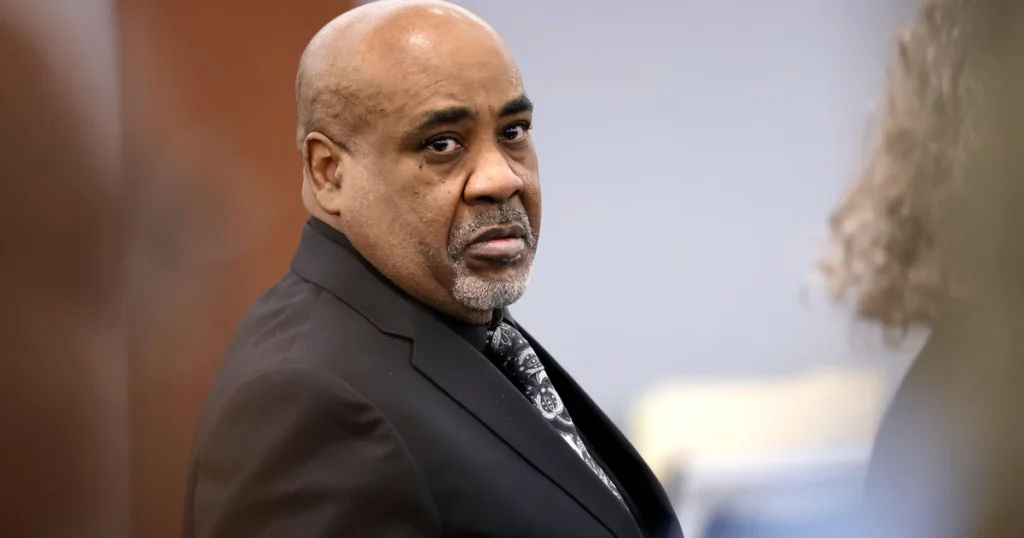
Tupac Murder Trial: Defense Attorney Claims Jury Bias
Bizeconanalysis.com – More than two decades after the drive-by shooting that killed rapper Tupac Shakur in a Las Vegas hospital parking lot, a Nevada jury returned a guilty verdict against Duane “Keffe D” Davis, finding him responsible for first-degree murder. The deliberation lasted fewer than three hours — a span that immediately drew sharp criticism from the defense attorney in the Tupac murder case, who argued the jury never properly weighed the full record of evidence presented over the course of the trial.
Jury Deliberation and the Question of Prejudgment
Michael Sanft, Davis’ lead counsel, told reporters on Tuesday that the speed of the verdict raised serious questions about whether jurors actually engaged with the complexities of the case.
“I’m surprised. With the amount of evidence that should have been considered by the jury, I don’t believe that they went through it,” Sanft said. “My feeling is that they had preconceived notions, and those notions was what led to the conviction for Duane Davis.”
Nevada statutes impose no minimum deliberation period on juries, meaning a verdict reached in under three hours is legally unremarkable. Sanft acknowledged that, at the outset of the trial, his attention was consumed by a series of pre-trial motions over which pieces of evidence would be admitted. He described those procedural battles as the “bigger issues” occupying his mind before jurors ever entered the courtroom.
Prosecution Theory, Judicial Rulings, and the Defense’s Dilemma
The state’s case rested not on the claim that Davis pulled the trigger, but on the theory that he arranged the shooting and supplied the weapon. Prosecutors alleged that on the night of September 6, 1996, Davis procured a Glock .40-caliber handgun and coordinated a drive-by attack in retaliation for a beating inflicted earlier that evening on his nephew, Orlando “Baby Lane” Anderson, by associates of Shakur and Death Row Records co-founder Marion “Suge” Knight. Knight was struck in the same shooting but survived.
Chief Deputy District Attorney Binu Palal characterized the evening’s events as a targeted operation, saying Davis was “hunting” for both Shakur and Knight. In his closing argument, Chief Deputy District Attorney Marc DiGiacomo went further:
“It is a slam-dunk, absolutely no defense to murder case,” DiGiacomo told the jury.
Under Nevada law, a person need not be the actual shooter to face a murder conviction; assisting another in committing the crime is sufficient for liability. The state leaned heavily on audio from a 2008 interview in which Davis told detectives that Anderson, not he, had fired the shots after Davis handed the gun to the backseat of the Cadillac they were riding in. Anderson was never formally charged with the killing and died roughly twenty months after Shakur in an unrelated shooting. As of the verdict, Davis is the sole surviving individual alleged to have been involved in the 1996 incident.
Davis had pleaded not guilty to all charges. Prosecutors argued that an earlier agreement granting him protection from prosecution in exchange for cooperating with investigators was rendered void when he published his memoir, Compton Street Legend, in 2019 and subsequently gave a series of public interviews. In that book, Davis placed himself inside the Cadillac and described obtaining the Glock from a drug dealer identified as Eric “Zip” Martin. He later told reporters he had “never read” the manuscript and was simply credited as a co-author — a position that prosecutors said further undermined any claim of innocence.
Sanft took aim at Judge Carli Kierny’s evidentiary rulings, calling her decision to admit testimony about Davis’ “other bad acts” — including his history of gang leadership and drug trafficking — “inappropriate.” He also objected to Kierny’s jury instruction that, should jurors accept Davis’ own self-incriminating statements at face value, they would not require independent corroboration before convicting.
“Going into the trial, we knew already that we were behind on the scoreboard,” Sanft said. “It’s like a football game where it was 52 to 0 walking in at the opening kickoff.”
That instruction, Sanft explained, forced him into the paradoxical position of having to attack his own client’s credibility in order to create reasonable doubt. Asked whether he still endorsed that approach, he called it
“the only defense strategy when you have an individual that’s being convicted just on his words alone, without any facts to support the words that he said.”
Frequently Asked Questions
Why did the defense attorney in the Tupac murder case argue the verdict was rushed? Sanft pointed to the under-three-hour deliberation and said the jury appeared to rely on “preconceived notions” rather than the full evidentiary record. Nevada law sets no minimum deliberation time, so the speed alone does not constitute a legal error, but Sanft used it to frame his post-trial criticism.
Was Duane “Keffe D” Davis the person who fired the shots? No. The prosecution’s theory was that Davis orchestrated the attack and supplied the weapon. Audio from a 2008 interview indicated that his nephew, Orlando “Baby Lane” Anderson, actually pulled the trigger. Anderson was never charged and died in an unrelated shooting roughly twenty months after Shakur.
What role did Davis’ 2019 memoir play in the trial? Prosecutors argued that publishing Compton Street Legend and giving public interviews voided an earlier immunity agreement. In the book, Davis described being inside the Cadillac and obtaining the gun from Eric “Zip” Martin — details that prosecutors used to challenge his not-guilty plea.
Can someone be convicted of murder in Nevada without being the shooter? Yes. Nevada law allows a conviction for assisting another in committing the crime. The state does not need to prove the defendant personally discharged the weapon.