
ICE deports Afghans and others to Africa, expanding “third country” deportations
U.S. Sends Over 100 Deportees to Eight African Nations in Expanded “Third Country” Push
Bizeconanalysis.com – In a sweeping expansion of its deportation strategy, the Trump administration dispatched more than 100 individuals expelled from American soil to eight separate African nations over roughly ten days. The recipients of these flights included men and women from Afghanistan, Cuba, Nicaragua, Iran, Nepal, Turkey, and Venezuela, along with African nationals who were sent to countries where they held no citizenship or residency ties. Internal government documents reveal the scope of the operation: three separate Immigration and Customs Enforcement flights deposited detainees in Burundi, Cameroon, the Central African Republic, Equatorial Guinea, Eswatini, Liberia, Rwanda, and Sierra Leone.
Not a single deportee on those flights was a national of the country where he or she was dropped off. The arrangement, framed by the administration as a “third country” deportation mechanism, places expelled individuals in nations with which they share no familial, ethnic, or legal connection.
A Global Network of Receiving Nations
The African operations represent the latest chapter in a far broader diplomatic effort. More than 30 countries worldwide have signed agreements to accept groups of deportees from the United States. Latin American destinations include Costa Rica, Panama, and Paraguay, while a growing roster of African signatories now encompasses nations such as the Central African Republic, the Democratic Republic of the Congo, and South Sudan — countries grappling with armed conflict, political instability, and documented human rights concerns.
The agreements themselves have been conducted with considerable opacity. Available details suggest that some African partners, including Ghana and Sierra Leone, have limited their commitments to receiving deportees originating from other parts of the continent. By contrast, Eswatini, the Central African Republic, and Liberia have accepted detainees hailing from Latin America, Europe, and Asia.
Destination Conditions Raise Questions
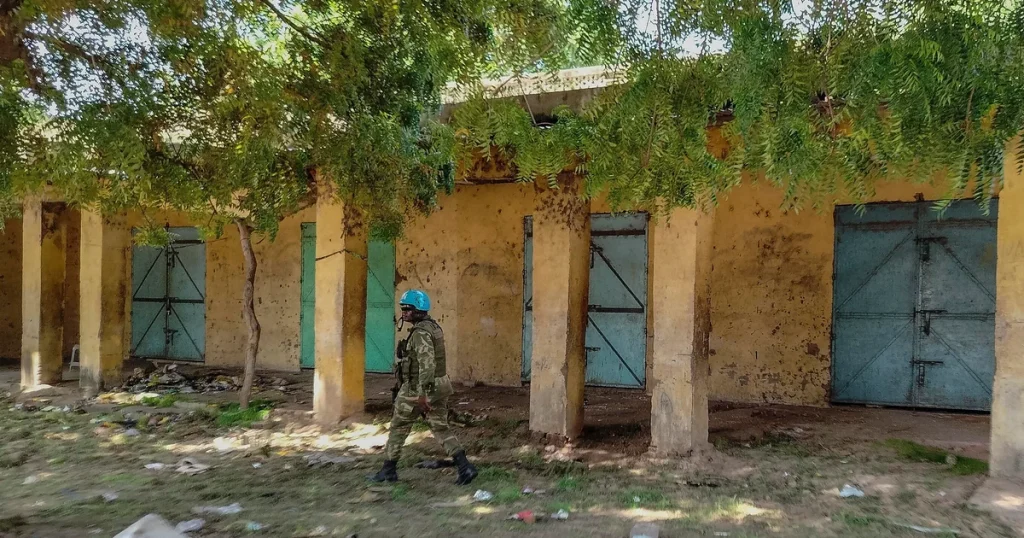
The most recent of the three flights delivered detainees to Sierra Leone and the Central African Republic. The latter, a landlocked nation in the heart of the continent, has endured decades of civil war and now hosts Russian mercenary forces, factors that have made it one of the most hazardous places on Earth. The State Department’s own travel advisory rates the country at “Level 4” — its highest warning tier — urging Americans to avoid travel there for any reason owing to pervasive violence and insecurity.
Among those sent to African destinations, some carry criminal records alongside their immigration violations. Detainees routed to Eswatini and South Sudan, for instance, included individuals convicted of violent and serious offenses in American courts, where local officials have placed them in prison. Yet a substantial share of the deportees dispatched abroad have no prior criminal history beyond entering the United States without authorization or remaining without valid documentation.
The Case of Khalil, an Afghan Interpreter’s Relative
One deportee on the latest flight to the Central African Republic was a 24-year-old Afghan man named Khalil, whose family had assisted American forces in their campaign against the Taliban. His immigration attorney and his brother stated that Khalil had secured legal protection in a U.S. immigration court before being removed. Khalil crossed the U.S.-Mexico border without inspection in 2024 after a journey through Latin America and remained in ICE custody throughout his time in the country.
His lawyer explained that Khalil sought to reunite with his brothers. One brother had been brought to the United States in 2014 following service alongside American military forces while serving in the Afghan Army. Court filings indicate that another brother flew as a pilot against the Taliban and was killed during the conflict. In August 2025, while still detained, Khalil was granted a legal protection order by an immigration judge — a ruling that, under normal circumstances, would have shielded him from removal.
Government Responses
The Department of Homeland Security addressed the deportations in a written statement, framing the process as a matter of individual choice:
“If an illegal alien chooses to file a claim in court refusing to go to their home country, we are required by law to find a safe and secure nation for them to go to. If an illegal alien chooses to go home, we will give them a free flight home and a $3,000 check. The choice is theirs.”
A State Department spokesperson declined to discuss what the agency called “private diplomatic communications with other governments” or to address the “authenticity or veracity of allegedly leaked documents.” The spokesperson added:
“Implementing the Trump Administration’s immigration policies is a top priority for the Department of State. We remain unwavering in our commitment to end illegal and mass immigration and bolster America’s border security.”
What the Third-Country Framework Means in Practice
The “third country” deportation model allows the United States to remove noncitizens not to their country of origin but to a third nation that has agreed to take them in. The legal basis typically rests on a detainee’s inability or unwillingness to return home — whether because the home country will not accept them, because they fear persecution, or because they have severed ties over years of residence elsewhere. Critics of the approach argue that sending people to unfamiliar nations, some of them conflict zones, stretches the concept of a “safe and secure” destination beyond recognition. Supporters maintain that the arrangement relieves pressure on overcrowded detention facilities and gives the government a lawful pathway to remove individuals who cannot be returned to their countries of birth.
The rapid multiplication of African signatories — from a handful of early partners to a roster spanning West, East, Central, and Southern Africa — signals that the administration views the continent as a key pillar of its deportation architecture. Whether those receiving nations can integrate, house, and protect large groups of foreign nationals with no local language skills, no established community networks, and in some cases serious criminal convictions remains an open question that the secrecy surrounding the agreements has so far prevented from being fully examined.
Related Reading
Frequently Asked Questions
What is ICE deports Afghans and others to Africa?
ICE deports Afghans and others to Africa is the main topic of this guide. The article explains the context, practical details, and next steps readers should understand.
Why does ICE deports Afghans and others to Africa matter?
ICE deports Afghans and others to Africa matters because readers are looking for a useful answer, not just a short summary. Good content should match search intent and help them decide what to do next.