
Lindsay Clancy trial testimony ends after 85 witnesses, closing arguments set for Thursday
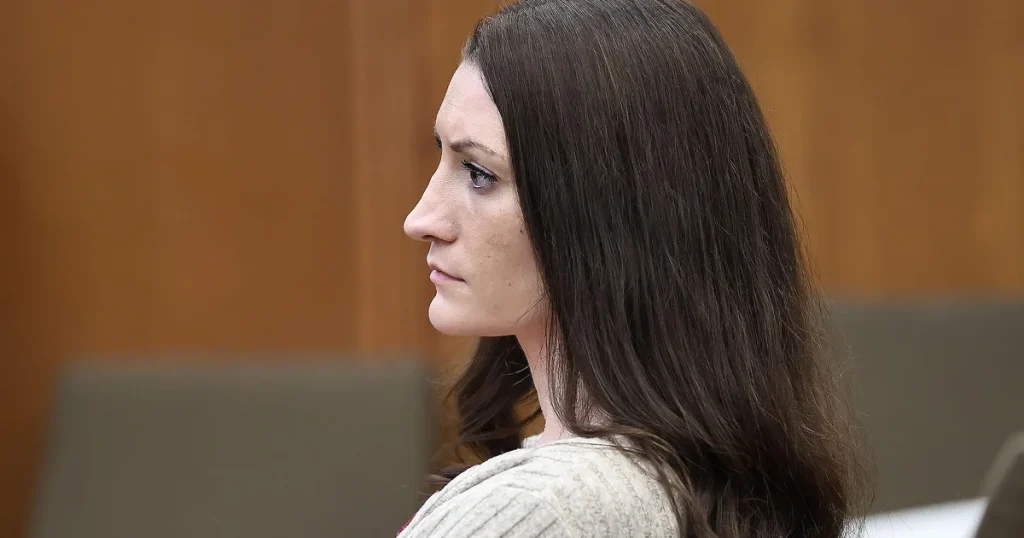
Clancy Trial Enters Final Phase as Jury Prepares for Closing Arguments
Bizeconanalysis.com – The courtroom drama surrounding Lindsay Clancy’s Massachusetts murder trial reached its evidentiary conclusion on Wednesday afternoon, when prosecutors formally rested their case after 85 witnesses had taken the stand in Plymouth Superior Court. With testimony now complete, the jury’s attention shifts to the final hour of the trial: closing arguments scheduled for Thursday, in which each side will receive sixty minutes to distill weeks of evidence into a persuasive narrative.
The last witness to testify was Dr. Gregory Saathoff, a professor of emergency medicine and forensic psychiatrist with prior experience consulting for the FBI. His examination wrapped up at approximately 1 p.m., after which jurors were dismissed for the day. The procedural pivot from witness testimony to final advocacy marks a critical juncture in a case that has drawn sustained public interest across New England.
Charge Conference and Verdict Options
Following the close of testimony, both legal teams convened with Judge William Sullivan for a charge conference to finalize jury instructions and determine the precise language appearing on verdict slips. One point of contention involved whether involuntary manslaughter should appear as a selectable option. Prosecutors lodged an objection, arguing the lesser charge was unnecessary given the gravity of the evidence. The judge nonetheless ruled that it would be included.
The jury will therefore be instructed on first-degree murder, second-degree murder, manslaughter, and acquittal by reason of insanity. A straightforward not-guilty verdict remains technically available, though defense attorney Kevin Reddington has publicly acknowledged that Clancy killed her children, making a full acquittal on the facts exceedingly unlikely. The practical question for jurors narrows to degree of culpability and mental state at the time of the killings.
“The judge will charge the jury on the lesser offense of manslaughter and it’s up to them what they feel is appropriate,” Reddington told reporters outside the courthouse when pressed on the inclusion of the lesser charge.
Judge Sullivan also denied the defense’s request for what is known as a “Bowden instruction,” a jury directive that permits jurors to weigh the consequences of an allegedly insufficient police investigation when evaluating evidence. With that motion rejected, the jury’s deliberation will rest solely on the testimony and exhibits admitted during trial.
Cross-Examination of the Final Witness
Reddington’s cross-examination of Saathoff probed several vulnerabilities in the prosecution’s expert testimony. He opened by emphasizing the temporal gap between the murders and Saathoff’s first interview with Clancy, which did not occur until more than three years after the killings. He then walked through Saathoff’s professional résumé line by line, noting that the psychiatrist had published extensively on terrorism but comparatively little on postpartum depression. Saathoff acknowledged that the last patient he treated for postpartum psychosis was in the 1990s.
Reddington pressed the question of whether Clancy had voiced dark thoughts and homicidal ideation to physicians and community members before the killings.
“The homicidal ideation, as I understand, was just voiced to her husband and her mother,” Saathoff replied.
“Just voiced? Is that like talking about the Red Sox?” Reddington said. “She’s talking about homicidal ideation of her children.”
The exchange grew tense when Reddington questioned Saathoff’s account of crushed-up pills discovered in a wine tumbler in Clancy’s bedroom. Asked how the substance could be identified as medication, Saathoff deferred to Patrick Clancy’s own observation. Reddington also challenged the circumstances under which Saathoff attempted to interview Clancy and her mother, at one point asking whether a woman facing a life sentence would willingly sit down and talk to a prosecution expert. The judge intervened to keep the exchange within bounds.
Reddington closed his cross by quoting a passage from the prosecution’s opening statement that characterized Clancy’s decision as a “selfish choice” to kill her children because she no longer liked her life.
“I think the statement that you read really minimizes what she was going through,” Saathoff responded.
Direct Testimony: The Voice, the Planning, and Criminal Responsibility
In his direct testimony, which began Tuesday and continued into Wednesday, Saathoff described interviewing Clancy in May and June of the current year. He discussed the voice she reported hearing, which she said ordered her to kill the children. According to Saathoff, Clancy told him the voice ceased once the killings were complete. He also noted inconsistencies in the details of her account across interviews.
When prosecutor Jennifer Sprague returned to the stand Wednesday and asked whether the voice had specified where or how to carry out the killings, Saathoff said it was significant that it had not.
“It indicated that she had control,” he said.
Saathoff described Clancy’s suicide attempt as “very serious,” pushing back against the prosecution’s earlier emphasis that the self-inflicted lacerations were not particularly deep.
“The fact that the lacerations were not deep doesn’t mean that she wasn’t intending to kill herself,” he said.
On the question of overmedication — a central pillar of the defense theory — Saathoff conceded that Clancy experienced significant side effects from some of her prescriptions but maintained that she retained the capacity to distinguish right from wrong. His ultimate medical opinion, offered to the jury, was that Clancy was criminally responsible for the murders, citing what he characterized as a substantial degree of planning involved in sending Patrick Clancy to retrieve the children.
Thursday’s closing arguments will be the final word before jurors retire to deliberate. The outcome will determine whether Clancy faces life imprisonment for first-degree murder, a lesser homicide conviction, or acquittal on insanity grounds — a question that has kept Plymouth Superior Court in session for weeks and the broader community watching closely.
Related Reading
Frequently Asked Questions
What is Lindsay Clancy trial testimony ends after 85?
Lindsay Clancy trial testimony ends after 85 is the main topic of this guide. The article explains the context, practical details, and next steps readers should understand.
Why does Lindsay Clancy trial testimony ends after 85 matter?
Lindsay Clancy trial testimony ends after 85 matters because readers are looking for a useful answer, not just a short summary. Good content should match search intent and help them decide what to do next.