
Judge postpones U.S. trial for Libyan man accused in deadly 1988 Lockerbie bombing, citing new evidence
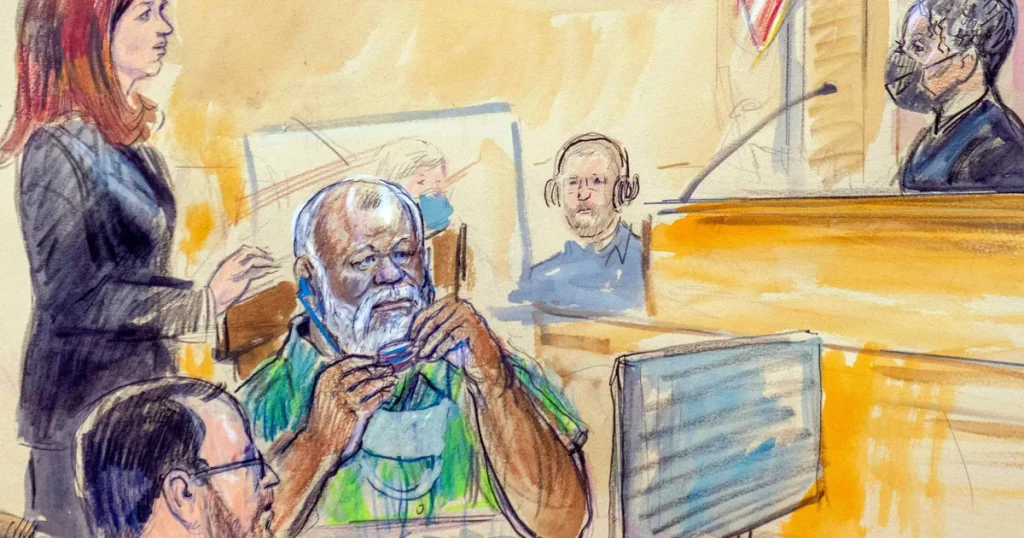
New Evidence Halts Lockerbie Bombing Trial Nearly Four Decades After the Disaster
Bizeconanalysis.com – A nearly four-decade quest to bring a Libyan intelligence officer to justice in an American courtroom was thrown into sudden uncertainty on Monday, when a federal judge in Washington, D.C., ordered a trial postponed after defense counsel learned of previously undisclosed evidence. The case centers on the December 21, 1988, explosion that tore Pan Am Flight 103 apart above the Scottish village of Lockerbie, killing 270 people and leaving families without answers for almost 38 years.
The defendant, Abu Agila Mohammad Mas’ud Kheir Al-Marimi, a former colonel in Libya’s intelligence apparatus, faces two counts of aircraft destruction resulting in death. If convicted, he could receive a life sentence. His federal trial was set to open with jury selection on Wednesday, marking what would have been the first U.S. courtroom proceeding tied directly to the Lockerbie catastrophe.
The Postponement Order
U.S. District Judge Dabney Friedrich issued a brief ruling Monday that did not identify the specific nature of the newly surfaced material. According to Al-Marimi’s legal team, prosecutors handed over the evidence on Saturday, giving the defense only a weekend to assess its implications. The judge pointed to the case’s inherent complexity, the arrival of fresh evidence, and what he described as “the need for the defense to determine how best to defend this case” as grounds for the delay.
A Sept. 1 status conference has been set in Washington to evaluate where the matter stands. Laura Koenig, an assistant federal public defender serving on the defense team, declined to provide further detail when reached for comment. Her colleagues framed the situation in procedural terms, stating that their “constitutional and ethical obligations require the defense to investigate this development.”
Who Is Al-Marimi?
Now in his mid-70s, Al-Marimi served as an explosives specialist within the Libyan intelligence service from roughly 1973 until 2011, eventually reaching the rank of colonel. Prosecutors allege he maintained connections in both Libya and Tunisia during that period. In February 2023, public defender Whitney Minter entered a not-guilty plea on his behalf in the U.S. District Court for the District of Columbia.
The government’s theory of the case holds that Al-Marimi and co-conspirators acted on instructions from Libyan leader Muammar Qaddafi, who was overthrown and killed during the 2011 civil war. Investigators believe Al-Marimi transported a suitcase containing an explosive device to an airport in Malta, where it was passed to accomplices bound for Frankfurt, Germany. From Frankfurt, the bag traveled to London and was loaded aboard Flight 103. Al-Marimi was first charged in 2020 and formally indicted in December 2022 before being transferred into American custody.
The Disaster Itself
On the evening of December 21, 1988, Flight 103 was cruising at approximately 31,000 feet over Lockerbie when a bomb detonated in the forward cargo hold, 38 minutes after departure from London Heathrow. The aircraft was en route to John F. Kennedy International Airport in New York. All 259 passengers and crew perished, along with 11 residents on the ground beneath the crash path. The wreckage obliterated an entire city block in the small Scottish village.
Citizens of 21 nations were among the dead, including 190 Americans and 43 British nationals. Thirty-five students from Syracuse University, returning home after a semester abroad, were aboard. The Federal Bureau of Investigation has characterized the Lockerbie bombing, prior to September 11, 2001, as one of the world’s most lethal acts of air terrorism and among the largest and most complex international terrorism investigations the agency has ever conducted.
Victims’ Families React
Kara Weipz, board president of the nonprofit Victims of Pan Am Flight 103, said her organization had received no specifics about the undisclosed evidence that triggered the delay. Her brother, Richard Monetti, was one of the Syracuse students killed in the bombing. Weipz described the postponement as a shock, noting that some relatives had already begun packing for the trip to Washington.
“At the same time, for almost 38 years we’ve been seeking the truth of what happened,” Weipz said. “If that’s what this is, then that’s a good thing, and this delay is worth it. … It’s important to hear all the facts.”
A Long Road to Accountability
The Lockerbie case has a tangled judicial history. In 2000, two other Libyan intelligence agents stood before a panel of Scottish judges sitting at a former U.S. military installation in the Netherlands. That tribunal convicted one official and acquitted the other, yet the identity of the actual bombmaker remained unresolved for years. Al-Marimi’s prosecution represents the latest attempt to close that gap.
The emergence of new evidence at this stage — with jury selection days away and families preparing to travel — underscores how little closure the Lockerbie disaster has delivered. For victims’ relatives who have waited nearly four decades for answers in a courtroom, the delay is painful but, as Weipz framed it, potentially meaningful if it brings previously hidden facts to light. The Sept. 1 hearing will determine whether and when the trial resumes, and whether the newly identified material alters the prosecution’s case in any substantive way.
Related Reading
Frequently Asked Questions
What is Judge postpones U S trial for Libyan?
Judge postpones U S trial for Libyan is the main topic of this guide. The article explains the context, practical details, and next steps readers should understand.
Why does Judge postpones U S trial for Libyan matter?
Judge postpones U S trial for Libyan matters because readers are looking for a useful answer, not just a short summary. Good content should match search intent and help them decide what to do next.