
AI companies accused of hoarding and destroying millions of books
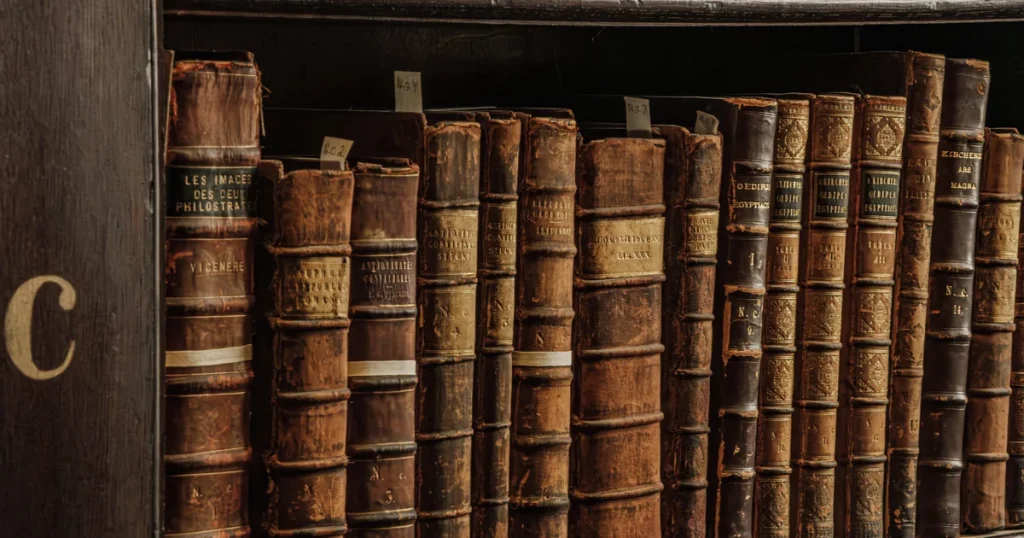
Advocacy Groups Demand FTC Probe Into AI Firms’ Mass Destruction of Printed Books
Bizeconanalysis.com – A coalition of over a dozen consumer-protection and public-interest organizations has formally petitioned the Federal Trade Commission to open an investigation into how major artificial-intelligence developers acquire, digitize, and then physically eliminate the printed volumes used to feed their large language models. The groups characterize the practice as both “destructive” and anticompetitive, arguing that it strips the public of irreplaceable cultural artifacts while entrenching the market position of a handful of tech giants.
The Letter and Its Recipients
The petition was delivered on Friday to FTC Chairman Andrew Ferguson and Commissioner Mark Meador. Signatories include the Demand Progress Education Fund, the Consumer Federation of America, and the Institute for Local Self-Reliance, alongside additional advocacy organizations. Together they outline a pattern they describe as systematic: AI firms purchase large quantities of books, run them through scanning equipment to extract text for model training, and then discard or destroy the physical copies rather than returning them to libraries, bookstores, or collectors.
The groups emphasize that in certain instances the eliminated volumes represent the final extant copies of particular titles. When a book is scanned and then pulped or thrown away, no other reader, researcher, or competing technology company can ever consult that physical object again. The organizations label this cycle a “hoard-and-destroy” strategy and contend it narrows access to foundational source material for both the general public and smaller firms attempting to build their own language models.
Legal Framing Under the FTC Act
The letter grounds its complaint in Section 5 of the FTC Act, the statute that prohibits unfair or deceptive acts or practices in commerce. The advocacy groups allege that permanently eliminating books at scale constitutes an unfair method of competition because it removes nonrenewable resources from the marketplace and from public reach, effectively granting incumbent AI developers a structural advantage that smaller entrants cannot replicate.
“Through their practice of permanently destroying books en masse and thus removing those nonrenewable resources from broader access, AI companies are engineering a future where only the wealthiest incumbents can build high-quality AI models and operate as the sole holders of humanity’s written works — after having destroyed the originals to get there.”
The organizations are asking the Commission to quantify the scope of the practice: how many titles have been acquired, scanned, and destroyed, and what proportion of those titles represent the last surviving physical copies of their underlying works. They frame the inquiry as a matter of both consumer welfare and competitive integrity.
Background: The Bartz v. Anthropic Litigation
The advocacy letter points to a concrete legal precedent. In August 2024, writer Andrea Bartz and fellow plaintiffs filed a copyright suit against AI developer Anthropic, alleging that the company had acquired, scanned, and discarded millions of printed books to build its training corpus. The case drew attention because it raised the question of whether lawful purchase of a physical book confers an unlimited right to digitize and repurpose its contents for commercial machine-learning purposes.
In 2025, a federal judge ruled that Anthropic’s use of legally purchased books to train its Claude model did not constitute a copyright violation. The decision effectively cleared the path for firms to buy print volumes, extract their text, and dispose of the originals without facing infringement liability. Anthropic did not immediately respond to a request for comment on the advocacy groups’ new petition.
The ruling has since been cited by industry analysts as a green light for bulk acquisition of printed material. Critics, however, note that a copyright clearance does not automatically resolve questions of competition law, consumer access, or the preservation of cultural heritage — precisely the dimensions the FTC letter seeks to place under regulatory scrutiny.
Amazon Under the Microscope
Separately from the FTC petition, digital publisher 404 Media published an investigation this week documenting that Amazon is purchasing books in bulk, scanning them to train its own AI tools, and then destroying the physical copies. The report adds a second major corporate actor to the list of firms allegedly engaged in the same acquire-scan-eliminate cycle. Amazon did not immediately respond to a request for comment on the findings.
The convergence of these two reports — one targeting Anthropic through litigation and advocacy, the other targeting Amazon through independent investigative journalism — suggests the practice is not an isolated corporate decision but an emerging industry norm. As large language models grow increasingly dependent on vast corpora of human-written text, the question of who controls the physical substrate of that text has moved from a niche publishing concern to a central issue in technology competition policy.
Why the Distinction Between Digitization and Destruction Matters
Scanning a book for internal use does not, by itself, deprive anyone of access. Libraries, archives, and private collectors retain their copies. But when the scanned copy is the last one in existence, the act of digitization becomes an act of elimination. The printed object — with its marginalia, its binding, its provenance — ceases to exist outside a server rack owned by a single corporation. For scholars, for readers who prefer physical media, and for smaller AI developers who might wish to build models on overlapping corpora, the loss is permanent and asymmetric.
The advocacy groups’ petition asks the FTC to treat that asymmetry as a competition problem, not merely a cultural-preservation one. If the Commission accepts the framing, the investigation could set precedents governing how AI firms handle physical source material going forward — from disclosure requirements to preservation obligations to limits on bulk acquisition of scarce titles. The outcome will shape whether the written record of human knowledge remains a shared commons or becomes the proprietary inventory of a few well-capitalized laboratories.
Related Reading
Frequently Asked Questions
What is AI companies accused of hoarding and destroying?
AI companies accused of hoarding and destroying is the main topic of this guide. The article explains the context, practical details, and next steps readers should understand.
Why does AI companies accused of hoarding and destroying matter?
AI companies accused of hoarding and destroying matters because readers are looking for a useful answer, not just a short summary. Good content should match search intent and help them decide what to do next.