
Reports of sexual assault in the military declined for third straight year, Pentagon says
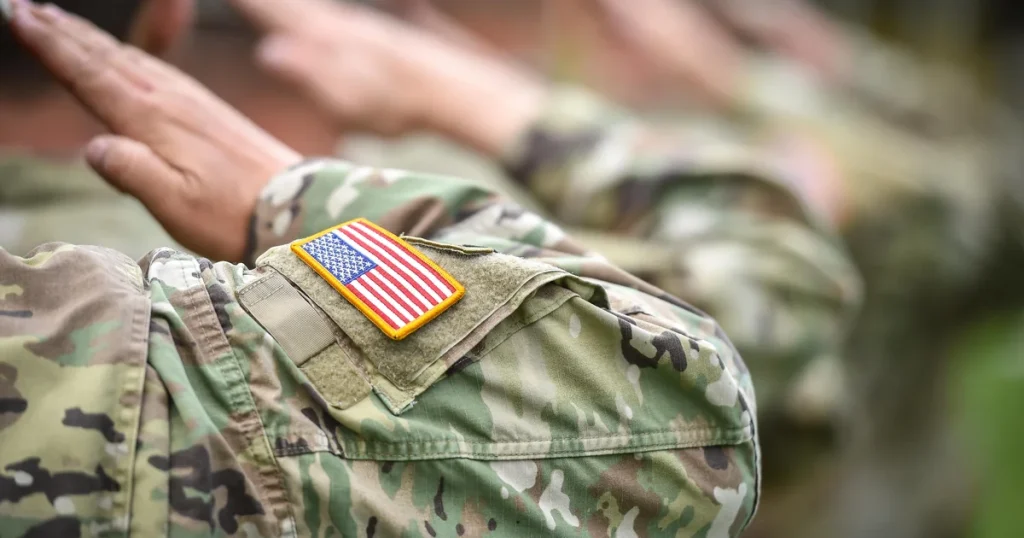
Military Sexual Assault Rates Drop for Third Consecutive Year, Pentagon Data Shows
Bizeconanalysis.com – The Department of Defense released its annual assessment of sexual assault within the armed forces on Friday, revealing that both the estimated total number of victims and the count of formally filed complaints fell during fiscal year 2025. This marks the third straight year in which official complaint filings have trended downward, a pattern the Pentagon attributes in part to a genuine reduction in incidents rather than simply fewer victims coming forward.
Survey Data Reveals Shrinking Prevalence
Beyond the raw complaint counts, the report draws on a biennial anonymous survey administered to service members. That instrument asks personnel whether they have experienced unwanted sexual contact or harassment, offering commanders and policymakers a broader lens on the true scale of the problem than formal reports alone can capture.
The latest survey cycle shows meaningful declines across both genders. Among active-duty women, the share reporting unwanted sexual contact fell from 6.8 percent in fiscal year 2023 to 4.3 percent in fiscal year 2025. For active-duty men, the corresponding figure dropped from 1.3 percent to 1.0 percent. These results represent the second consecutive survey cycle in which prevalence rates have declined, following the elevated readings of 8.4 percent for women and 1.6 percent for men recorded in 2021.
The trajectory matters because the 2021 spike had raised alarms within the ranks and in Congress about whether institutional reforms were actually reaching the point of contact between service members. Two successive downward cycles suggest that changes in training, command accountability, and victim-support infrastructure are producing measurable effects at the unit level.
Official Complaint Filings Continue to Fall
In fiscal year 2025, the Pentagon logged 7,998 official reports of sexual assault in which a service member appeared as either victim or offender. That figure sits below the 8,195 complaints recorded in 2024 and well under the 8,515 tallied in 2023. The year-over-year decline narrows each cycle, indicating that the downward slope is moderating rather than accelerating.
Yet the complaint count tells only half the story. The department estimated that roughly 20,492 service members were affected by sexual assault during fiscal year 2025, of whom 6,843 filed formal reports. In other words, nearly two-thirds of estimated victims did not initiate an official complaint that year.
A Reporting-Rate Increase the Pentagon Welcomes
One counterintuitive element of the data is that the proportion of estimated victims who actually filed reports climbed from 25 percent in fiscal year 2023 to 33 percent in 2025. Rather than treating that gap as a failure, the department framed the upward shift in reporting willingness as a positive signal of growing trust in the process.
“The Department continues to encourage greater reporting to connect warfighters with vital restorative care and enable leadership to hold offenders appropriately accountable,” the Pentagon stated in a news release issued alongside the report.
The logic is straightforward: if more victims believe the system will respond fairly, they are likelier to seek medical care, counseling, and career protections tied to a formal complaint. A higher reporting rate also gives commanders and prosecutors more complete data on where problems cluster, enabling targeted intervention rather than reactive patching.
Leadership Framing and Congressional Oversight
Under Secretary of Defense for Personnel and Readiness Anthony J. Tata issued a statement underscoring the cultural stakes of the issue.
“Dignity, respect, and discipline are foundational to the warrior ethos and the overall preparedness of the force. Sexual assault and sexual harassment undermine these values, eroding trust and threatening the mission,” Tata said.
The annual review is required by statute; Congress mandated the publication so that lawmakers and the public receive a standardized, comparable dataset each fiscal year. In prior cycles the Pentagon typically released the document in spring and convened a press briefing allowing reporters to question senior officials in real time. This year, however, the report was posted online on Friday without the customary in-person question-and-answer session, a procedural shift that drew little public commentary but nonetheless altered the traditional rhythm of accountability reporting.
Why the Trend Deserves Continued Scrutiny
Three years of declining complaint counts and two survey cycles showing reduced prevalence are encouraging, but analysts caution that short windows can mask cyclical variation. The biennial survey design means there is no annual prevalence check; a single year’s dip could reflect sampling noise rather than structural change. Moreover, the persistent gap between estimated victimization and formal reporting—still roughly two-thirds of affected personnel not filing—means the true incidence rate remains uncertain.
For service members and their families, the practical takeaway is that the department’s own data now supports the claim that the environment is improving incrementally. Whether that improvement will hold, deepen, or stall depends on sustained investment in prevention training, accessible victim advocacy, and consistent command-level enforcement of accountability standards. The numbers released this Friday suggest progress is real but fragile, and the coming survey cycle will be the next meaningful test.
Related Reading
Frequently Asked Questions
What is Reports of sexual assault in the military?
Reports of sexual assault in the military is the main topic of this guide. The article explains the context, practical details, and next steps readers should understand.
Why does Reports of sexual assault in the military matter?
Reports of sexual assault in the military matters because readers are looking for a useful answer, not just a short summary. Good content should match search intent and help them decide what to do next.