
Liberia receives first group of “third country” deportees from U.S., officials say
Liberia Receives First Third-Country Deportees
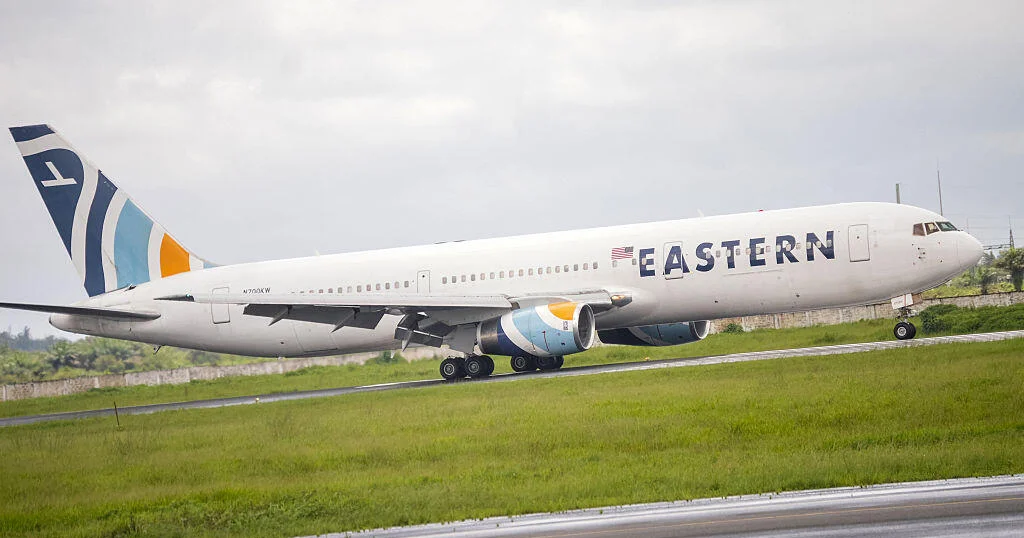
Bizeconanalysis.com – Liberia receives first group of third-country deportees from the United States, marking a milestone in Washington’s aggressive immigration-enforcement strategy. Roughly 20 migrants from various nations landed in Monrovia on Thursday, becoming the earliest operational arrivals under a policy that relocates non-citizens to countries where they hold no citizenship, family ties, or prior residence. U.S. officials confirmed the flight and described the passengers as individuals removed from American soil under executive-branch authority.
The episode signals a policy shift of considerable scale. A small West African republic with no historical migration link to Latin America or South Asia now sits at the center of a machinery designed to deter unauthorized entry by demonstrating that removal can occur to a destination far removed from a migrant’s homeland.
Arrival Complications and Liberia’s Stated Capacity
Not every passenger disembarked willingly. An official familiar with the operation reported that a small subset of the group resisted instructions once the aircraft touched down, were physically guided off the plane, and then climbed back aboard moments later. Their current location remained unconfirmed as of the latest available reporting.
Monrovia’s government has publicly committed to absorbing as many as 1,200 third-country deportees over the coming twelve months. Under the arrangement, newly arrived migrants may file asylum applications on Liberian soil, giving them a formal legal avenue to seek protection rather than facing immediate secondary removal. For a nation of roughly five million people still rebuilding from a civil war that ended in 2003, the commitment represents a substantial administrative and humanitarian undertaking.
The Wider Architecture and Legal Challenges
The Liberia deal is one thread in a far larger tapestry. The administration has negotiated bilateral deportation agreements with dozens of sovereign states spanning multiple continents, including South Sudan, the Central African Republic, and the Democratic Republic of the Congo. Regular deportation flights have already been dispatched to Ghana, Equatorial Guinea, and other West and Central African states that agreed to receive migrants originating elsewhere.
Human-rights organizations and international-law scholars have condemned the program as inconsistent with obligations under the 1951 Refugee Convention and customary international law, arguing that some receiving states send deportees back to the very countries those individuals fled. The administration, by contrast, frames the framework as a necessary tool to curb unauthorized migration and has defended its legality before federal courts.
Liberia also features prominently in the Kilmar Abrego Garcia matter. The Salvadoran-born man was deported to El Salvador last year under circumstances later characterized as wrongful, returned to the United States, and now faces prosecution on human-smuggling charges. The administration has stated its intention to send him to Liberia, but a federal judge in Maryland has temporarily blocked that effort, keeping his fate in active litigation.
“The question is whether a system that can uproot an individual from one country and deposit them in another with no recourse can simultaneously claim to protect due process.” — commentary on the Garcia litigation
Frequently Asked Questions
What does “third-country” mean in this context? It refers to a destination nation where the deportee holds no citizenship, no family network, and no prior residence. Liberia, for example, has no historical migration link to the Latin American or South Asian nationals being removed.
How many deportees does Liberia plan to accept? Monrovia has publicly committed to receiving up to 1,200 individuals over twelve months, with asylum applications permitted on Liberian soil.
Is the program legally challenged? Yes. Federal courts have intervened in at least one high-profile case (Abrego Garcia), and international-law scholars have raised objections under the 1951 Refugee Convention. The administration maintains the program is lawful and operationally effective.
What happens if a deportee refuses to leave the aircraft? Officials report that non-cooperative arrivals are physically guided off the plane. In the Monrovia incident, a small number of passengers climbed back aboard after being removed; their subsequent disposition was not confirmed in available reporting.