
CBS News poll on whether Democrats split over socialism, and how Americans see parties in today’s economy
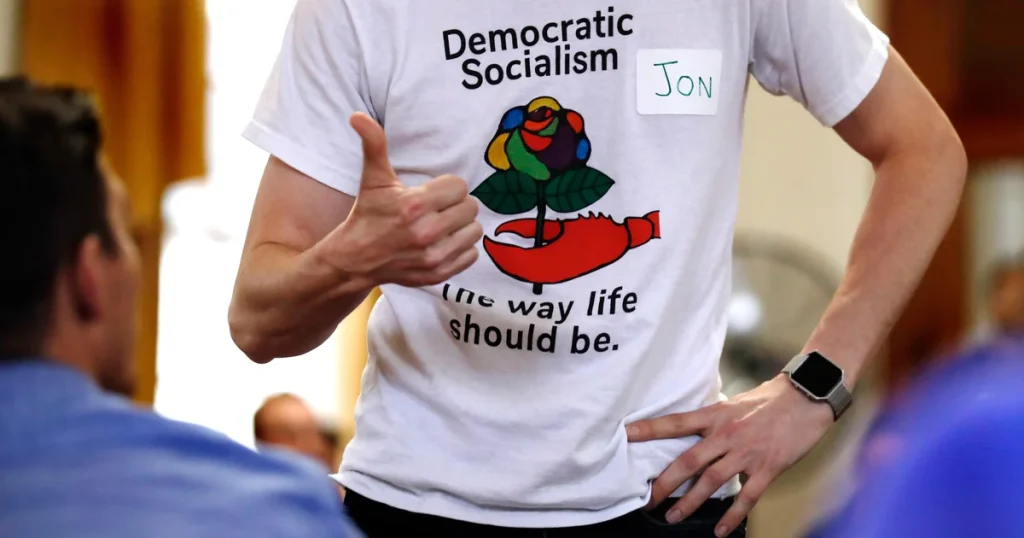
CBS News Poll: Do Democrats Split Over Socialism?
Bizeconanalysis.com – The CBS News poll on whether Democrats are fracturing over socialism reveals a party more divided than most outsiders assume. While the broader public remains net-negative on socialism and broadly favorable toward free-market capitalism, Democratic rank-and-file members skew noticeably more positive on the socialist label. The CBS News poll on whether Americans see the two major parties as aligned with their economic interests paints a picture of partial agreement at best, with neither party fully matching voter priorities on economic or cultural issues.
What Americans Think About Economic Systems
Most respondents in the CBS News poll on whether the free market is viewed positively answered that it is, on balance, a good thing for the economy. Capitalism draws more favorable ratings than socialism, though a meaningful share of respondents expressed no opinion on either system. At the same time, a majority described the current economic landscape as unfair in how it distributes opportunities to get ahead, and younger Americans were especially likely to feel that chances to build a home, raise a family, or achieve basic financial security have narrowed compared with the prior generation.
When asked to define “socialism” in their own words, respondents most frequently cited government control or government ownership of key industries. Behind those process-oriented answers, however, came outcome-oriented language: equality, fairness, and the idea of helping people who fall behind. Republicans and independents leaned toward the government-control framing, while Democrats more often invoked equality, fairness, and public services.
How Democrats View Socialism Differently
Unlike the public at large, Democrats in the CBS News poll on whether the party is splitting over economic ideology showed a majority-positive impression of socialism, rating it more favorably than capitalism. The gap widened among college-educated Democrats, younger Democrats, and White Democrats relative to older or non-White members. Democrats who held more favorable views of socialism were also more likely to perceive a widening gap between the richest households and the middle class, and less likely to call their own party “effective.”
The specific label “democratic socialist” was viewed positively by roughly half the party, with younger and more liberal members more inclined to embrace it. The term was not, however, seen as negative by the remainder; it registered as neutral. By contrast, the phrase “Democratic establishment” drew little negativity within the party, though those who did view it unfavorably were less likely to rate the party as strong or effective.
On the question of how progressive the party should be, opinions split almost evenly. About half said the Democrats were as progressive as they wanted; the other half said the party was not progressive enough. The latter group tended to be more liberal, held a relatively more positive impression of socialism, and was less likely to say the party agreed with their views “a lot” on economic issues. When Democrats do present economic policies, the rank-and-file wants those proposals to signal big change rather than incremental adjustment, even when the smaller steps would be easier to implement.
Party Effectiveness and Voter Alignment
The CBS News poll on whether voters see the parties as representing their interests found that Democrats, like Republicans, have work to do matching the public on both economic and cultural dimensions. On each facet, voters registered at least a little agreement but not a lot. Just over half of respondents agreed with the Democrats at least a little on economic issues. Republicans, meanwhile, showed a strong voice favoring capitalism, though a slight majority—along with most Democrats and independents—would accept government price controls in certain circumstances. About half of respondents agreed with Republicans at least a little as well.
On perceptions of strength, the Democratic Party was described by most voters as weak, and most did not call it effective. Over a third of Democrats themselves characterized their own party as weak. The overall picture is one of a party whose members want bold economic action, feel the system is unfair, and view socialism more favorably than the general public does—yet struggle to translate those sentiments into a coherent, effective political brand.
“The fairness views are related to how well people are doing and also to perceived opportunities. There’s more unease about opportunities among younger generations.”
Frequently Asked Questions
Did the CBS News poll on whether most Americans support socialism find broad backing? No. The poll showed the public is net-negative on socialism and broadly positive on free-market capitalism, even as many respondents described the current economy as unfair in how it distributes opportunity.