
Live Updates: U.S. and Iran locked in a stalemate as 60-day negotiation period ends
Stalemate Hardens as U.S.–Iran Negotiation Window Closes Without Resolution
Bizeconanalysis.com – The sixty-day negotiation window embedded in the June 18 memorandum of understanding between Washington and Tehran expired on Monday, August 17, 2026, with neither side having opened formal talks. The lapse deepens an already brittle standoff over the Strait of Hormuz, the narrow waterway through which roughly one-fifth of global oil shipments pass, and signals that diplomatic off-ramps are narrowing rapidly.
Tehran Dismisses the Deadline
Iran’s foreign ministry moved quickly to frame the expiration as irrelevant. Spokesman Esmaeil Baghaei told reporters during a weekly briefing that the United States had begun violating the memorandum almost immediately after its signing, rendering the sixty-day clock meaningless.
“What was included in the memorandum […] is not being implemented,” Baghaei said. “We did not commence negotiations because the United States began violating the memorandum shortly after its June 18 signing. Therefore, the 60-day issue essentially has no relevance.”
Baghaei added that Tehran would not shift its posture under external pressure or calendar deadlines, a rhetorical move designed to insulate the government from domestic criticism over the stalled talks. The ministry pointed to ongoing American strikes against Iranian territory as evidence that the memorandum’s terms had already been breached.
Trump Threatens Oman Over the Strait
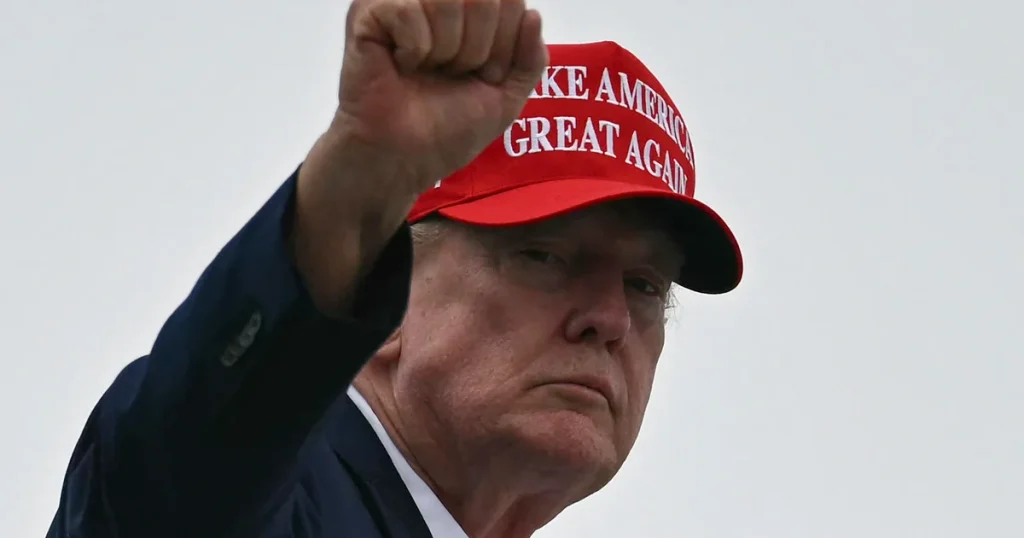
Amid the diplomatic impasse, President Donald Trump escalated the rhetoric on Monday, telling Fox News that the United States would bomb Oman if the Gulf sultanate “gets in the way” of American efforts to reopen the Strait of Hormuz and end the war with Iran.
“If Oman gets in the way, we’ll bomb the s*** out of them,” Trump said, as recounted by Fox News correspondent Trey Yingst.
The remark landed against a backdrop of weeks-long Iranian and Omani talks aimed at constructing a joint management mechanism for the waterway. Both governments had floated the idea of levying transit fees on commercial vessels, though no concrete operational plan had been formally announced before the president’s comments. The threat effectively injected a new bilateral friction into an already volatile maritime corridor where ship traffic has been reduced to a near-standstill by Iranian attacks and intimidation campaigns.
Despite those disruptions, Trump has repeatedly insisted that the United States retains operational control of the strait and that Washington may “keep it” open by force if necessary. The Strait of Hormuz, at its narrowest point roughly 33 kilometers wide, has long been a chokepoint whose closure would send shockwaves through energy markets worldwide. Any sustained interruption would pressure oil prices, shipping insurance premiums, and the economies of every major importer from East Asia to Western Europe.
Oman–Iran Transit-Route Accord
Earlier on Monday, Baghaei confirmed that Tehran and Muscat had reached what he called “an understanding regarding the map of the transit route” for vessels transiting the strait. He declined to specify the exact corridor or confirm whether tolls would apply, but noted that both sides were working toward a joint statement.
Previous indications from both governments suggested a dual-lane concept: commercial ships would enter the strait along a corridor hugging Iran’s coastline and exit via a separate lane closer to Omani waters. Such an arrangement would give Tehran a degree of oversight over inbound traffic while preserving Omani sovereignty over outbound lanes. The practical implications remain unclear until a formal agreement is published, but the very existence of bilateral talks on routing underscores how central the waterway has become to the broader conflict.
Kushner Bridges Gaza Track
In a parallel diplomatic track, Jared Kushner, the president’s son-in-law and special envoy, met on Monday with Israeli Prime Minister Benjamin Netanyahu following a day of talks with Hamas leadership in Egypt. The Egyptian session was aimed at converting the broad strokes of the U.S.-backed Gaza peace framework—negotiated under Trump’s Board of Peace—into implementable steps.
According to a source familiar with the discussions, the Egyptian meeting covered the transfer of all governing responsibilities to the National Committee for the Administration of Gaza, the exclusion of Hamas from any future administrative role, facilitation of Israeli military withdrawals, and the deployment of an international stabilizing force. The timing was pointed: two weeks earlier, Hamas had agreed to disarm under the peace deal, only for Netanyahu to publicly reject the arrangement, insisting the movement must be “genuinely disarmed” before any withdrawal proceeds.
The Kushner–Netanyahu meeting thus served as a pressure valve, attempting to keep the ceasefire architecture intact while both sides recalibrate their positions on sequencing and verification.
Missing Pilots and the Qatar Question
Separately, Iran’s foreign ministry announced Monday that it would treat three Iranian pilots missing since March 2 as prisoners held in Qatar, notwithstanding repeated denials from Doha. The pilots went missing during an operation against the United States’ Al Udeid Air Base shortly after the war erupted. Iranian authorities had previously stated that one pilot was killed and three remained unaccounted for following the sortie.
On Saturday, Tehran broke from that earlier account for the first time, alleging the three had been captured. Baghaei framed the issue as a matter of principle.
“It is imperative to obtain clarification on their situation,” he said. “Until the pilots’ situation is clarified, we consider them prisoners and will spare no effort to shed light on their fate.”
The claim adds another layer of tension to U.S.–Qatar relations and complicates any back-channel diplomacy, since Qatar has served as a frequent intermediary between Washington and Tehran throughout the conflict.
Bounty on American Service Members
On Sunday, Major General Amir Hatami, chief of the Iranian army, announced at a ceremony in Tehran a reward equivalent to approximately $30,000 for the capture or killing of any U.S. military personnel. The announcement, delivered in a formal military setting, was widely read as a signal that Tehran intends to sustain active operations against American forces for the foreseeable future rather than wind down toward a negotiated settlement.
With the sixty-day window now closed, the Strait of Hormuz still effectively locked, and both capitals signaling that they will not blink first, the coming weeks carry the risk of further escalation across multiple fronts—maritime, aerial, and diplomatic. The absence of a functioning negotiation channel means that even minor incidents, from a single shipboard exchange to a border skirmish, could cascade without the buffer that structured talks once provided.
Related Reading
Frequently Asked Questions
What is Live Updates: U.S. and Iran locked in a stalemate as 60-day negotiation period ends?
Live Updates: U.S. and Iran locked in a stalemate as 60-day negotiation period ends is the main topic of this guide. The article explains the context, practical details, and next steps readers should understand.
Why does Live Updates: U.S. and Iran locked in a stalemate as 60-day negotiation period ends matter?
Live Updates: U.S. and Iran locked in a stalemate as 60-day negotiation period ends matters because readers are looking for a useful answer, not just a short summary. Good content should match search intent and help them decide what to do next.