
Book excerpt: Modesty on the line in “The Summer of Death”
When a Heat Wave Turned Kentucky’s Police Force Against Its Own Women
Bizeconanalysis.com – The summer of 1936 brought one of the most lethal stretches of weather ever recorded in American history. Across the eastern seaboard and into the interior, temperatures climbed to levels that overwhelmed cities still lacking widespread air conditioning, modern building codes, or reliable emergency medical infrastructure. Roughly five thousand people died as a direct result of the prolonged heat event — a toll that would not be matched again until decades later. Municipal governments scrambled to respond: opening cooling centers, urging residents to stay indoors, and in some cases deploying public works crews to distribute water.
Yet not every municipal reaction to that crisis was measured or proportionate. In the river city of Covington, Kentucky, authorities took a step that would look almost absurd to modern readers but fit neatly within the social logic of its era: they dispatched officers onto the streets specifically to identify and cite young women whose summer clothing was judged too revealing.
The Woman Behind the Patrol
The initiative came from Elizabeth Cohran, a police matron — the title given in 1936 to a female officer who handled matters deemed to require a woman’s presence. Born in 1891, Cohran was an unmarried former nurse who occupied one of the very few positions available to women within a municipal law-enforcement structure at that time. Her duties typically included locating teenage runaways, assisting pregnant young women who needed placement for their children, and intervening in domestic-abuse situations where a female officer’s involvement made victims more willing to speak.
By most accounts, Cohran performed valuable work in Covington throughout her career. The summer of 1936, however, saw her extend that authority into a domain many residents found overreaching: personal wardrobe choices made under the pressure of extreme heat.
A Crusade Against Shorts and Halters
Cohran had been vocal about hot-weather attire since late 1935, but the unbearable temperatures of that following summer gave her cause to act. She asked fellow officers to watch for girls and women wearing shorts or halter-top blouses while out on public streets. The stated goal was not fashion policing in the abstract; it was enforcement of an indecent-exposure ordinance applied, in her view, to clothing she considered inadequate for a woman over the age of ten.
“The heat of the past few days has brought them out,” Cohran told a local reporter. “Now, I think the shorts and halters are perfectly lovely in the right place. The streets, however, are no place for them.”
The distinction she drew — between private spaces where such garments were acceptable and public thoroughfares where they were not — reflected a worldview in which women’s bodies remained subject to communal moral oversight even as economic necessity pushed more of them into factories, offices, and outdoor labor.
Pushback From Neighboring Officials
Not every authority figure in the region shared her reading of the law. John Ames, acting secretary-director of Cincinnati — a city separated from Covington by only the Ohio River — pushed back publicly. In an interview he noted:
“I don’t think that under the law, shorts and halters would be defined as contributing to indecent exposure. They seem to have become an accepted custom.”
The disagreement highlighted a broader tension: whether municipal codes written in earlier decades could legitimately govern clothing choices that had shifted into everyday practice over just a few years of changing norms.
Reading the Past Without Condescension
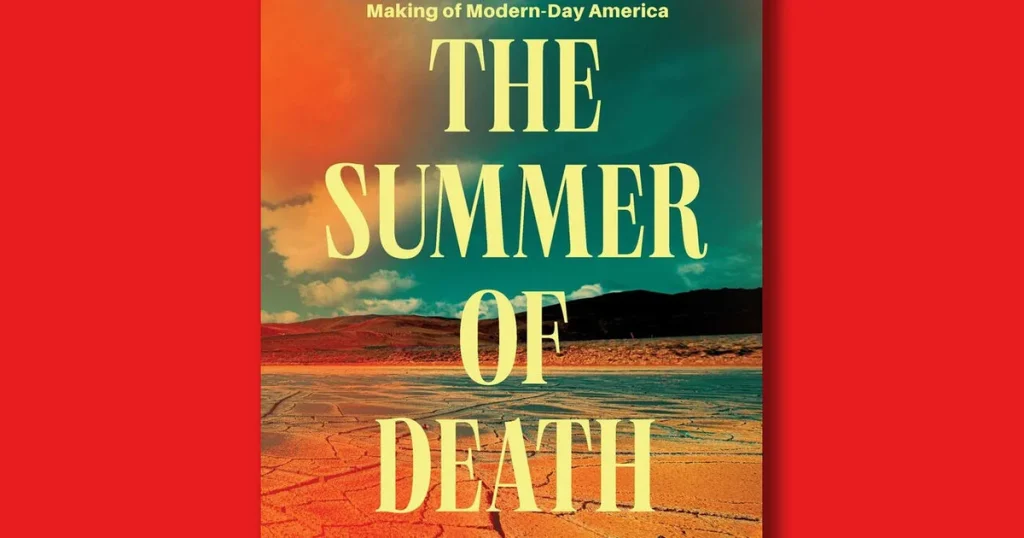
Geoff Williams, author of The Summer of Death: The Great Heat Wave of 1936 and the Making of Modern-Day America (Pegasus Books), situates Cohran’s actions within a wider social context rather than dismissing them as simple bigotry. He notes that Cohran lived in an era when masculinity and youthful vigor were culturally prized, and he points out that she had shaved four years off her stated age when applying to the police force — a small detail that underscores how much pressure women faced to conform to narrow expectations of appearance and capability.
Williams suggests Cohran may genuinely have believed she was shielding young women from male attention she considered predatory. In a city where street lighting was sparse, sidewalks narrow, and social supervision informal, the idea that a woman’s exposed shoulders or bare legs invited unwanted advances was not fringe thinking in 1936. It was mainstream civic reasoning, however uncomfortable it appears now.
The Larger Story Behind the Excerpt
The Covington episode is one thread among many in Williams’s account of how the 1936 heat wave accelerated changes that reshaped American public life: expanded municipal emergency services, earlier adoption of building ventilation standards, growth of the electrical grid to power fans and eventually air conditioners, and a gradual loosening of dress codes as women entered the workforce in greater numbers. The heat deaths forced governments to confront infrastructure gaps they had long ignored.
Cohran’s shorts-and-halters patrol sits at the intersection of two forces — genuine public-health panic and rigid gender policing — and Williams uses it to illustrate how emergencies can simultaneously expand state power into private life while also exposing the limits of old social codes. The women in Covington who walked those streets in halter tops were, whether they knew it or not, participating in a quiet revolution that no municipal ordinance could fully contain.
The Summer of Death is available in hardcover, ebook, and audiobook formats through Pegasus Books.
Related Reading
Frequently Asked Questions
What is Book excerpt?
Book excerpt is the main topic of this guide. The article explains the context, practical details, and next steps readers should understand.
Why does Book excerpt matter?
Book excerpt matters because readers are looking for a useful answer, not just a short summary. Good content should match search intent and help them decide what to do next.