
Short pants: The long and the short of it
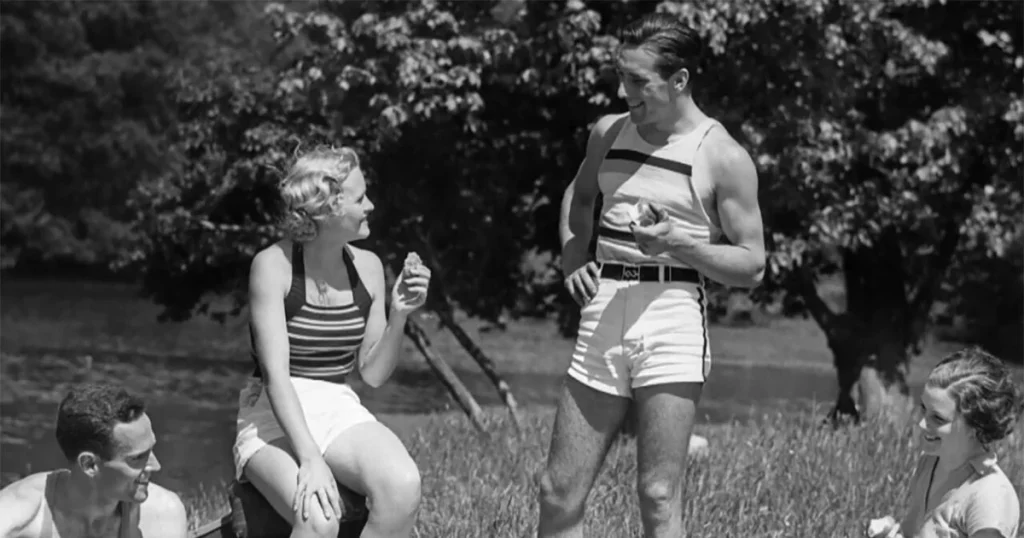
Shorts: From Jail Sentence to Everyday Wardrobe Staple
Bizeconanalysis.com – Walk through any American city this July and you will see them everywhere — on office workers, joggers, parents hauling strollers, teenagers leaning against brick walls. Shorts have become so woven into daily life that imagining a world without them feels almost absurd. Yet fewer than ninety years ago, pulling up your hemline past the knee in certain municipalities could land you behind bars for a full month. The garment we now treat as the default uniform of summer was, until very recently, a legal liability.
The Summer That Broke America
The catalyst was not fashion but catastrophe. The heat wave of 1936 struck with a ferocity that still defies modern memory. At least 5,000 Americans died from heat-related causes across the country. Cities from New York to Baltimore, Columbus, Ohio, Lexington, Kentucky, and Minneapolis endured weeks of temperatures at or above 100 degrees Fahrenheit — records that, by some accounts, have never been surpassed.
Geoff Williams, who chronicled that catastrophe in his book The Summer of Death, describes the experience as relentless:
“All day, you’re suffering, and then you can’t sleep. And this would go on day after day after day.”
Air conditioning had not yet reached most American homes. Families fled to movie theaters for their coolers or simply slept on sidewalks and in parks. The physical toll was staggering, but the social consequences rippled outward in ways few anticipated. In a nation still governed by rigid dress codes — knee-length trousers for men, ankle-covering skirts for women — unbearable heat forced people to loosen up. And in some jurisdictions, loosening up meant breaking the law.
Yonkers: Where Hemlines Were Policed
In Yonkers, New York, the city council moved in 1935 to criminalize casual summer wear. Alderman William Slater spearheaded an ordinance that banned shorts and halter tops from public streets. The penalty for violation: a $150 fine plus thirty days in jail. Ten police officers were reportedly assigned to patrol specifically for hemline infractions — a deployment that current Mayor Mike Spano, himself a Yonkers native now serving in City Hall, calls an absurd allocation of municipal resources.
Asked whether he suspected Slater was secretly wearing shorts at home, Spano laughed and offered a wry observation:
“Isn’t that usually the case?”
The Daily News Gambit
On June 21, 1936, two reporters from the New York Daily News made the trip to Yonkers wearing shorts. Their intent was explicit: provoke an arrest and force the courts to confront the ordinance’s reasonableness. Police obliged. Spano frames their act as a small act of civic defiance:
“They asked that they be arrested. A little bit of public disobedience, because they wanted to right what they saw as a wrong. Love it. It’s so American.”
The reporters were fined $10 each. They appealed. After an extended court battle, their convictions were vacated and the ordinance struck down. Yonkers attempted a replacement “modesty ordinance” in 1937, but that measure, too, proved short-lived.
A Taboo Far Older Than 1936
The discomfort Americans felt about exposed legs was not born in the Depression era. Erin Black, an associate arts professor at New York University’s Tisch School of the Arts who teaches costume design history, traces the anxiety back centuries:
“It was scandalous to show legs during certain eras.”
In Elizabethan England, men wore what were called pumpkin hose or pumpkin breeches — bulbous, knee-length garments paired with stockings. To maintain their exaggerated silhouette, the fabric was stuffed with sawdust and horse hair. Black notes a practical downside: in English summers, those packed seams became ideal nesting sites for insects.
“And in the summer in England, bugs thought it was a great place to live. So, you could have an infestation problem in your pumpkin hose.”
By the late nineteenth century, the only people routinely wearing shorts were young boys. Adults of both sexes kept their legs covered regardless of temperature.
War, Climate, and the Bermuda Short
The first major crack in adult hemline orthodoxy came from an unlikely quarter: British soldiers garrisoned in sweltering Bermuda during World War I. Unable to endure tropical heat in full-length trousers, they took Army knives and cut their own pants at the knee. The resulting garment — the “Bermuda short” — was, as Black puts it, purely a climate adaptation:
“They couldn’t stand the heat. They had to do something.”
The practice spread through military culture and eventually into civilian wardrobes, though slowly.
Women’s Longer Wait
For women, the path from full-length skirt to knee-length short was considerably more protracted. World War II pinup imagery — figures like Betty Grable became icons of liberated femininity — helped normalize shorter hemlines. By the 1950s, women’s shorts had shrunk dramatically. James Brown released “Hot Pants” in 1971, but Black credits the disco era with elevating very short women’s shorts from novelty to high fashion.
No single pop-culture moment encapsulates the phenomenon better than Catherine Bach’s role as Daisy Duke on The Dukes of Hazzard. Her impossibly short shorts became a cultural shorthand so potent that the garment category still carries her name in casual speech. Black confirms the lasting power of the reference:
“Absolutely. And we still call them Daisy Dukes.”
The Hemline Today
In Yonkers, the city once patrolled by ten officers for hemline violations, Mayor Spano himself wears shorts through the summer months without incident. In Ohio, Geoff Williams — the historian who spent years documenting the 1936 heat wave — says he reaches for them daily.
“Oh, I love them. I have thought so many times that if I went back to 1936, that summer, I would have been doomed.”
The arc from pumpkin hose stuffed with sawdust to the ubiquitous athletic short spans roughly four centuries of shifting norms, two world wars, a deadly heat wave, and at least one municipal jail sentence. What changed was never the fabric itself but the tolerance of the society wearing it. Today’s complaint about summer weather is mild by comparison — a small price for a wardrobe that took generations to earn.
Related Reading
Frequently Asked Questions
What is Short pants?
Short pants is the main topic of this guide. The article explains the context, practical details, and next steps readers should understand.
Why does Short pants matter?
Short pants matters because readers are looking for a useful answer, not just a short summary. Good content should match search intent and help them decide what to do next.