
A pregnant woman had 2 signs her life was about to be in danger: “Everything kept getting worse”
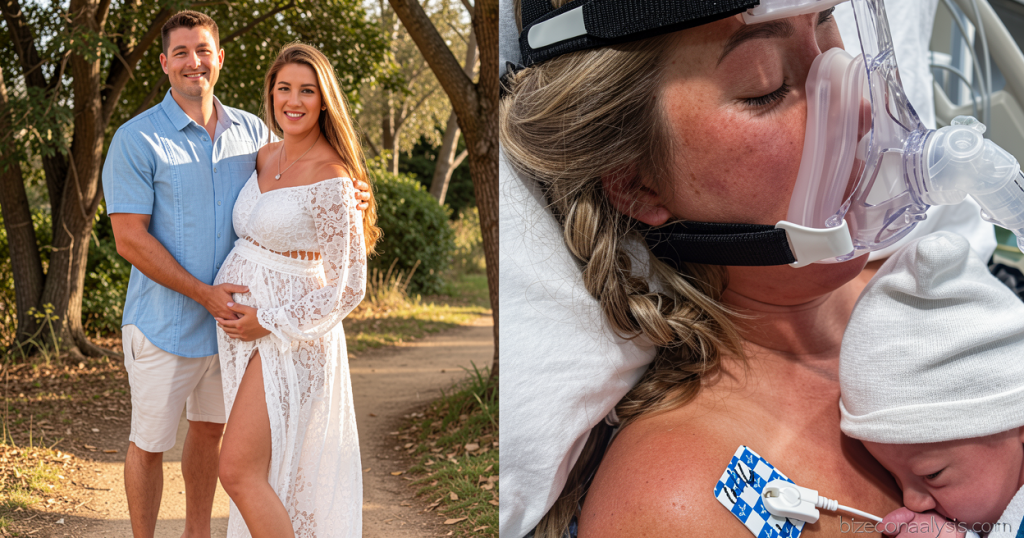
A Florida Mother’s Near-Death Experience: How HELLP Syndrome Changed Everything
Bizeconanalysis.com – Candice Davis never expected her first pregnancy to end in a medical emergency. What began as a relatively uncomplicated journey through nine months of gestation transformed into a life-threatening crisis that required emergency surgery, multiple blood transfusions, and ultimately resulted in the loss of part of her hand. The turning point came on June 14, 2025, just eleven days before her scheduled delivery date, when seemingly normal symptoms rapidly escalated into a medical catastrophe.
From Comfort to Crisis
Davis, who works as a recruiter for an OB-GYN practice, had enjoyed a surprisingly smooth pregnancy. Routine checkups showed no complications, and she experienced minimal discomfort throughout the gestation period. That changed on a warm morning when she was sitting by her pool, feeling perfectly fine. Within hours, nausea set in, followed by sharp pain in her upper abdomen.
Her husband immediately recognized something was wrong and insisted she seek medical attention. Davis initially resisted, confident in her medical knowledge and certain that serious problems would present themselves clearly. However, when her friend and colleague, Dr. Susan Passarella, an OB-GYN, strongly recommended an emergency room visit, Davis finally agreed to go.
“Everything kept getting worse,” Davis recalled of the rapid deterioration that unfolded at Baptist Hospital in Pensacola, Florida.
Understanding HELLP Syndrome
At the obstetric emergency department, medical tests revealed Davis was suffering from HELLP syndrome, a severe pregnancy complication related to preeclampsia. While preeclampsia affects approximately 5 to 8 percent of all pregnancies, HELLP syndrome is considerably rarer, developing in only 0.01 to 0.06 percent of cases. The condition causes damage to the liver and can trigger rapid, life-threatening bleeding.
Within just two hours of Davis’s arrival, her medical team observed escalating problems. Her blood pressure continued climbing, her liver enzymes skyrocketed to dangerous levels, and her abdominal pain intensified dramatically. The care team recommended inducing labor immediately, though Davis had hoped for a natural delivery. The decision was ultimately made to perform a cesarean section.
“And thank goodness we did,” Davis said. “I was in a lot of pain. They ended up giving me an epidural to help with the pain in the upper abdomen, which did not even touch it. I just remember I was scared. I physically knew that I could not birth my son naturally. I couldn’t even sit up.”
A Dangerous Delivery
The C-section procedure went smoothly initially, but complications emerged almost immediately. Davis’s son, Camden, had been pressing against a 17-centimeter injury in her liver throughout the pregnancy. When he was delivered, the organ began bleeding profusely and would not stop.
“When they were getting my son out, they said, ‘Oh, there’s not blood. This is good,'” Davis remembered. “And within seconds, it was, ‘Oh, there’s blood, there’s a lot of blood.’ The anesthesiologist came in and put a mask over my face, and said, ‘OK, we’ve got to put you out now.'”
Fortunately, Davis’s medical team had anticipated this possibility due to her elevated liver enzymes. A surgeon was present, and the C-section had been performed with access to her liver in mind. However, the bleeding persisted despite their efforts. Davis became too unstable for additional surgical intervention, forcing doctors to pack her body with sterile materials and wait overnight for her condition to stabilize.
Recovery and Sacrifice
For approximately 24 hours, Davis fought to survive. She could not breathe on her own, and Dr. Passarella, receiving updates through Davis’s husband, feared her friend would not wake up.
“It was just one thing after another,” said Passarella, who has extensive experience treating patients with HELLP syndrome. “He asked me, ‘Is she going to survive this?’ I didn’t know what was going to happen.”
Eventually, doctors managed to control the bleeding. Davis regained consciousness the following day and could breathe independently. Her first clear memory came two days later when her four-day-old son was placed on her chest in the intensive care unit.
“My blood pressure was still elevated, and Camden, my son, he was crying,” Davis recalled. “I heard my sister say, ‘Oh look, he stopped crying when he got on her chest, and her blood pressure immediately started decreasing.’ That’s something I’ll never forget.”
Long-Term Consequences
Davis’s recovery extended far beyond the initial crisis. Blood clots had formed in her left hand, and because she could not take blood thinners without risking further liver bleeding, doctors tried topical treatments and hyperbaric oxygen therapy. Unfortunately, these interventions proved insufficient, and Davis ultimately lost her thumb and portions of her other four fingers on her left hand.
Over the following weeks, she underwent six separate surgeries to remove damaged tissue, followed by intensive physical therapy to relearn how to use her hand. Adjusting to these amputations while caring for a newborn proved exhausting, even with support from her husband and extended family.
“Everything I had planned just went out the window,” she said. “It was a whole process in terms of what changed from what I thought was going to happen. I couldn’t change his diaper by myself. I had to get help feeding him.”
Today, Davis’s story serves as a powerful reminder of how quickly pregnancy can transform from a joyful experience into a medical emergency. HELLP syndrome, though rare, demands immediate attention and can have lasting consequences for both mother and child. Her experience highlights the importance of recognizing warning signs and trusting medical professionals when complications arise.
Related Reading
Frequently Asked Questions
What is A pregnant woman had 2 signs?
A pregnant woman had 2 signs is the main topic of this guide. The article explains the context, practical details, and next steps readers should understand.
Why does A pregnant woman had 2 signs matter?
A pregnant woman had 2 signs matters because readers are looking for a useful answer, not just a short summary. Good content should match search intent and help them decide what to do next.