
South Carolina to hold first 2028 Democratic presidential primary, DNC vote confirms
Democratic Party Reshapes Primary Calendar with South Carolina at the Forefront
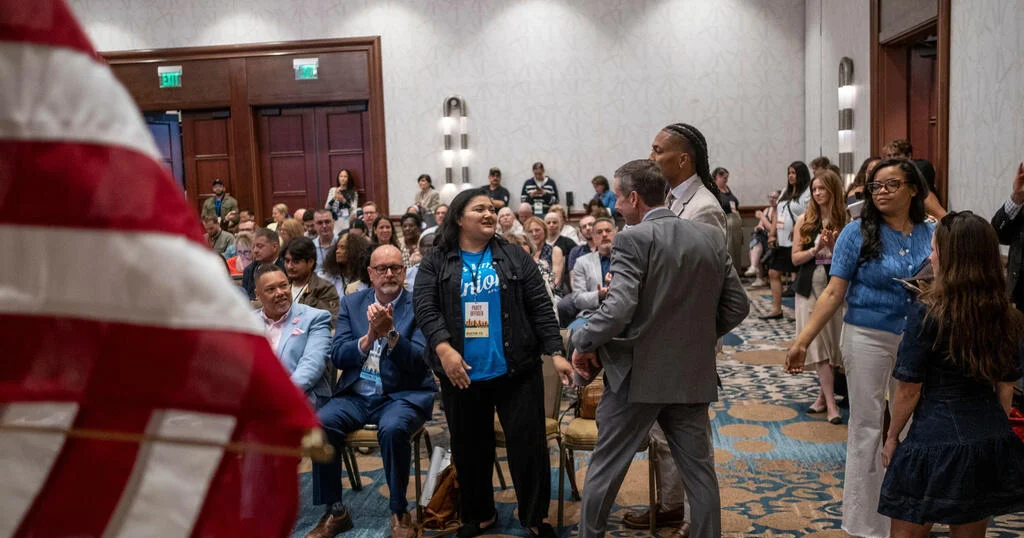
Bizeconanalysis.com – The Democratic National Committee has officially restructured its presidential nominating schedule for 2028, placing South Carolina at the very beginning of the contest. This decision represents a significant departure from decades of tradition, as the party seeks to build a coalition that more accurately mirrors the nation’s growing diversity. Committee members cast their votes during a summer gathering in Austin, Texas, finalizing a timeline that will fundamentally alter how candidates campaign in the opening months of a presidential election cycle.
Under the newly approved framework, South Carolina will host the first official primary on January 22, 2028. Nevada follows shortly after on February 1, while New Hampshire, New Mexico, Michigan, and Virginia complete the early-state sequence throughout February. All of these contests will occur before the massive Super Tuesday bloc of primaries, giving these six states disproportionate power in shaping the field of potential nominees.
A Strategic Shift Toward Diverse Electorates
DNC Chair Ken Martin emphasized that the calendar change extends far beyond simple scheduling logistics. He described the move as central to the party’s broader mission of reclaiming the White House and defining what kind of political organization and nation it aspires to become. The new structure deliberately reduces the historical dominance of Iowa and New Hampshire, two states that have held outsized influence for more than half a century despite having predominantly White populations.
“This is much bigger than a lineup of dates on a calendar,” Martin stated. “This is about our approach to winning back the presidency. It’s about the kind of Democratic Party and the kind of country we aspire to be.”
Political strategists note that the revised calendar amplifies the voices of Black and Latino voters, who constitute essential segments of the Democratic base. Chuck Rocha, a Democratic strategist and CBS News contributor, observed that candidates cannot afford to neglect these communities if they hope to succeed under the new system. He added that the schedule demonstrates appropriate recognition for Black voters, whose support has historically been crucial to Democratic victories in Southern states.
Resistance from Traditional Powerhouses
Not all party members welcome the transformation. Leaders from Iowa and New Hampshire, which previously served as the first and second primary states respectively, quickly criticized the proposal when the DNC’s Rules and Bylaws Committee recommended it. These states argue that their long-standing role in testing and vetting candidates remains valuable, regardless of demographic composition.
The New Hampshire congressional delegation issued a statement defending their state’s position. They described the First in the Nation primary as a proven testing ground that produces stronger candidates and presidents. The delegation highlighted that New Hampshire’s engaged electorate and compact geography allow candidates to connect directly with voters rather than relying heavily on super PACs or wealthy donors.
“New Hampshire’s First in the Nation primary is a tested proving ground in a closely contested swing state that forges better candidates and better presidents — and despite what DNC insiders say, that hasn’t changed,” the delegation declared.
Rita Hart, chair of the Iowa Democratic Party, expressed similar concerns on Saturday. She characterized the new calendar as a failure to honor previous commitments and argued that it leaves out significant portions of the country that Democrats must win to achieve majority status. Hart connected the calendar change to broader frustrations with the current Trump administration, suggesting that the party needs to rebuild its principles through a more inclusive nominating process.
Historical Context and Future Implications
The push to elevate South Carolina gained substantial momentum during the 2020 election cycle. After Joe Biden struggled in Iowa, New Hampshire, and Nevada, he secured a decisive victory in South Carolina, which revitalized his campaign and ultimately led to his nomination. Recognizing this pattern, the DNC moved South Carolina to the first position for the 2024 primary calendar. However, New Hampshire challenged that arrangement by holding its contest earlier, citing state legislation requiring it to remain first. The party responded by removing New Hampshire’s primary from its official sanctioned list.
With the 2028 calendar now set, DNC Chair Martin has indicated that any repeat defiance from New Hampshire would trigger harsher consequences. He emphasized that the party intends to actively defend the new schedule against challenges.
“This is a calendar this party is actually going to protect,” Martin told reporters following the Rules and Bylaws Committee meeting last month.
The restructured timeline may also intensify ideological competition within the Democratic Party between establishment moderates and progressive candidates, including democratic socialists positioned on the far left. In the absence of a clear frontrunner for 2028, the six early states will wield considerable influence over which faction gains traction first. Among these states, only Nevada and New Mexico provide unambiguous advantages to progressive candidates. Michigan has demonstrated growing receptiveness to progressive voices during this cycle, evidenced by Abdul El-Sayed’s Senate primary victory, signaling that the new calendar could reshape not just when candidates campaign, but how they build coalitions across different voter demographics.
Related Reading
Frequently Asked Questions
What is South Carolina to hold first 2028?
South Carolina to hold first 2028 is the main topic of this guide. The article explains the context, practical details, and next steps readers should understand.
Why does South Carolina to hold first 2028 matter?
South Carolina to hold first 2028 matters because readers are looking for a useful answer, not just a short summary. Good content should match search intent and help them decide what to do next.