
Justice Department expands military’s power to detain migrants accused of trespassing
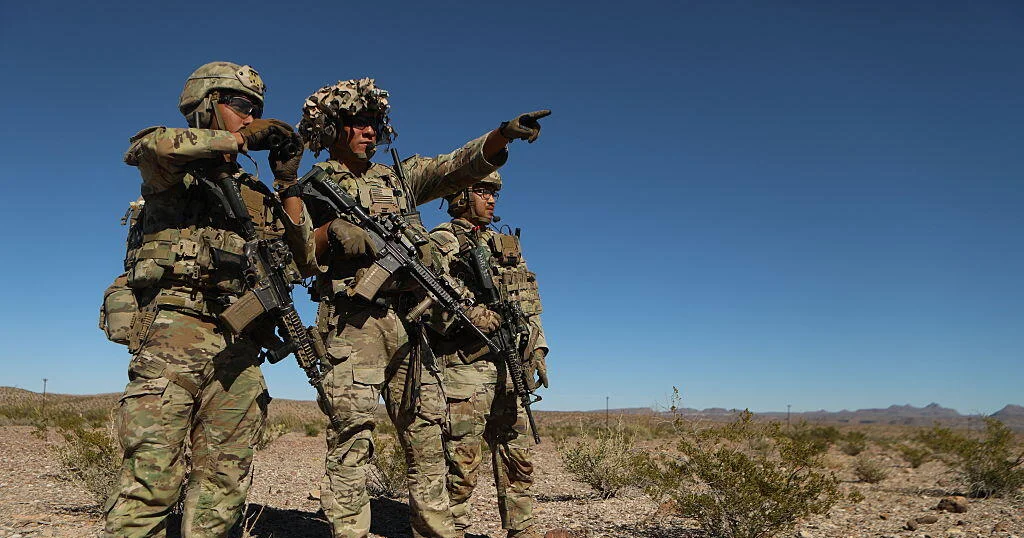
Military Gains Expanded Authority to Hold Border Trespassers Under New Legal Guidance
Bizeconanalysis.com – A fresh legal interpretation from the Justice Department has significantly widened the scope of military authority to hold migrants suspected of trespassing across territories managed by the Department of Defense. This development forms a cornerstone of the current administration’s intensified efforts along the southern frontier.
The guidance, delivered by the Office of Legal Counsel, addresses extensive tracts of territory adjacent to the Mexican boundary that have been classified as National Defense Areas. These zones serve as a mechanism to discourage unauthorized immigration through enhanced military presence and enforcement capabilities.
Legal Framework and Posse Comitatus Exception
Under the Posse Comitatus Act, which has governed domestic military operations for decades, armed forces are typically barred from executing law enforcement duties on American soil. However, the newly designated National Defense Areas create a statutory pathway for soldiers to apprehend individuals suspected of crossing into these restricted zones without violating the longstanding prohibition.
This arrangement enables federal prosecutors to pursue trespassing charges against those detained within these boundaries, treating them as violations of military property rather than standard immigration infractions.
In sum, we conclude that the use of military personnel to arrest trespassers just outside of an NDA would not violate the [Posse Comitatus Act], given the express statutory authorization and the military-purpose of a commander’s traditional protective power,
Deputy Assistant Attorney General William Hyde articulated in his written assessment.
Geographic Scope and Future Expansion
Currently, six National Defense Areas span across Arizona, California, New Mexico, and Texas. These territories cover substantial portions of land that may not immediately appear connected to traditional military installations. To clarify boundaries for the public, the Defense Department has installed bilingual signage in English and Spanish warning that unauthorized entry is forbidden.
U.S. Northern Command, responsible for overseeing military operations throughout North America, has clarified on its official platform that service members possess the authority to apprehend trespassers and hand them over to relevant law enforcement agencies.
While the current configuration includes six zones, military officials have indicated that additional areas could be established in coming months as operational needs evolve.
Charges and Enforcement Statistics
Federal prosecution efforts targeting individuals caught within these zones commenced in April 2025. Since that initial wave, hundreds of migrants have faced charges. The most frequent accusations involve violating military security regulations and entering military, naval, or Coast Guard property—both classified as misdemeanor offenses.
Additional charges unrelated to trespassing may also apply when border crossing violations occur simultaneously with military land violations.
The Pentagon elevated the southern border to its primary operational focus during the opening weeks of the second Trump administration, announcing substantial increases in troop deployments. The Defense Department reports that over twenty thousand service members have completed assignments along the frontier since that directive. A spokesperson for the southern border Joint Task Force confirmed that eight thousand personnel currently operate within the task force structure, which has recorded one hundred sixty-one detentions within National Defense Areas.
Broader Policy Implications
It is important to note that the Office of Legal Counsel’s guidance carries advisory weight and does not establish binding legal precedent. Nevertheless, it provides a framework for ongoing enforcement actions and potential future legal challenges.
This military expansion coincides with parallel efforts to restrict asylum access for individuals entering the United States without authorization. The combined approach has produced measurable reductions in unauthorized crossings.
Border Patrol figures reveal that fiscal year 2025 saw fewer than two hundred forty thousand migrant apprehensions along the southern boundary, representing a sharp decline from one point five million in fiscal year 2024 and two million in fiscal year 2023. The downward trajectory continues into fiscal year 2026, with Border Patrol documenting eighty-one thousand apprehensions with only two months remaining in the current fiscal period.
These developments reflect a comprehensive strategy that combines military presence, legal reinterpretation, and administrative restrictions to reshape border management across multiple dimensions simultaneously.
Related Reading
Frequently Asked Questions
What is Justice Department expands military s power?
Justice Department expands military s power is the main topic of this guide. The article explains the context, practical details, and next steps readers should understand.
Why does Justice Department expands military s power matter?
Justice Department expands military s power matters because readers are looking for a useful answer, not just a short summary. Good content should match search intent and help them decide what to do next.