
What to know about Taylor Farms, the produce giant tied to the cyclospora outbreak
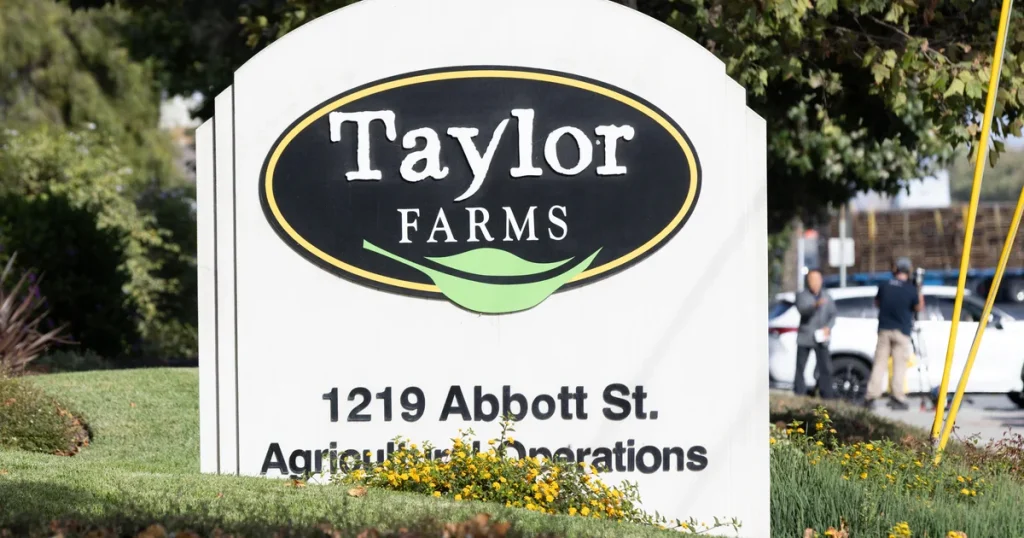
What to Know About Taylor in Cyclospora Outbreak
Bizeconanalysis.com – One of America’s largest agricultural suppliers is facing renewed scrutiny after voluntarily pulling iceberg lettuce from shelves. This recall connects to what experts call an exceptionally large cyclosporiasis outbreak affecting the nation. Industry specialists note that while product withdrawals remain routine for a supplier operating at this scale, this particular situation stands out due to both its breadth and the substantial number of individuals affected.
Health authorities have documented over five thousand cyclosporiasis cases to date. This figure dramatically surpasses the usual yearly range of two hundred to one thousand infections. Since cyclospora contamination can trigger intense diarrhea persisting for days or weeks, numerous shoppers are steering clear of leafy vegetables and other fresh items frequently linked to this parasite. Meanwhile, health officials continue their efforts to pinpoint exactly where the contamination originated.
“Nothing about this outbreak is typical,” Jennifer McEntire, founder of food safety consulting firm Food Safety Strategy, told CBS News. “When you see something of this magnitude, it’s surprising, even to those of us who are accustomed to working with outbreaks. This is not normal, and it’s not acceptable.”
Understanding the Company’s Scale and Operations
Celebrity CEO Bruce Taylor established the company in 1995 within California’s Salinas Valley. Today, the organization oversees dozens of production sites spanning the United States, Canada, Mexico, and Western Europe. According to the company’s 2025 impact report, Taylor Farms cultivates one-quarter of its own agricultural products while collaborating with family-run farms to provide the remainder.
The enterprise employs approximately twenty-five thousand workers and generated six billion dollars in revenue during 2022, based on the latest available figures. This financial performance places the company among the top produce distributors throughout the country. Its considerable size makes it an essential provider of lettuce and various other vegetables to major retail chains including Walmart, Costco, Target, and Whole Foods, alongside restaurant networks like Taco Bell and McDonald’s.
The company also controls the organic label Earthbound Farms and manufactures forty percent of all salad kits purchased in the United States. Despite these impressive credentials, many shoppers might assume the company operates as a modest single-location farm simply because of its name, McEntire observed. “But it’s not. It’s an enormous company with multiple processing operations and growing locations in different regions,” she explained.
The Lettuce Recall Timeline
On July 17, the company initiated a voluntary recall of potentially contaminated iceberg lettuce originating from central Mexico. This action followed federal investigators’ determination that lettuce served at certain Taco Bell establishments connected to Taylor Farms de Mexico contained the parasite. Other company products, including its popular salad kits, remain unaffected by the recall.
Initially, the Food and Drug Administration identified one independent farm responsible for less than one percent of the nation’s iceberg lettuce supply as the probable outbreak source. However, on Sunday, the FDA reversed course, announcing that a test indicating contaminated lettuce had actually produced a false positive result. The company subsequently released a statement confirming the agency “apologized to us.”
By Monday, the FDA clarified that the “false-positive lab sample DOES NOT change the basis for [the] FDA’s ongoing outbreak investigation or the overwhelming epidemiological data supporting the current voluntary recall.” The agency further noted that its “traceback investigation and outbreak data continue to converge on shredded iceberg lettuce from Taylor Farms locations in central Mexico.”
“The unusual thing isn’t the false positive. It’s that an unconfirmed single-sample result went public on a Saturday and was withdrawn on a Sunday,” Dr. Céline Gounder, CBS News medical correspondent, said. “The question I’d ask FDA is not ‘how did the lab get it wrong’ but ‘what is your policy for announcing a presumptive positive before confirmatory testing closes, and did you follow it?'”
McEntire added that the false positive “doesn’t call into question the conclusion of the outbreak investigation.” She noted that if the positive test had been confirmed, “it could’ve resulted in a substantially expanded recall.” Dr. Gounder pointed out that while the FDA rarely publicly reverses test results, such false positives remain “ordinary as a laboratory phenomenon.”