
Mexican president to attend World Cup final at Trump’s invitation amid trade tensions
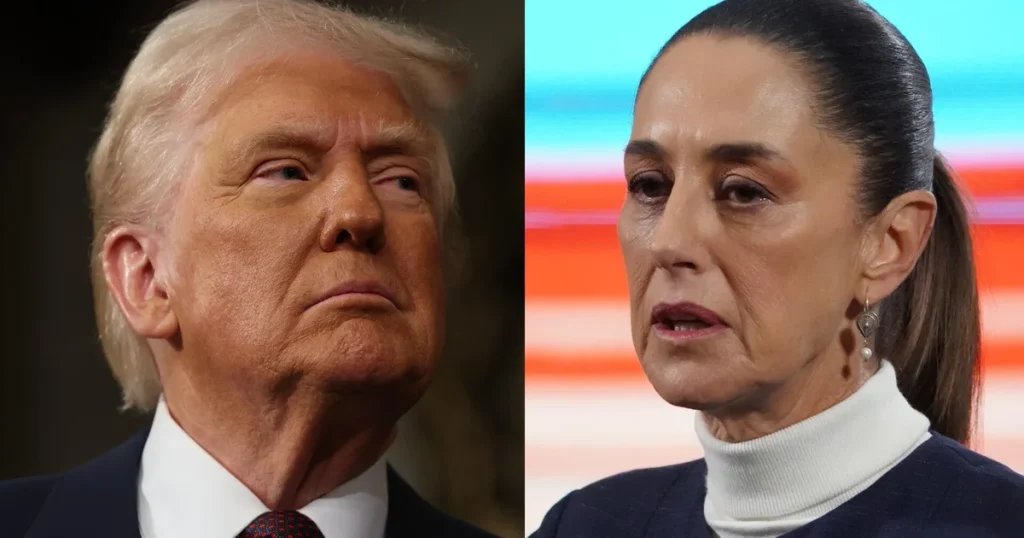
Sheinbaum to Attend World Cup Final at Trump’s Invitation
Mexican president to attend World Cup final – President Claudia Sheinbaum of Mexico has officially confirmed she will travel to the United States for Sunday’s World Cup championship match. The invitation came directly from U.S. President Donald Trump, marking a significant diplomatic gesture between the two neighboring nations. This meeting represents their first face-to-face encounter since December, following a period of notable public disagreements and growing diplomatic friction. Interestingly, Sheinbaum had previously declined to attend the tournament’s opening ceremony in Mexico City, where her nation’s team defeated South Africa 2-0. Instead of keeping her seat for the historic opening match, she presented her ticket to a young Indigenous woman, demonstrating her dedication to uplifting underrepresented voices in Mexican society.
Championship Match Logistics and Attendees
As Saturday afternoon approached, the most affordable seats for Sunday’s decisive match were listed at roughly $10,000 per ticket on FIFA’s official platform, underscoring the tremendous interest in this global sporting event. During an interview with Mexican reporters, Sheinbaum shared her reasoning for accepting the invitation.
I decided to go because it is a direct invitation from the president of the United States.
She also mentioned that Canadian Prime Minister Mark Carney would join the festivities.
Canadian Prime Minister (Mark) Carney will also be there, and tomorrow I will record a message with more details.
These international leaders gathering for the final highlights the tournament’s role as a diplomatic platform beyond mere athletic competition.
Diplomatic Tensions and Cooperation
The relationship between Sheinbaum and Trump has been marked by numerous disagreements spanning multiple policy areas. Border security and commercial disputes have particularly shaped their interactions since both assumed leadership positions. Their last meeting took place at the World Cup draw ceremony in December, where cordial exchanges masked deeper underlying tensions. Despite publicly challenging each other’s viewpoints on various occasions, both leaders have pledged to collaborate on mutual concerns. This delicate balance between disagreement and partnership characterizes their bilateral relationship moving forward.
Recent Trade and Security Initiatives
Earlier this year, the U.S. State Department revealed plans to evaluate 53 Mexican consulates across American territory. This announcement followed the heartbreaking deaths of two Central Intelligence Agency officers during a security mission in Northern Mexico. The consulate assessment forms part of broader efforts to enhance border protection and strengthen diplomatic ties. Commercial relationships have also seen important developments. In June, President Trump announced that the United States would not automatically renew the U.S.-Mexico-Canada Agreement, known as USMCA, through 2042. This foundational trade agreement continues to serve as a critical economic bridge between North American countries.
Upcoming Bilateral Negotiations
Government officials from both nations will meet for fresh bilateral discussions just two days after the World Cup final concludes. These negotiations will concentrate mainly on trade matters that have dominated recent diplomatic conversations between Washington and Mexico City. The current tournament marks the first time three North American nations have jointly hosted the prestigious competition, representing a fresh chapter in regional collaboration. The championship game will pit defending champions Argentina against Spain in New Jersey. Spanish King Felipe VI is also expected to grace the occasion, elevating the event’s international prestige. This convergence of athletics, diplomacy, and global relations offers North American leaders a valuable opportunity to connect on both official and casual levels, potentially establishing momentum for future collaboration across numerous policy areas.