
Judge rebukes Trump and DOJ over IRS lawsuit, refers lawyer for disciplinary proceedings
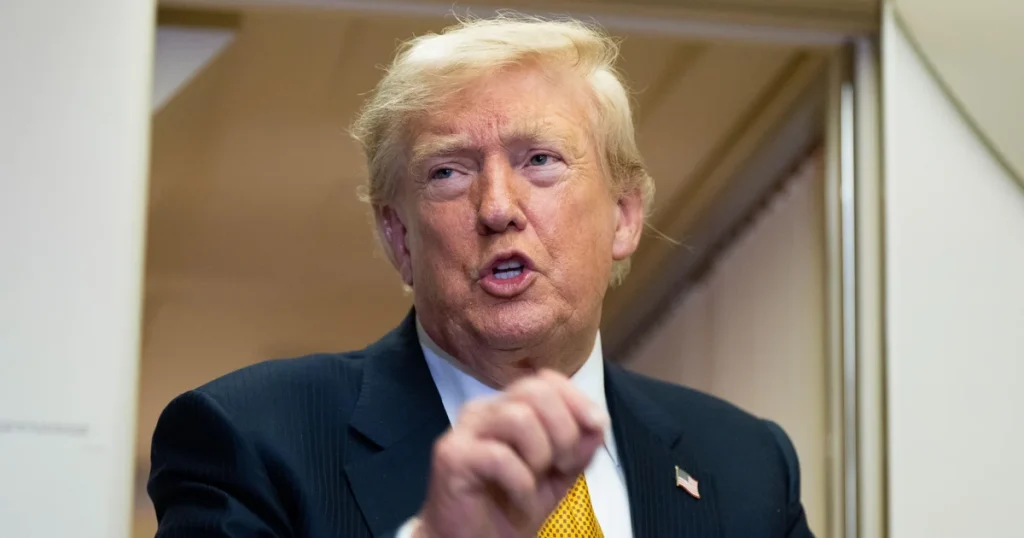
Federal Judge Issues Stern Reprimand to Trump Legal Team and Justice Department in IRS Case
Disciplinary Measures and Settlement Review
Judge rebukes Trump and DOJ over – A federal judge has handed down significant professional consequences for attorneys representing President Trump in litigation against the Internal Revenue Service, while simultaneously delivering a sharp critique of how the Justice Department managed the proceedings. The ruling, issued on Monday, determined that the civil action was initiated for reasons that fell outside proper legal purpose.
U.S. District Judge Kathleen Williams authored a comprehensive 56-page opinion that included multiple sanctions. Among the most notable actions, she directed that Alejandro Brito, one of the president’s counsel, be forwarded to the Florida Bar for possible disciplinary review. Additionally, Williams restricted Daniel Epstein, another attorney in the case, from continuing to practice within the Southern District of Florida.
The judge also established limitations on how the settlement agreement can be referenced going forward. Under her order, neither the Justice Department, the IRS, nor President Trump may cite or utilize specific provisions of the deal as evidence of a settlement in any judicial, administrative, regulatory, or other types of proceedings.
Questions of Adverseness and Good Faith
Writing in her decision, Judge Williams articulated her view that the lawsuit lacked fundamental legal grounding. She stated that the case was initiated for an improper purpose, specifically to obtain judicial validation for what she described as a settlement lacking viable legal or factual foundations.
“In sum, the facts before this Court demonstrate there was never adverseness between the Parties; there was never a case or controversy; and there was never a question as to who would prevail,” she wrote.
The judge further concluded that President Trump and his two eldest sons, who joined as co-plaintiffs, had acted in bad faith throughout the proceedings. This assessment formed the basis for her broader criticism of the entire litigation process.
Bar Referrals and Official Reactions
Williams extended her disciplinary reach beyond Florida by directing copies of her order to be sent to professional organizations. She instructed that correspondence be mailed to the State Bar of New York and the District of Columbia Bar, recognizing that acting Attorney General Todd Blanche and Associate Attorney General Stanley Woodward belong to those respective bodies. Both officials had signed documents connected to the settlement arrangement with the president.
When contacted for their response, neither Brito nor Epstein provided immediate comment regarding the judge’s findings.
Background on the Settlement Controversy
The judge’s unusual order followed concerns voiced by a coalition of 35 former federal judges about the settlement agreement finalized in May. That arrangement concluded the $10 billion civil lawsuit that President Trump and his two eldest sons had initiated against the IRS earlier in the year. The litigation stemmed from allegations concerning the unauthorized disclosure of the president’s tax returns by a government contractor.
Initially, the settlement encompassed the establishment of a $1.776 billion “anti-weaponization” fund designed to distribute taxpayer money to individuals claiming the federal government had been weaponized against them. However, following substantial criticism from Congress and a ruling by another federal judge, Blanche announced that the Justice Department would not proceed with the program.
One key element of the settlement remains unchanged: a permanent prohibition preventing the IRS from pursuing tax claims against President Trump, his eldest sons, his business entity, or affiliated family companies.
Judge’s Findings on Collusion and Jurisdiction
The former judges petitioned Williams in May to reconsider the case, contending that the settlement represented both collusion and a fraud upon the court. The agreement had been reached while Williams was evaluating whether she possessed jurisdiction over the matter.
“President Trump did not pursue his claims until he once again occupied the White House and had appointed his former lawyer, and the former lawyer of persons who are putative beneficiaries of the ‘Anti-Weaponization Fund’ to prominent positions in the DOJ,” she wrote.
In her ruling, Williams concluded that no genuine case or controversy existed for the court to adjudicate. Because the lawsuit was filed by Trump against a federal agency and officials under his presidential control, she determined there was no true adverse litigant. She further found that the president had improperly used the litigation to secure taxpayer access and exemptions from audits through his control over the defendants.
Williams criticized the Justice Department for failing to vigorously protect American interests, noting that the administration had disregarded established policies and pursued objectives both beyond and contrary to legal authorization. The nature of the suit and the conduct of all parties from its inception, she concluded, clearly demonstrated that the proceedings lacked genuine adversarial character.